




Branding and Strategy
Building a strong technology product does not automatically create a strong brand. Many tech companies struggle to differentiate themselves, communicate their value clearly, and maintain a consistent brand across customer touchpoints.
In this post, SotaMedia will explain how to build one, from business analysis and positioning to brand identity, customer touchpoints, and measurement.
Key takeaways:
- Tech brand strategy defines long-term brand direction: It connects business goals, customer needs, competitive positioning, differentiation, and brand identity.
- Build the strategy before executing tactics: Analyze the business foundation, target customers, competitors, positioning, and differentiation before investing in branding activities.
- Measure both brand and business outcomes: Track awareness, recall, preference, trust, customer acquisition, retention, adoption, revenue, and other metrics relevant to your business objectives.
What Is Tech Brand Strategy?
Tech brand strategy is the long-term direction and plan a technology company develops to achieve its branding goals.It focuses on how target customers should recognize, prefer, trust, and accept the brand.
More broadly, brand strategy is the process of building brand equity over time. It provides a clear direction for how a tech company should position, differentiate, and develop its brand to create lasting value in the market.
Are You Mistaking Tactics for Strategy?
Many tech companies mistake short-term branding activities for a long-term brand strategy. Your company invests in redesigning websites or creating more social content without having a clear branding image and position. However, these activities cannot make your company stand out from others.
In fact, these activities are just tactics to bring your strategy to life:
- Strategy: A long-term direction that helps a brand compete, differentiate itself, and achieve its business objectives.
- Tactics: Specific activities and initiatives used to execute the strategy.
How can I implement tech brand strategy?
49% of tech marketing leaders indicate they have increased investment in brand awareness over the last year. But investing more money cannot ensure that their brand strategy will be successful. The following steps provide a practical framework for developing a tech brand strategy.
Step 1: Analyzing the business foundation
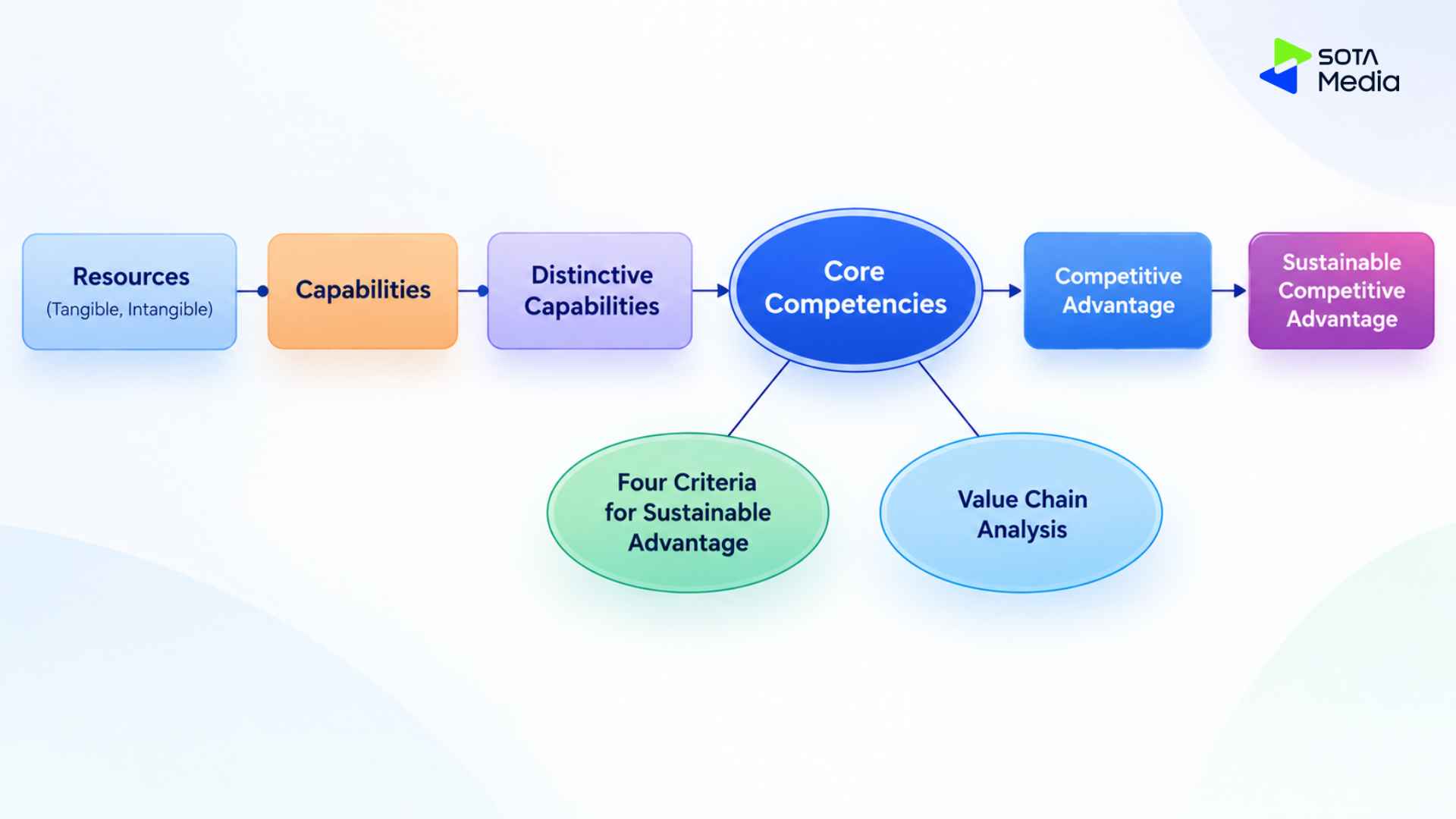
Factors Shaping Competitive Advantage from Internal Resources
At this step, you need to identify:
- Strategic vision and goal
- Value and culture of the organization
- Organizational values and culture
- Core capabilities and competitive advantages
- Resources and capabilities
- Existing products and brands
- Business operations and management
Step 2: Analyze Target Customers and Competitors
Analyze target customers
Understand who the brand is targeting, what they need, and what influences their technology purchasing decisions.
- Needs and motivations: Identify the technology problems customers need to solve and what drives their purchase decisions.
- Perceptions and attitudes: Understand how customers perceive technology, existing solutions, and competing brands.
- Aspirations: Identify the outcomes and values customers want to achieve through technology.
- Barriers: Consider factors such as cost, complexity, security concerns, integration challenges, and switching costs.
- Functional and emotional benefits: Identify both rational benefits, such as efficiency, convenience, and cost savings, and emotional benefits, such as confidence, trust, and peace of mind.
Analyze competitors
Assess how competing brands and alternative solutions address the same customer needs.
- Identify direct competitors and alternatives: Consider both brands offering similar products and alternative solutions that customers may choose instead.
- Identify Points of Parity (POP): Determine the features, capabilities, and benefits a tech brand must offer to be considered a viable option in the market.
- Identify Points of Difference (POD): Find the distinctive value, such as function, price, customer service, or user experience, that can make the brand more relevant and memorable than its competitors.
Step 3: Define brand position and differentiation
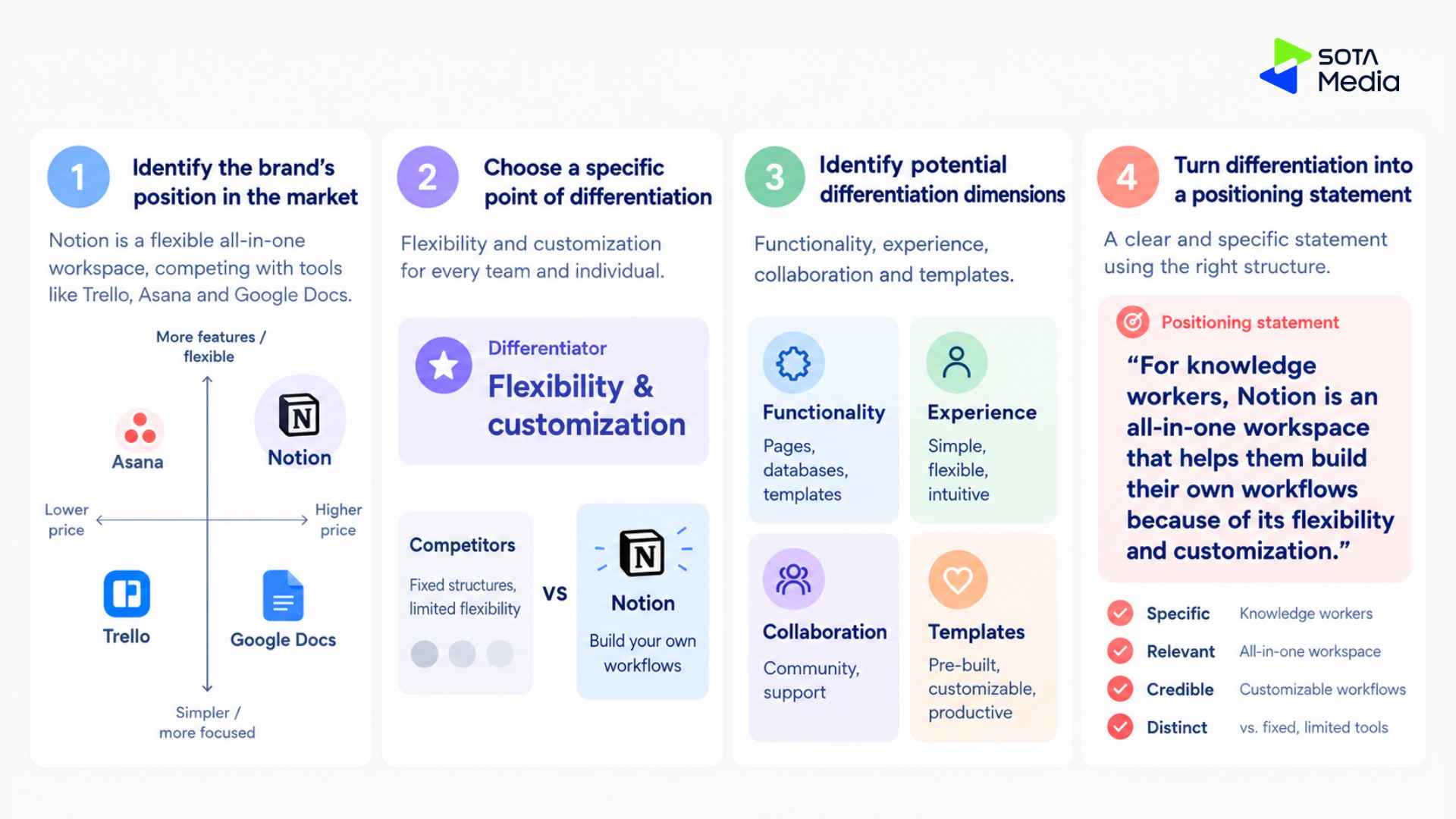
4 steps to define brand position and differentiation
Once the target customers and competitive landscape are clear, define where the brand should compete and why customers should choose it.
- Identify the brand’s position in the market: Define how the brand should be perceived relative to competitors, then map competing brands based on relevant attributes such as price, performance, innovation, ease of use, or specialization.
- Choose a specific point of differentiation: Look for an attractive and less crowded position in the market, leverage capabilities or expertise that competitors cannot easily replicate, and focus on a differentiator that addresses customer needs and creates meaningful value.
- Identify potential differentiation dimensions: Consider whether the brand can differentiate through product functionality, customer experience, people and expertise, or emotional and symbolic value. These may include superior features and performance, a better customer journey, specialized technical expertise, or stronger trust and brand identity.
- Turn differentiation into a positioning statement: Translate the chosen differentiation into a clear statement using the structure: For [target customer], [brand] is [category] that [core benefit/value] because [point of differentiation]. A strong positioning statement should be specific, relevant to the target customer, credible, and clearly distinct from competitors.
For example, Notion positions itself as an all-in-one workspace, competing with tools like Trello, Asana, and Google Docs. Its key differentiator is flexibility and customization, letting users build their own workflows.
This differentiation comes mainly from its product functionality and user experience, with customizable pages, databases, templates, and collaboration features.
Based on this, its positioning statement could be: “For teams and individuals, Notion is an all-in-one workspace that brings notes, projects, and knowledge together through its flexible and customizable platform.”
Step 4: Establish Brand Identity
Brand identity includes tangible and intangible factors, such as visual elements and brand personality, that differentiate a brand from another. To establish brand identity, you can:
- Define the core characteristics that shape how the brand is perceived and experienced. The identity should reflect the brand’s vision, mission, culture, and core values, while staying consistent with its positioning and differentiation.
- Define the brand’s personality – the human traits that guide how it communicates and behaves. For example, a tech brand may be innovative, trustworthy, professional, approachable, or sophisticated.
- Next, establish the brand’s verbal and visual identity, including its tone of voice, messaging style, logo, color palette, typography, graphic elements, photography style, and other visual assets. These elements should work together to create a consistent brand experience across digital and offline touchpoints.
The result should be a clear identity that gives the brand a consistent character, personality, values, and direction.
Step 5: Activate the brand across every touchpoint
Brand identity is how a company wants to be perceived, while brand image is how customers actually perceive it. This step focuses on consistently delivering the brand identity across every customer touchpoint to shape the desired brand perception.
Key touchpoints include the website, social media, advertising, case studies, product experience, events and communities, and PR or thought leadership. Each touchpoint should communicate the same positioning, key messages, visual identity, and brand personality.
For example, an AI SaaS brand positioned as an “AI partner that helps businesses improve productivity” should consistently build this perception across its touchpoints. Over time, customers should move from seeing it as simply an AI tool to an AI solution, then an AI partner, and ultimately a trusted technology partner.
How can I measure a tech brand strategy?
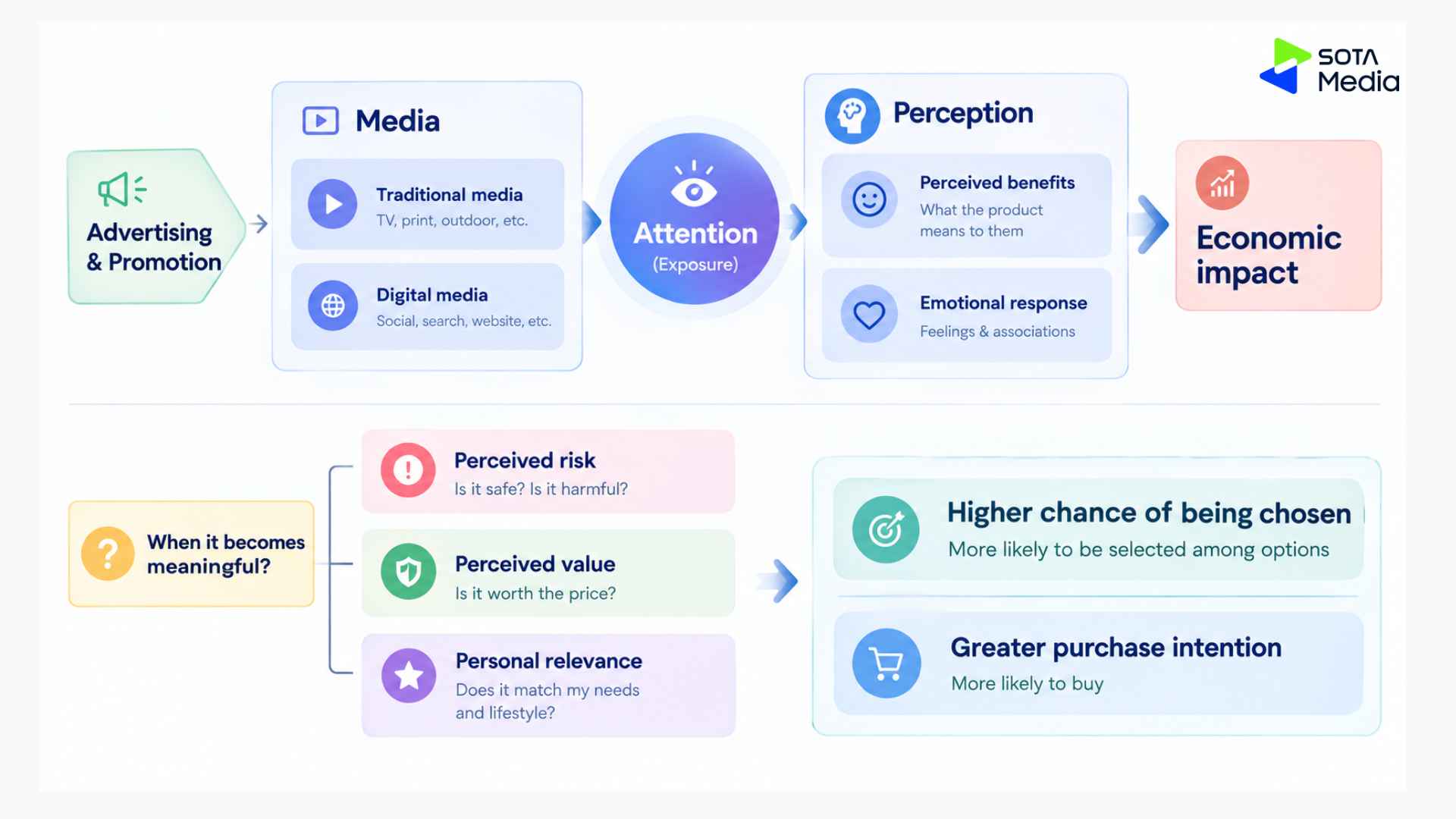
Measuring tech brand strategy: From media exposure to perception and economic impact
| Measurement area | Key metrics | What it measures |
|---|---|---|
| Brand health | Brand awareness | How well customers recognize the tech brand |
| Brand recall | Whether customers remember the brand when they need a technology solution | |
| Brand preference | How strongly customers prefer the brand over competitors | |
| Brand trust | Customers’ confidence in the brand, its technology, products, and expertise | |
| Financial impact | Brand investment | Investment in building and developing the tech brand |
| Brand revenue | Revenue generated by branded products or services | |
| Brand ROI | The return generated from brand-building investments | |
| Brand value | The brand’s long-term economic value and competitive advantage | |
| Business performance | Market position | The brand’s position within the technology market |
| Customer acquisition | The brand’s ability to attract new customers | |
| Customer retention | The ability to retain customers over time | |
| Price premium | Customers’ willingness to pay more because of the brand’s value | |
| Product adoption | The extent to which customers adopt and use new products or technologies |
What are the challenges of doing tech branding in-house?
58% of tech leaders reduced their investment in brand awareness in 2024 because of poor performance of their branding strategy. To minimize the risk when implementing a tech branding strategy, you should consider these things below:
- Making complex technology easy to understand: Technical products are often difficult to turn into simple, relevant, and differentiated brand messages.
- Focusing too much on the product: Teams may emphasize features and functionality while overlooking brand positioning and customer perception.
- Maintaining brand consistency: It can be difficult to keep brand identity, website, content, and communication aligned across different touchpoints.
- Building brand authority: Establishing credibility and becoming a trusted voice is challenging in highly competitive technology markets.
- Connecting branding with growth: Branding is often treated separately from SEO, content marketing, and demand generation, making it harder to build sustainable long-term growth.
How SotaMedia can help
Building a sustainable tech brand requires more than a new visual identity or a short-term campaign. SotaMedia is the marketing powerhouse of Sotatek, a global tech company with 11 years of experience and 350+ clients worldwide.
SotaMedia helps technology companies turn their brand strategy into a consistent market presence across identity, communications, media, and customer touchpoints. Our Branding and Strategy service includes:
- Go-to-market strategy: A clear plan for how, where, and to whom you launch.
- Brand audit & strategy: We map your market and competitors before a pixel is drawn.
- Guideline & visual identity: A complete system that keeps every asset on-brand.
- Content & channel strategy: The messaging and channels that carry your brand to market.
Conclusion
A tech brand strategy starts with knowing where you compete, who you serve, and what makes your brand different. That direction should then shape your identity, communication, and customer touchpoints.
If you need to define your positioning or build a consistent brand identity, contact SotaMedia for a brand strategy tailored to your technology business.
Frequently asked questions
Technology creates the product experience, while branding shapes how people perceive, understand, and remember it. When product experience and brand communication are consistent, technology becomes easier to recognize and trust.
Brand strategy defines how a brand should be positioned and perceived in the market. It typically covers target audience, positioning, differentiation, brand identity, personality, messaging, values, and customer experience.
A brand strategy gives the brand a clear direction for how it looks, sounds, and communicates. It helps align identity, content, and customer touchpoints around a consistent market position.
Start by understanding the business, market, competitors, and target customers. Then define the positioning, differentiation, personality, values, and messaging before translating these strategic decisions into a visual identity.
Tech products can be complex and difficult to differentiate based on features alone. A clear brand strategy helps communicate their value in a way that is easier for customers to understand and remember.
Tech brand strategy must connect brand positioning with product experience, technology, and often complex value propositions. It also needs to account for fast-changing markets, evolving products, and highly informed audiences.