




Branding and Strategy
Brand voice is the unique personality, language, and style a company uses across its communications. Today, B2B and B2C brands are moving beyond generic corporate language to create authentic, consistent messaging across every customer touchpoint.
This guide will explain what brand voice is, how it differs from tone and personality, share real-world examples, and provide 7 practical tips to define and scale your brand voice.
Key takeaways
• What Is Brand Voice: The consistent personality, language, and style a brand uses to communicate its values and positioning.agents.
• Why It Matters: A clear brand voice helps your brand stand out, build trust, strengthen recognition, and stay consistent across every touchpoint.
• How to Establish It: Audit your brand, audience, and competitors; define your personality and values; create voice and tone guidelines; then train teams and apply them across content and AI workflows.
What is Brand Voice?
Brand voice is the unique personality, tone, and language a company uses across all communication channels.
More than a writing style, it reflects the company’s values, strategy, and market positioning (Aaker, 2014). A consistent brand voice helps create a clear identity that connects with the target audience across marketing, social, advertising, and customer service.
A well-defined brand voice also keeps internal and external communication aligned with business goals. It gives teams a clear framework for creating content while helping employees communicate the brand consistently. Over time, this consistency builds trust, strengthens customer relationships, and supports long-term brand loyalty (Cornelissen, 2020).
Brand Voice vs. Tone vs. Personality: What’s the Difference?
While “voice,” “tone,” and “personality” are often used interchangeably, they serve different roles in brand communication. Brand personality defines who your company is, based on its core human traits.
Brand voice turns that personality into a consistent way of communicating across channels. Tone adds flexibility by adjusting the emotional style based on the situation and customer context.
| Dimension | Definition | Constancy | Primary Purpose |
|---|---|---|---|
| Brand Personality | The foundational human traits and emotional attributes assigned to a brand | Permanent (evolves very slowly over decades) | Establishes brand identity and emotional connection with the audience |
| Brand Voice | The specific verbal style, vocabulary, and grammar rules used to express that personality | Consistent (static across all channels and campaigns) | Ensures brand recognition and message uniformity across all touchpoints |
| Brand Tone | The emotional inflection and attitude applied to the voice based on context | Flexible (Changes dynamically depending on situation/audience) | Matches the customer’s current emotional state and channel context |
When aligned, these three elements create a consistent brand identity, making communications more recognizable, authentic, and trust-building.
Why Having a Clear Brand Voice Matters for Your Business
A clear brand voice connects your business strategy with everyday communication. It keeps internal teams and external messaging aligned while building trust, improving consistency, and making content easier to scale.
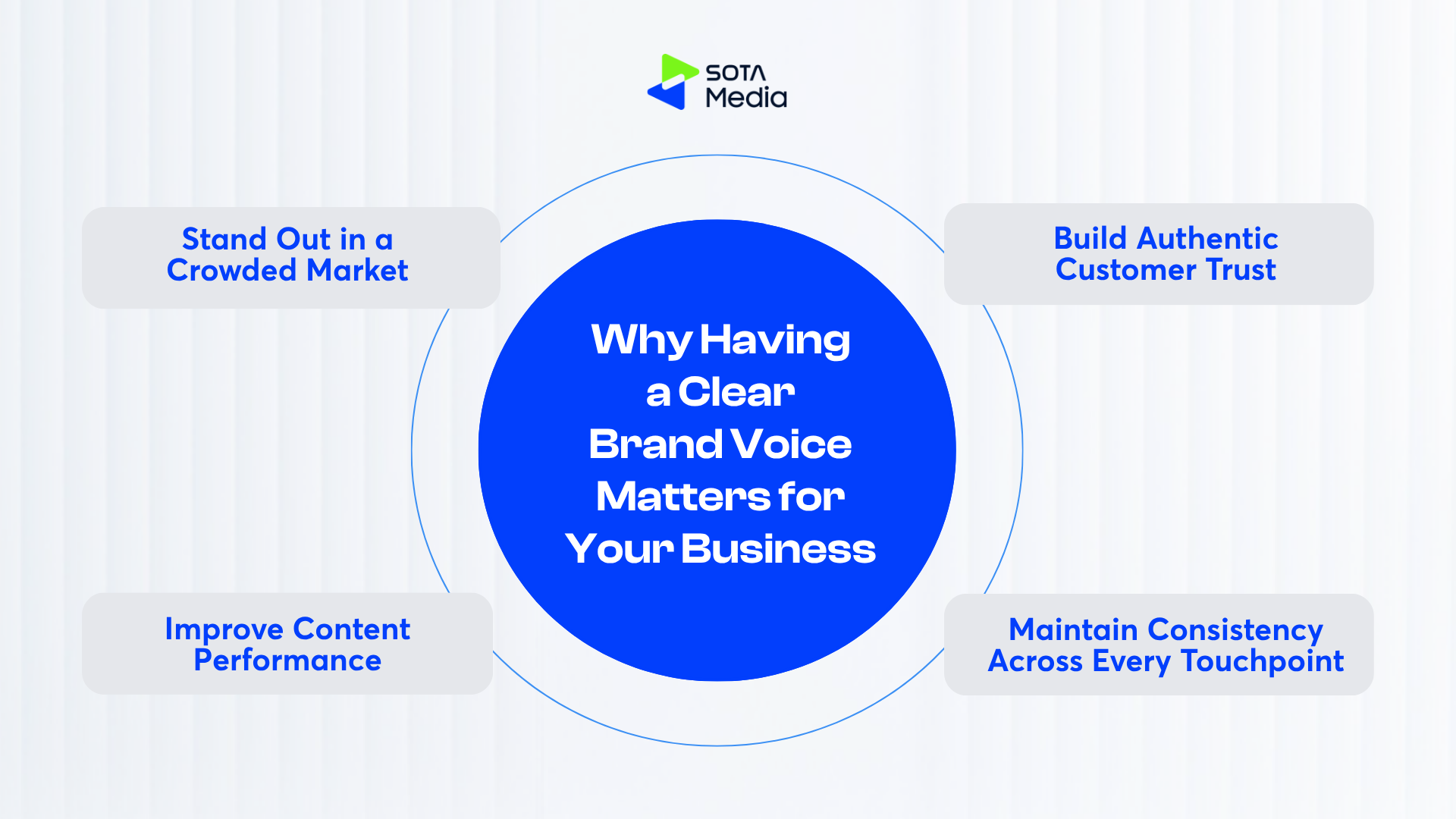
Stand Out in a Crowded Market
In competitive markets where products and features can be easily copied, a strong brand voice helps your business stand out.
A distinct brand personality makes your company more relatable and gives customers a reason to remember you. A clear and consistent voice also helps communicate your unique value and position your brand more clearly against competitors.
Build Authentic Customer Trust
A consistent brand voice signals reliability and credibility. When your messaging aligns with your core positioning, prospects are more likely to see your business as a dependable partner.
This is especially important for B2B SaaS companies, where purchases often involve high contract values, long sales cycles, and multiple decision-makers. Consistent and transparent communication across every touchpoint can reduce perceived buying risk, support faster decision-making, and strengthen long-term customer relationships.
Maintain Consistency Across Every Touchpoint
Consistent messaging is key to building an authentic and trustworthy brand. When a company’s communication reflects its values, mission, and business strategy, customers, investors, and partners are more likely to trust the brand.
Over time, consistent communication strengthens brand reputation, encourages customer loyalty, and helps the business stay credible during challenges or crises.
Improve Content Performance
A clear brand voice keeps communication consistent across every channel and stage of the customer journey.
Whether customers see an ad, read your website or documentation, or contact customer support, they should experience the same brand personality and message.
This cross-channel alignment bridges marketing and customer service, delivering a cohesive brand experience that boosts customer lifetime value.
7 Actionable Steps to Define and Scale Your Brand Voice
Building a recognizable brand voice requires more than creating content on the go. It takes clear guidelines and a consistent process that teams can follow. Here are seven practical steps to turn your brand strategy into consistent communication across every channel:
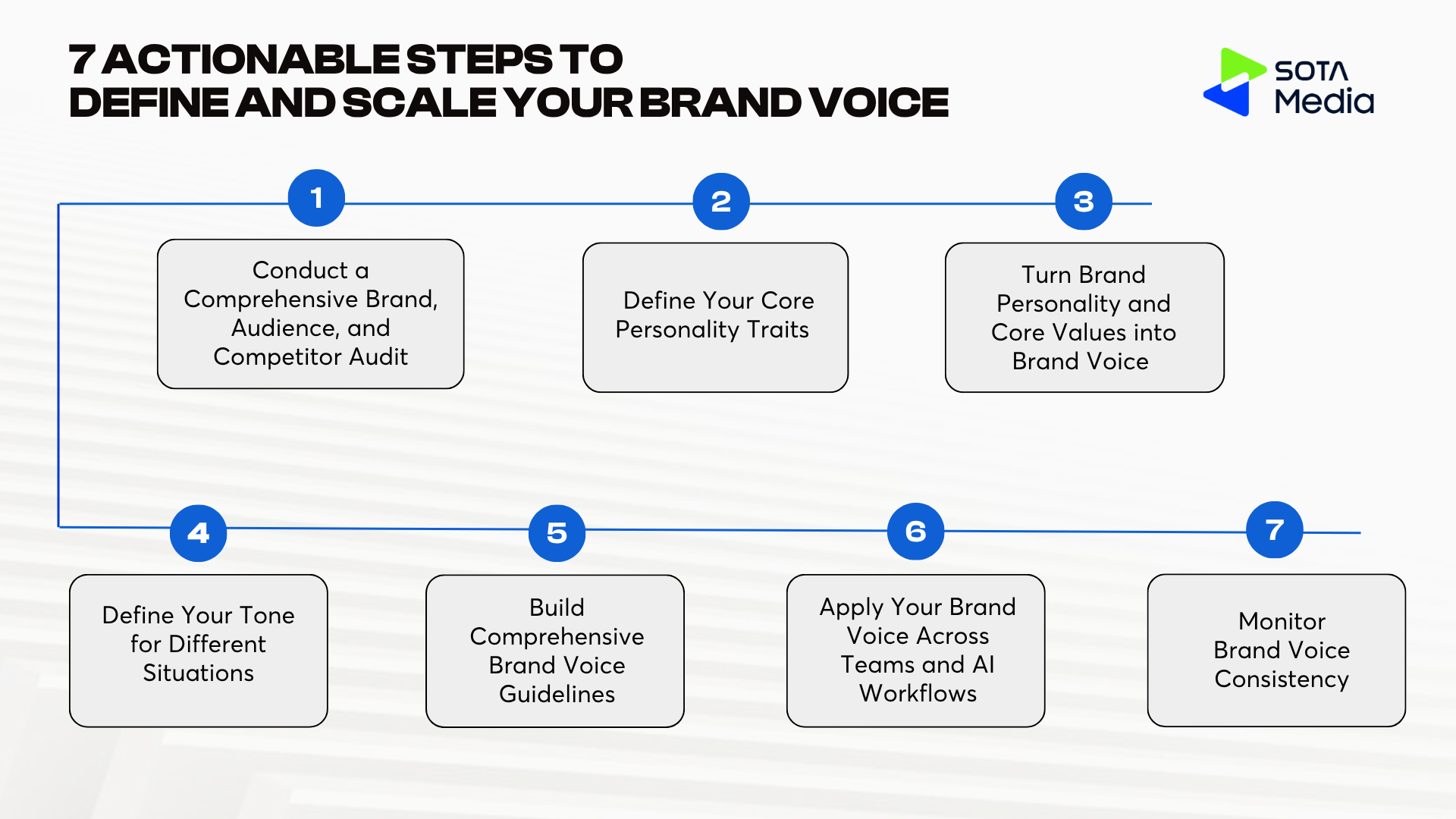
Step 1: Conduct a Comprehensive Brand, Audience, and Competitor Audit
Before defining how your brand should sound, understand where you are today, who you are speaking to, and how competitors communicate. Start with three key areas: your brand, your audience, and your competitors.
Brand Audit: Connect Your Voice to Your Mission, Vision, and Values
A strong brand voice starts with your company’s mission, vision, and values. Identify 3 to 5 core values that define your business, shape your decisions, and reflect how you want your brand to be perceived. These values will serve as the foundation for your voice and messaging.
Audience Audit: Understand What Resonates with Your Audience
Analyze your buyer personas, customer feedback, support conversations, and sales calls. Identify the language your audience uses, their key pain points, motivations, and communication preferences.
These insights help you create a brand voice that feels relevant, relatable, and aligned with what your customers care about.
Competitors Audit: Identify Gaps and Differentiate Your Brand Voice
Review how your competitors communicate across their websites, social media, ads, and other marketing channels. Identify the language, messaging, and tone they commonly use, then look for gaps or opportunities your brand can own.
Use your USPs to develop a distinct voice that helps your brand stand out and gives customers a clear reason to remember you.
Step 2: Define Your Core Personality Traits
Once you understand your current position, audience, and competitive landscape, turn those insights into a clear brand personality. Think of your brand as a person: how should it sound, behave, and communicate?
Choose 3-4 traits that best represent your brand, such as transparent, sincere, innovative, or empathetic. These traits define the character of your brand and provide the foundation for how it should communicate.
Step 3: Turn Brand Personality and Core Values into Brand Voice
With your brand personality and core values defined, the next step is to translate them into how your brand actually communicates. Each personality trait and value should influence your choice of words, writing style, tone, and communication approach.
For example, if your brand is transparent, use direct language, active voice, and clear information while avoiding vague corporate jargon.
If your brand is empathetic, use supportive, inclusive, and customer-focused language that shows an understanding of customer needs.
If your brand is innovative, use fresh, forward-looking language and explain new ideas clearly without relying on outdated or overly technical jargon.
Step 4: Define Your Tone for Different Situations
Your brand voice should stay consistent, but your tone needs to adapt to different channels, audiences, and situations. Keep your core personality and values consistent while adjusting your tone for social media, customer support, marketing campaigns, or crisis communication.
To execute this, identify your main communication scenarios and define the appropriate tone for each one. This gives your team the flexibility to adapt how the brand communicates while keeping every interaction aligned with the same overall brand personality.
Step 5: Build Comprehensive Brand Voice Guidelines
Bring your personality, writing rules, and tone guidelines together in one Brand Voice Guidelines.
Read more: B2B Content Strategy: A Practical Guide for Your Marketing Team
Include five key elements:
| # | Element | What to Include |
|---|---|---|
| 1 | Brand Mission, Vision, and Values | Define what your brand stands for, where it is going, and the values that guide its communication |
| 2 | Brand Personality | Define your core personality trait that describes how your brand should sound and behave |
| 3 | Voice & Writing Rules | Explain how your brand personality should translate into language, writing style, and communication rules |
| 4 | Do’s & Don’ts | Provide clear examples of language, phrases, and communication styles to use or avoid |
| 5 | Brand Tone | Define how your tone should adapt to different channels, audiences, and communication situations while staying consistent with your brand personality |
Step 6: Apply Your Brand Voice Across Teams and AI Workflows
Apply your Brand Voice Guide across marketing, sales, customer support, and other teams to keep communication consistent as your business grows.
Include it in onboarding, training, and content processes so employees and partners can create on-brand content.
You can also add these guidelines to AI workflows to keep AI-generated content aligned with your brand voice.
Step 7: Monitor Brand Voice Consistency
Once your brand voice is in use, regularly check your content to make sure it stays consistent across teams and channels.
Review key content, identify inconsistencies, and make adjustments when needed. This helps maintain a recognizable brand voice as your content volume, teams, and communication channels grow.
Real-World Brand Voice Examples: How Slack Builds a Clear, Concise, and Human Brand Voice
Business Context and Differentiation Strategy
Slack entered a workplace software market where business communication was often formal, functional, and impersonal. Its opportunity was to make workplace communication feel simpler and more human.
How Slack Identifies and Defines Its Brand Voice
Slack’s brand guidelines are built around the broader mission that the brand should sound like one human speaking directly to another. Instead of relying on formal corporate language, Slack focuses on communication that users can easily understand and recognize.
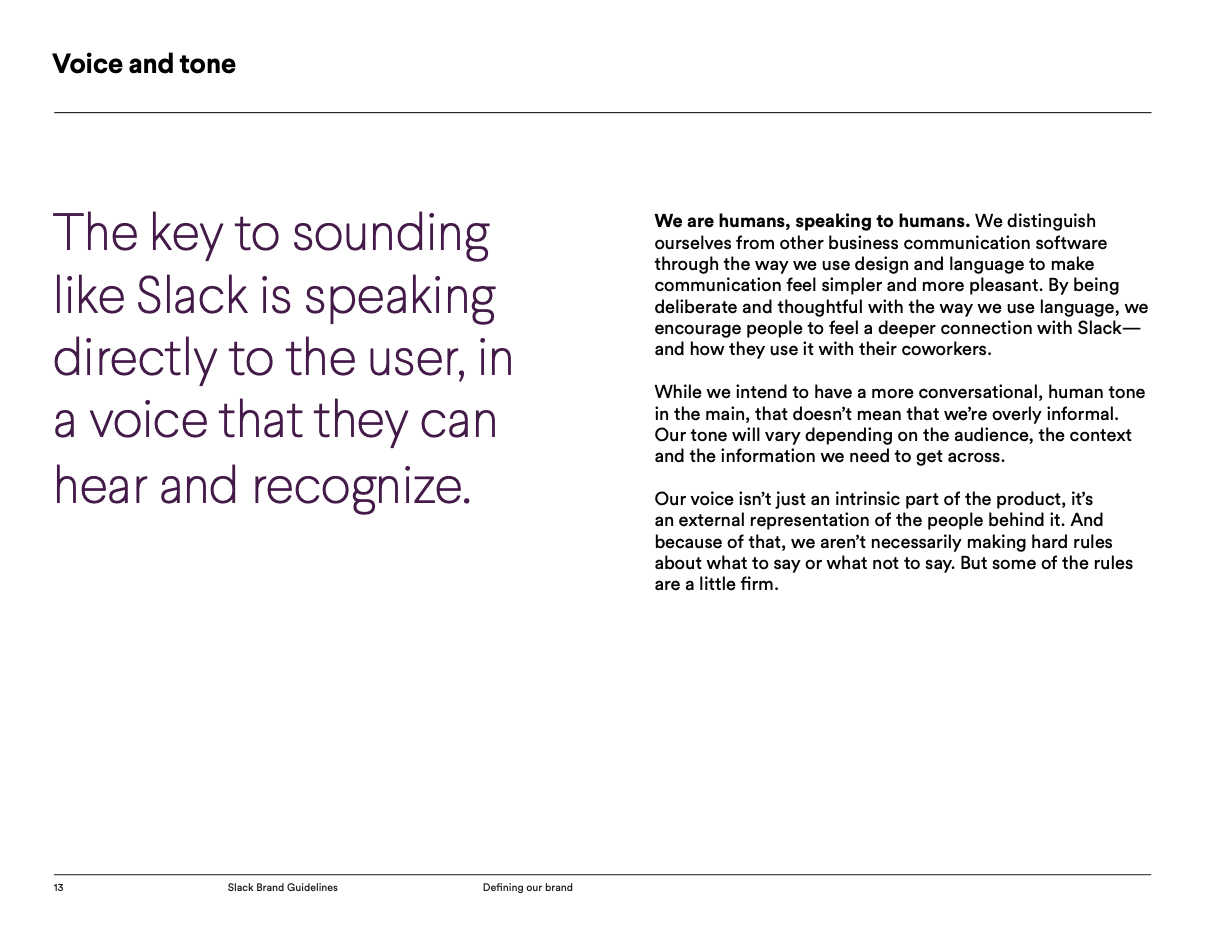
Its approach is reflected in several key principles:
- Keep it clear and concise: Use simple language and avoid unnecessary jargon or complexity.
- Sound human: Write naturally and conversationally rather than sounding overly formal or corporate.
- Put the customer first: Frame messaging around what users can achieve rather than simply describing product features.
- Create shared principles: Slack developed five copy principles to give teams a common framework for creating brand-aligned content.
For example, Slack’s website uses customer-focused messaging such as “Give yourself the flexibility to work when, where and how you work best”. The message speaks directly to the user and focuses on their needs rather than leading with product features.
How Slack Executes and Maintains Its Brand Voice Across Channels
Slack turns its brand voice into a practical system through:
- Clear Brand Voice Guidelines: Slack documents its voice principles so teams have a shared reference when creating copy.
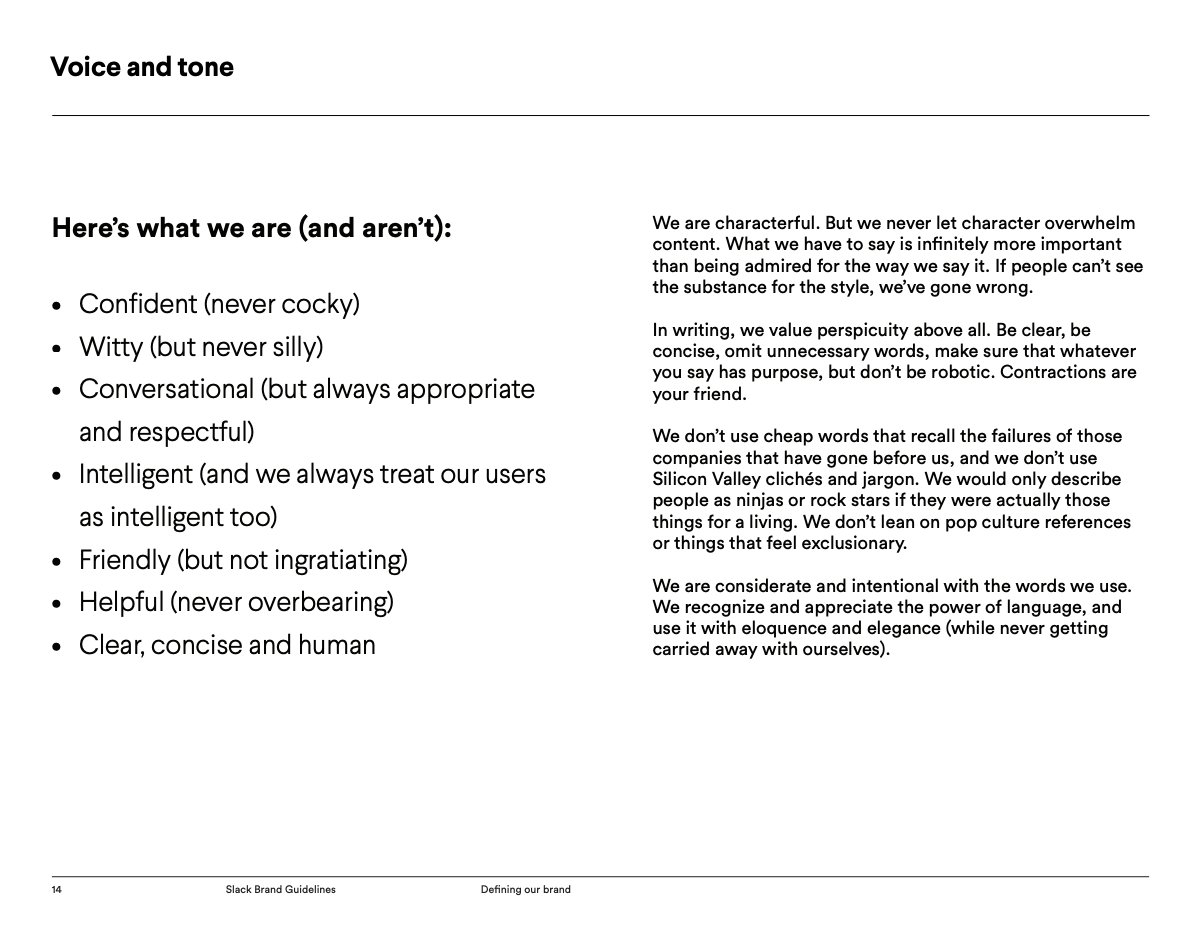
- Teams Training: Slack ran dedicated training sessions to help employees understand and apply the brand voice in real situations.
- Cross-channel application: The same communication principles are applied across website, product, marketing, and customer interactions.
This creates a consistent experience where customers can recognize the Slack brand regardless of where they encounter it.
Key Takeaway
Slack shows that a consistent brand voice requires more than guidelines. Brands need to define clear principles, train teams, and consistently apply the voice across channels.
Common Mistakes to Avoid When Building and Maintaining a Brand Voice
Skipping Brand Personality
Building a brand voice without first defining your brand personality and core values can lead to inconsistent and generic messaging.
Ignoring Your Target Audience
Writing for yourself rather than your ideal customer leads to immediate disinterest. Failing to align vocabulary, tone, and emotional triggers with your audience’s pain points makes your messaging irrelevant.
Blending In with Competitor Voice
Copying industry conventions or using safe, generic language leaves your brand invisible. If your copy could easily belong to a competitor, your voice lacks strategic differentiation.
Prioritizing Cleverness Over Clarity
Avoid humor or overly casual language that does not fit your brand or audience, as it can distract from your value proposition and confuse potential buyers.
Failing to Apply Brand Guidelines
Treating brand guidelines as a one-time document without training teams can lead to poor understanding and inconsistent application of the brand voice.
Conclusion
Defining and scaling a distinct brand voice requires more than generic copy. It starts with a clear framework built around your brand values, personality, audience, and positioning. Avoiding common mistakes such as unclear brand personality, generic messaging, and poor guideline adoption helps maintain a consistent voice that builds trust across every touchpoint.
At Sota Media, we help B2B SaaS companies build a clear, consistent brand voice that strengthens differentiation and brand recognition. With practical guidelines and AI workflows, we help teams apply their voice consistently across every customer touchpoint.
Frequently asked questions
Brand voice is your company’s core personality and stays consistent across all marketing channels and communications. Brand tone is more flexible and changes based on the situation, channel, and audience’s emotions. For example, a brand may use a calm and direct tone during a service outage but a more positive and encouraging tone during onboarding.
Your core brand voice and personality usually stay consistent because they are based on your company’s values and positioning. However, it is a good idea to review your guidelines at least once a year or after major changes, such as a business pivot, rebrand, new product launch, or market shift. This helps keep your language, tone guidelines, and AI prompts relevant.
Turn your brand voice into clear rules that AI tools can follow. Add your Brand Voice Guidelines, Do’s & Don’ts, writing style, and tone examples to custom instructions or AI prompts. You can also use them in AI training or fine-tuning when appropriate. Always have a human review AI-generated content before publishing to make sure it is accurate, natural, and on-brand.
Brand and Marketing teams usually own and maintain the brand voice guidelines, but consistency is a shared responsibility across the organization. Teams such as Sales, Customer Success, Product Design, UX Writing, and HR should apply the brand voice in their own customer and employee communications.
A full brand voice project typically takes around 4-8 weeks, depending on the company’s size and complexity. The process usually includes auditing the brand and audience, defining the brand personality and voice, creating the Brand Voice Guide, training teams, and integrating the guidelines into content and AI workflows.