


PR and Communications
As online advertising costs rise and consumers become less responsive to traditional ads, micro-influencers offer brands a more authentic way to drive engagement and sales. With smaller but highly engaged niche audiences, they can build stronger trust and make product recommendations feel more relevant and credible.
This guide explains what a micro-influencer is, how it differs from a nano-influencer, its benefits for brands, and how to build effective partnerships that drive real conversions.
What Is a Micro-Influencer?
A micro-influencer is a content creator with a following of around 10,000 to 100,000 people. Unlike mainstream celebrities or mass-market KOLs, micro-influencers typically focus on a specific niche, such as sustainable fashion, vegan beauty, B2B technology, personal finance, or wellness (Sharma & Kumar, 2024).
What makes micro-influencers effective is not just their follower count, but the strong relationships they build with their audiences. They often interact with followers like peers, respond to comments, and share personal experiences in a more natural and less scripted way.
As a result, their content can feel more authentic, relatable, and trustworthy, making their recommendations more credible to niche audiences.
Micro-Influencer vs. Nano-Influencer: What are the differences?
Clearly distinguishing influencer tiers helps businesses allocate budgets more effectively and choose the right creators for each stage of the marketing funnel.
| Classification Criteria | Nano-Influencer | Micro-Influencer |
|---|---|---|
| Follower Count | 1,000-10,000 | 10,000-100,000 |
| Engagement Rate | Very high, typically 6%-10% | High and consistent, typically 3.5%-6.8% |
| Reach & Scale | Limited reach, mainly close-knit communities, friends, family, and highly specific niches | Moderate reach, suitable for expanding awareness within a specific niche |
| Content Quality | Highly personal and authentic, often less professionally produced | More defined content style with higher-quality visuals and videos |
| Cost / CPE | Very low; collaborations may involve product seeding or gifting | Moderate and generally cost-efficient based on engagement |
| Best Campaign Use | Product testing, seeding, and generating initial reviews or feedback | Driving conversions, supporting whitelisting ads, and building brand loyalty |
While nano-influencers are better suited for highly personal, niche campaigns, micro-influencers offer greater reach and more polished content while maintaining strong audience engagement.
Why Micro-Influencers Matter in 2026
In 2026, social media is becoming more personalized and niche-driven. As a result, micro-influencers are becoming an important part of influencer marketing strategies, helping brands reach targeted audiences, drive engagement, and improve campaign efficiency.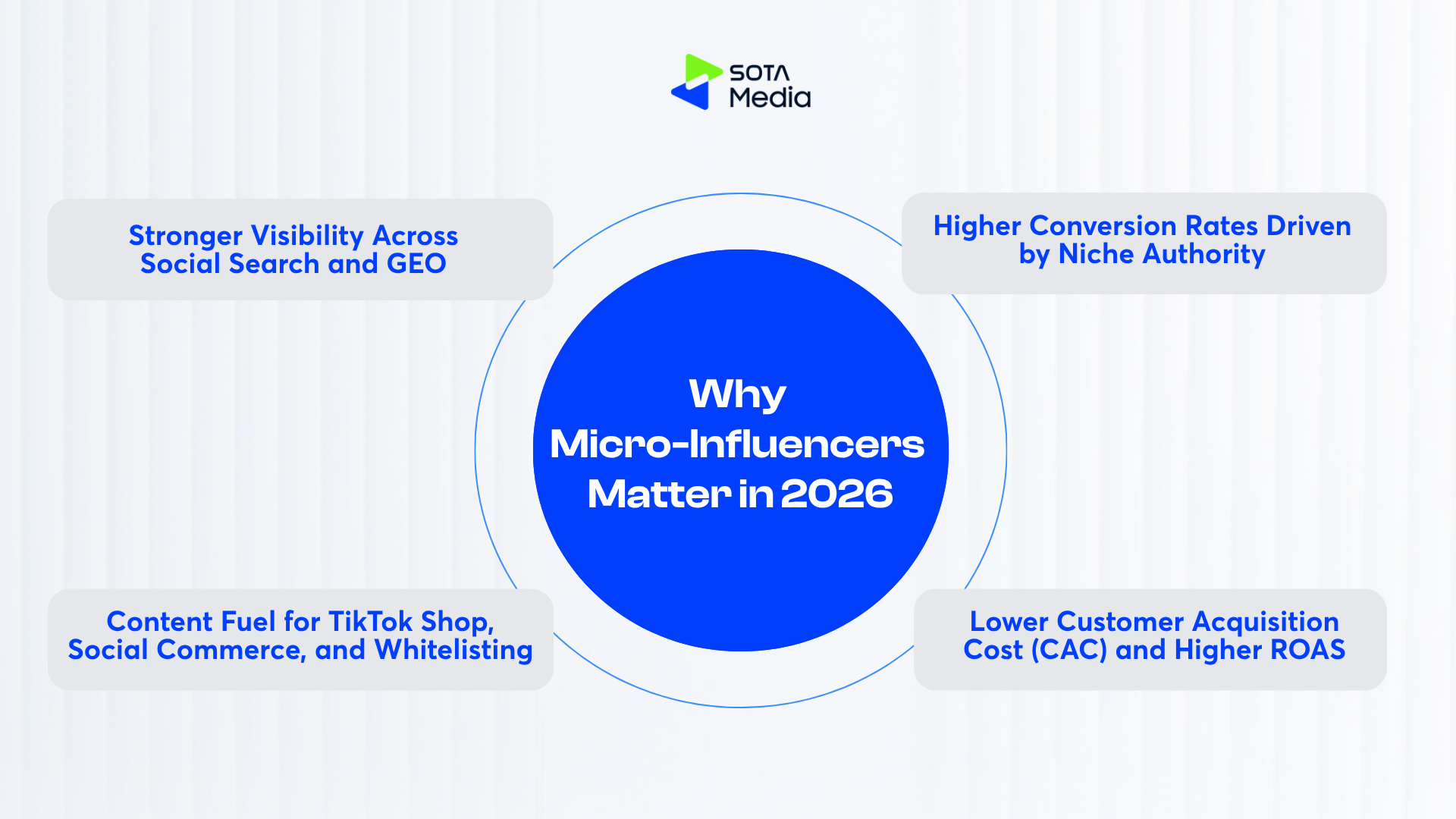
Higher Conversion Rates Driven by Niche Authority
A micro-influencer typically focuses on a specific topic or industry, allowing them to build strong credibility within a niche. Their audiences often follow them for practical advice, product reviews, and personal experiences.
Because of this close connection, recommendations from a micro-influencer can feel more authentic and relevant than traditional advertising. Their niche expertise can also help brands reach consumers who are already interested in a specific product category or problem.
Lower Customer Acquisition Cost (CAC) and Higher ROAS
A micro-influencer can also offer a cost-efficient way to reach highly engaged audiences. Compared with larger creators, they typically require lower collaboration costs while maintaining strong engagement within their niche.
Key benefits include:
- Higher engagement: Smaller, niche-focused audiences can lead to stronger interactions with sponsored content.
- Lower content costs: A micro-influencer is generally more affordable than a macro-influencer or a celebrity.
- Better campaign efficiency: Their combination of niche relevance, engagement, and lower costs can support stronger ROI when campaigns are well targeted.
For brands, the key is not simply choosing creators with the highest engagement rate. Evaluate engagement quality, audience relevance, content performance, conversion potential, and total campaign cost together.
Content Fuel for TikTok Shop, Social Commerce, and Whitelisting
Micro-influencers can also help brands create authentic content for social commerce and paid advertising. Their videos and reviews can be repurposed as UGC for platforms such as TikTok and Instagram.
With formats such as TikTok Spark Ads and Meta whitelisting, brands can amplify creator content while keeping the original creator-led format. This gives brands more content assets to test across paid and organic channels.
Stronger Visibility Across Social Search and GEO
Micro-influencer content can also support social search and GEO by adding real-world experiences, product mentions, use cases, and niche expertise around a brand.
As consumers increasingly discover products through social platforms and AI-powered search, this third-party content can create additional touchpoints for brand discovery and reinforce broader SEO efforts.
Examples of Successful Micro-Influencer Campaigns: Glossier
Context & Background
Glossier was founded in 2014 by Emily Weiss, growing out of her beauty blog Into The Gloss. At a time when beauty marketing relied heavily on celebrities and polished advertising, Glossier took a more community-driven approach built around real customers and social conversations.
How Micro-Influencer Strategy Works
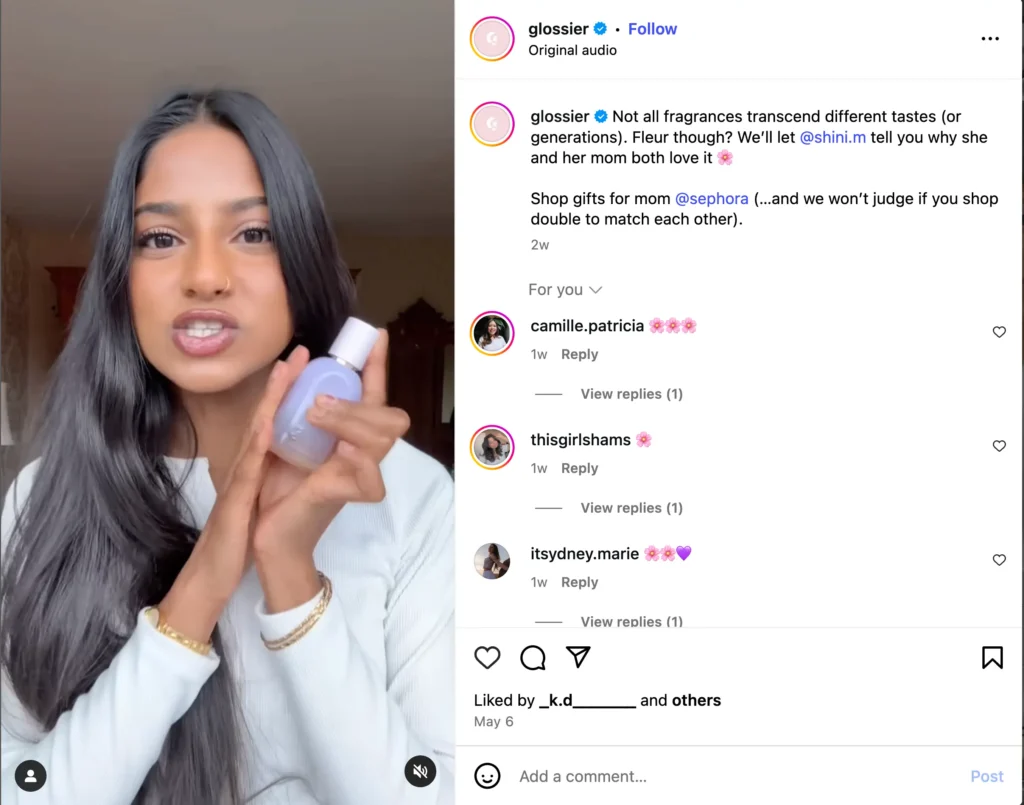
- Product Seeding: Glossier sent products to micro-influencers and beauty enthusiasts, encouraging them to share genuine experiences with their audiences.
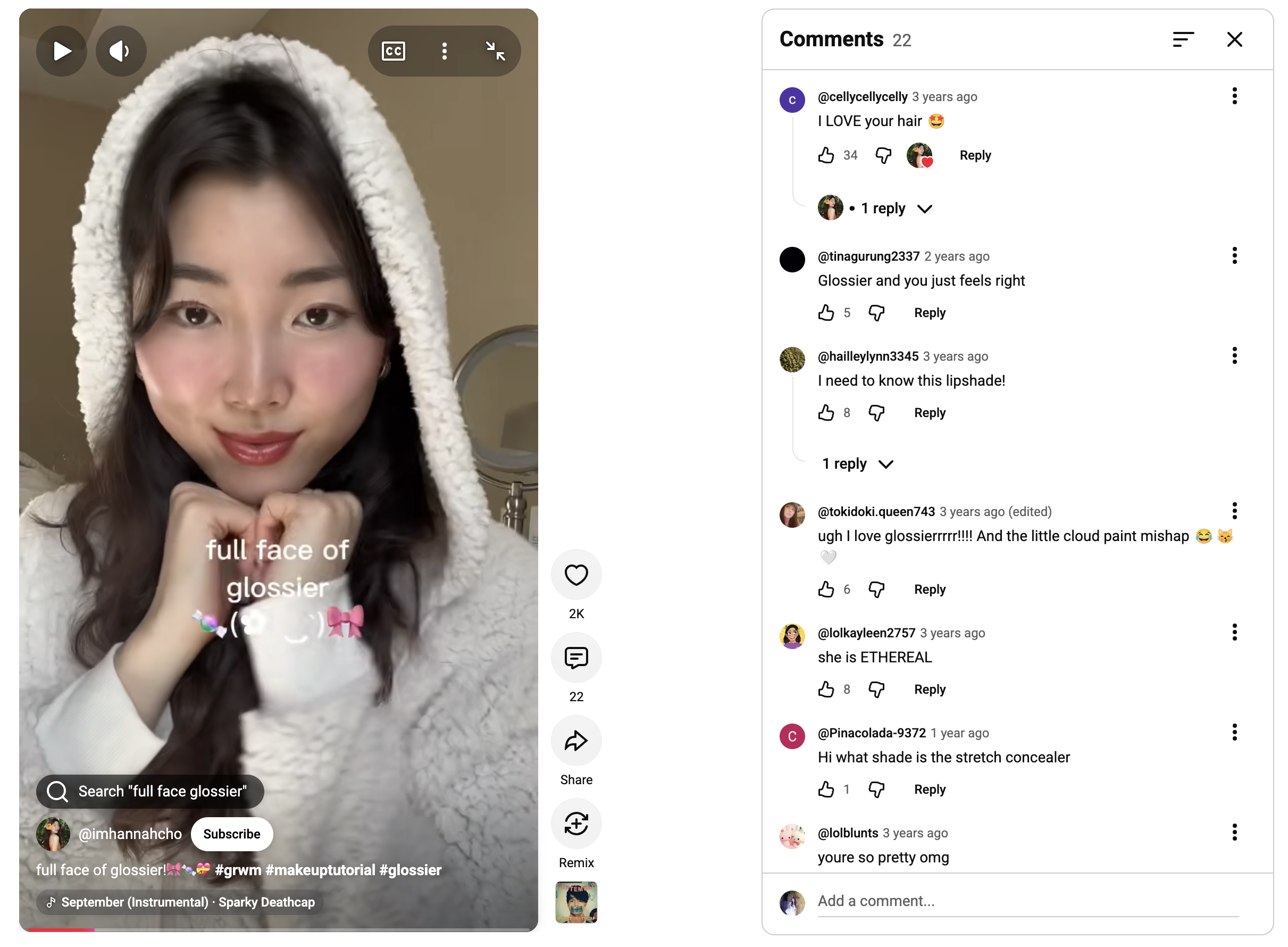
- Organic UGC: Instead of relying on rigid advertising scripts, the brand encouraged creators and customers to produce natural reviews, skincare content, and everyday beauty posts.
- Affiliate and Referral Programs: Glossier used referral and representative programs to encourage creators and customers to recommend products and generate sales through personalized links and incentives.
Results
- Revenue Growth: Glossier generated over $100M in revenue in 2018 and reached a $1.2B valuation in 2019, becoming a beauty industry unicorn.
- Organic Reach: Over 70% of revenue and new customers came from word-of-mouth, micro-influencers, and UGC on Instagram and TikTok.
- Lower CAC: Glossier cut traditional advertising spend by over 80% while maintaining a high customer retention rate.
Key takeaway: Glossier shows how authentic micro-influencer content can build trust, drive conversions, and reduce reliance on traditional advertising. By combining cost-efficient marketing with scalable UGC, brands can strengthen brand awareness, improve retention, and support long-term growth.
How to Work with Micro-Influencers to Drive Real Conversions
To turn micro-influencer campaigns into real conversions rather than vanity metrics, brands need a structured approach to creator selection, collaboration, and performance tracking.
How to Find the Right Micro-Influencers
Finding the right creator starts with evaluating more than follower count. Focus on four key factors:
- Search by Niche and Hashtags: Use social listening tools and relevant hashtags to find creators who consistently produce content for your target audience.
- Check Audience Quality: Review follower authenticity, engagement quality, comments, and audience demographics to identify genuine communities rather than fake or inactive followers.
- Evaluate Brand Fit: Review the creator’s content, tone, values, and previous partnerships to ensure they align naturally with your brand.
- Look for Real Audience Relationships: Prioritize creators who actively engage with their followers through comments, Q&As, and discussions. Strong audience relationships can make recommendations more credible.
Best Practices for Working with a Micro-Influencer
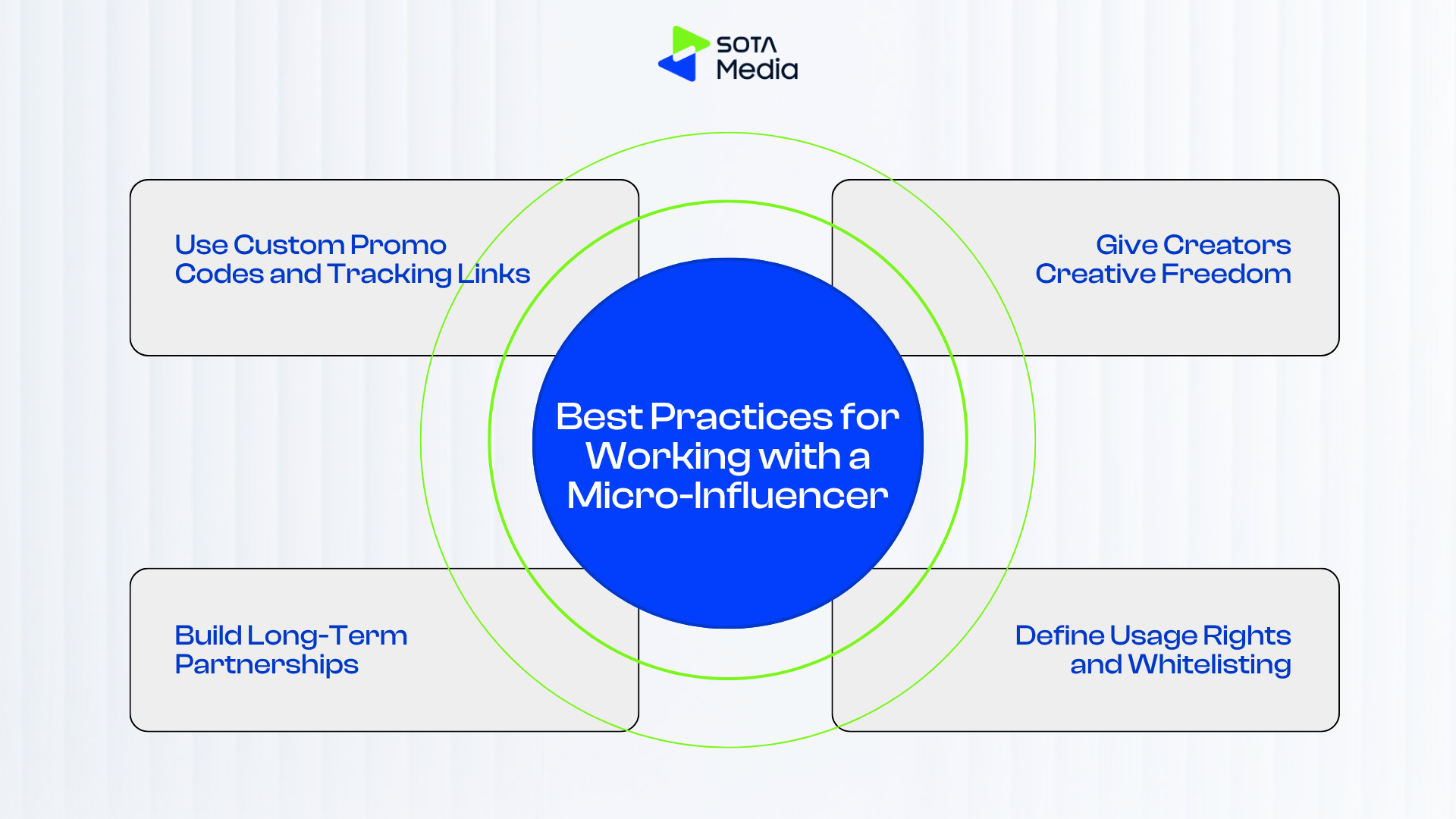
Give Creators Creative Freedom
A micro-influencer understands their audiences best, so rigid scripts can make sponsored content feel less authentic. Provide clear key messages and USPs, but let creators adapt the content to their own style and voice.
Define Usage Rights and Whitelisting
Clarify content usage rights from the start. Define whether the brand can reuse UGC on owned channels or run TikTok Spark Ads and Meta whitelisting, as well as the usage period. This helps maximize the value of creator content without requiring additional production.
Build Long-Term Partnerships
Instead of relying on one-off collaborations, build ongoing relationships with relevant micro-influencers. Consistent collaborations can make brand mentions feel more natural and strengthen audience familiarity and trust over time.
Use Custom Promo Codes and Tracking Links
Give each creator a unique promo code and UTM tracking link to measure clicks, conversions, revenue, and ROI. This also gives creators a clear way to track and support their campaign performance.
Why Partner with a Marketing Agency to Scale Your Micro-Influencer Strategy?
Micro-influencer marketing can deliver strong ROI, but scaling the strategy can be challenging. Managing 50-100 creators at once requires significant resources for briefing, contracts, content approval, campaign coordination, and performance tracking.
This is where a specialized influencer marketing agency like SotaMedia can help brands scale their micro-influencer campaigns more efficiently:
- Creator Network and Data: Access a network of micro-influencers across different industries, supported by performance data such as engagement, CPE, CTR, and conversion rates to support creator selection.
- End-to-End Campaign Management: Manage the full campaign lifecycle, from creator outreach and rate negotiation to contracts, content approval, tracking, and campaign delivery.
- Social Commerce and Paid Amplification: Turn creator content into assets for TikTok Spark Ads, Meta whitelisting, and social commerce, helping brands extend the value of influencer-generated content beyond organic reach.
- Performance and ROI Tracking: Go beyond likes and views by tracking business metrics such as CAC, ROAS, conversions, and revenue contribution to understand the actual impact of each campaign.
If you are looking to scale your micro-influencer strategy in 2026, explore SotaMedia’s Influencer Marketing Services to see how a structured, data-driven approach can support your campaign goals.
Conclusion
Micro-influencers offer brands a strong balance of niche reach, audience trust, engagement, and cost efficiency. Their value goes beyond vanity metrics, with the right creators able to support conversions, UGC, social commerce, and long-term brand growth.
To get the most from micro-influencer marketing, brands should focus on audience quality, brand fit, creative freedom, clear tracking, and long-term partnerships. As campaigns scale, working with a specialized marketing agency like SotaMedia can help manage creators, optimize performance, and turn influencer marketing into a more measurable growth channel.
Frequently asked questions
For conversion-focused campaigns, a practical allocation could be 70% for micro-influencers, 20% for nano-influencers, and 10% for macro-influencers. Micro-influencers can support conversions and UGC, while nano-influencers support niche seeding and macro-influencers help expand overall reach.
Compare views, likes, comments, and engagement quality rather than relying on a single metric. For example, unusually high views with very low engagement or repetitive, low-quality comments from suspicious accounts can indicate artificial engagement.
Yes. Even for smaller collaborations, the agreement should clearly define content ownership, usage rights, whitelisting, confidentiality, deliverables, and performance requirements. Clear terms help protect both the brand and the creator throughout the campaign.
Beyond sales and ROAS, brands can track engagement rate, UGC output, content reuse, and brand lift. Organic mentions, discussions, and audience sentiment across social platforms can also provide insights into brand awareness and campaign impact.
Gifting can work when the product has strong value or unique appeal. For more consistent deliverables, content quality, and whitelisting rights, brands can combine a fixed collaboration fee with an affiliate commission based on sales.