


Digital marketing
Key takeaways
- A tech marketing agency sells complex products to technical buyers, so pick for category fit, not logo count on the homepage.
- The 10 agencies below are ranked by what each one actually does well, not by a single global “winner.”
- Five questions separate a good fit from a bad one: pipeline ownership, technical fluency, reporting cadence, team model, and proof in your category.
- The right agency already understands your buyer and your sales cycle. The wrong one will spend six months learning both, on your budget.
What is a tech marketing agency?
A tech marketing agency markets technical or complex products, such as SaaS platforms, developer tools, hardware, fintech, and deep tech, to buyers who decide based on specs and ROI rather than impulse.
That definition matters because the work is different from a generalist agency. Tech buying cycles run six to eighteen months, and buying committees often include 6 to 10 stakeholders. At least one of them will read your documentation before they take a call. Content has to be technically accurate, not just on-brand. A campaign that lands a CMO might still die in front of a CTO who finds one wrong claim about your API.
A tech marketing agency is built for that environment. The writers can read a product spec. The strategists understand the difference between product-led growth and sales-led. The paid media team knows that LinkedIn cost-per-lead numbers mean nothing without pipeline attribution.
The 10 best tech marketing agencies in 2026
1. The Rubicon Agency
- Best for: B2B tech companies moving from product to as-a-Service revenue
- Specialty: Strategic content, proposition development, demand generation
- What they are known for: Thirty years working with technology brands, with a focus on turning complex propositions into clear positioning for enterprise tech
- Location: UK
- Watch-out: Premium pricing. Less useful if you have not nailed your positioning yet, because their model starts with strategy work.
2. Cremarc
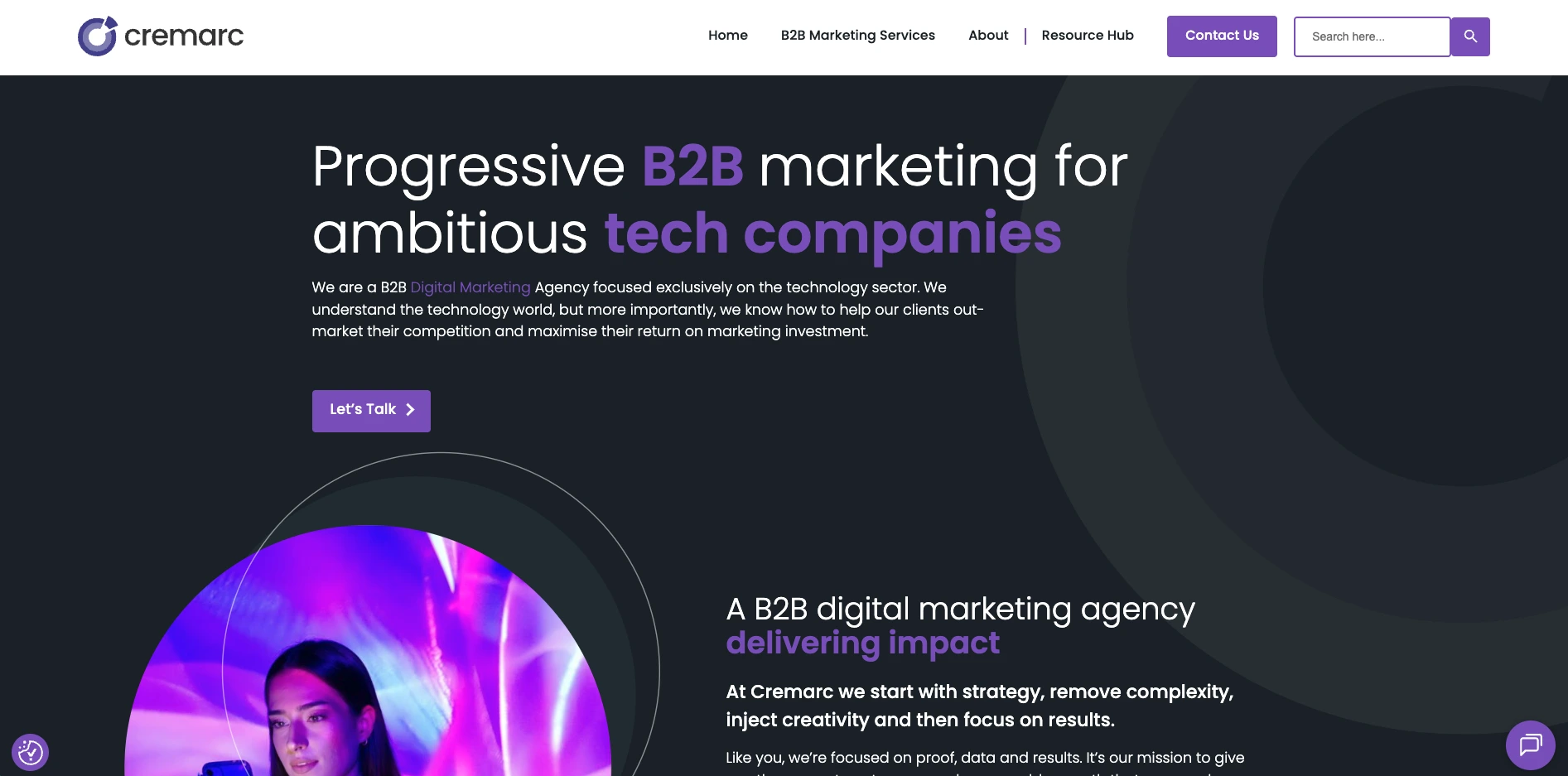
- Best for: B2B technology brands rebranding or repositioning for enterprise buyers
- Specialty: Branding, integrated campaigns, thought-leadership programs
- What they are known for: Client roster including Google Cloud, SAP, Adobe, Vodafone, Telefonica, Hitachi Vantara, Citrix, Qualcomm, Canon, and Salesforce
- Location: UK
- Watch-out: Built for enterprise scale. A 15-person SaaS startup will pay for capabilities it does not need.
3. Fox Agency
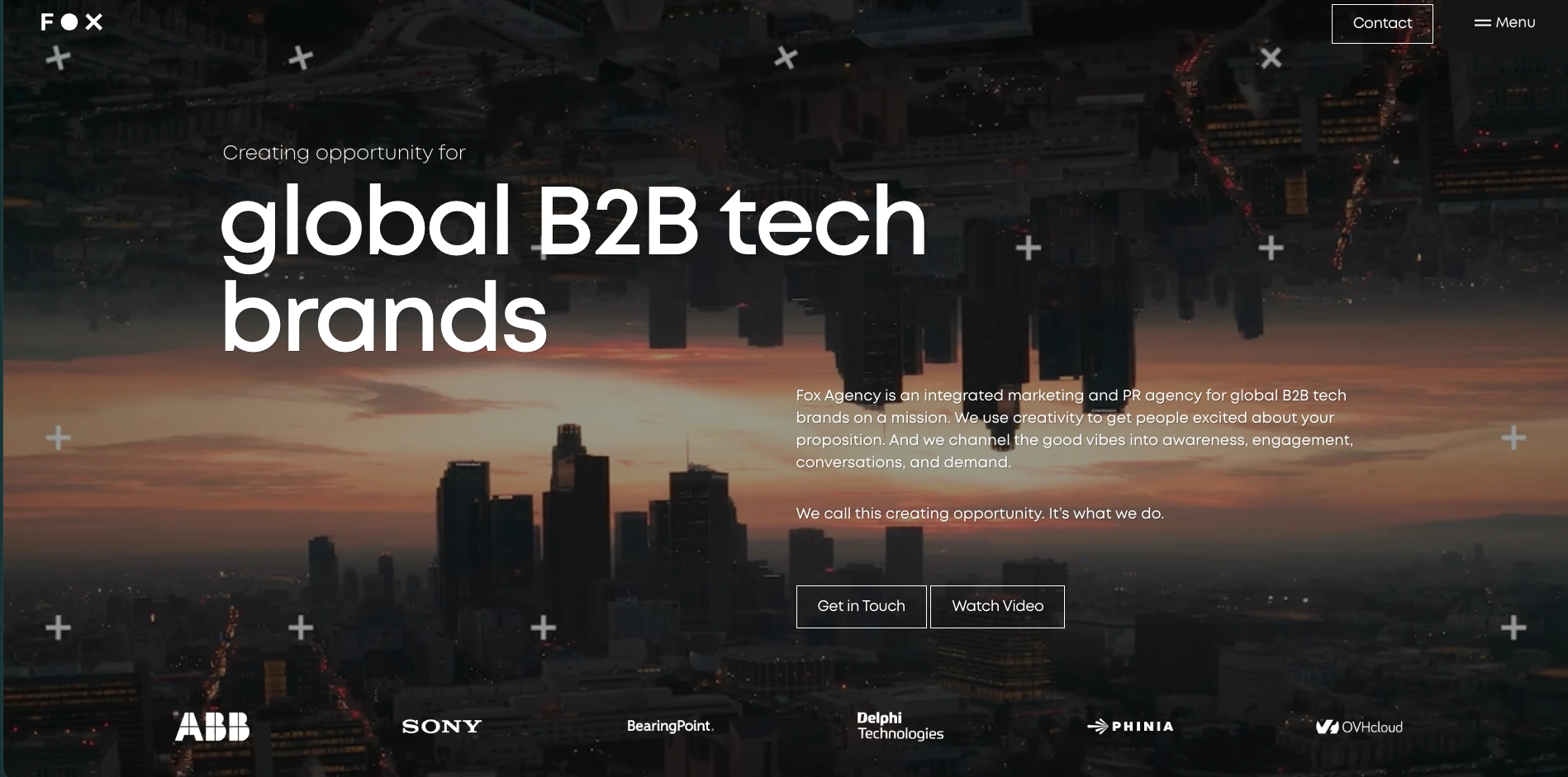
- Best for: Global tech brands running integrated campaigns across multiple markets
- Specialty: Awareness, demand, and influence as one connected program
- What they are known for: Integrated B2B model that combines strategic insight with creative execution for international tech clients
- Location: UK, with offices in the US and Europe
- Watch-out: Their model assumes you already have an in-house team to receive and deploy what they produce.
4. Velocity Partners
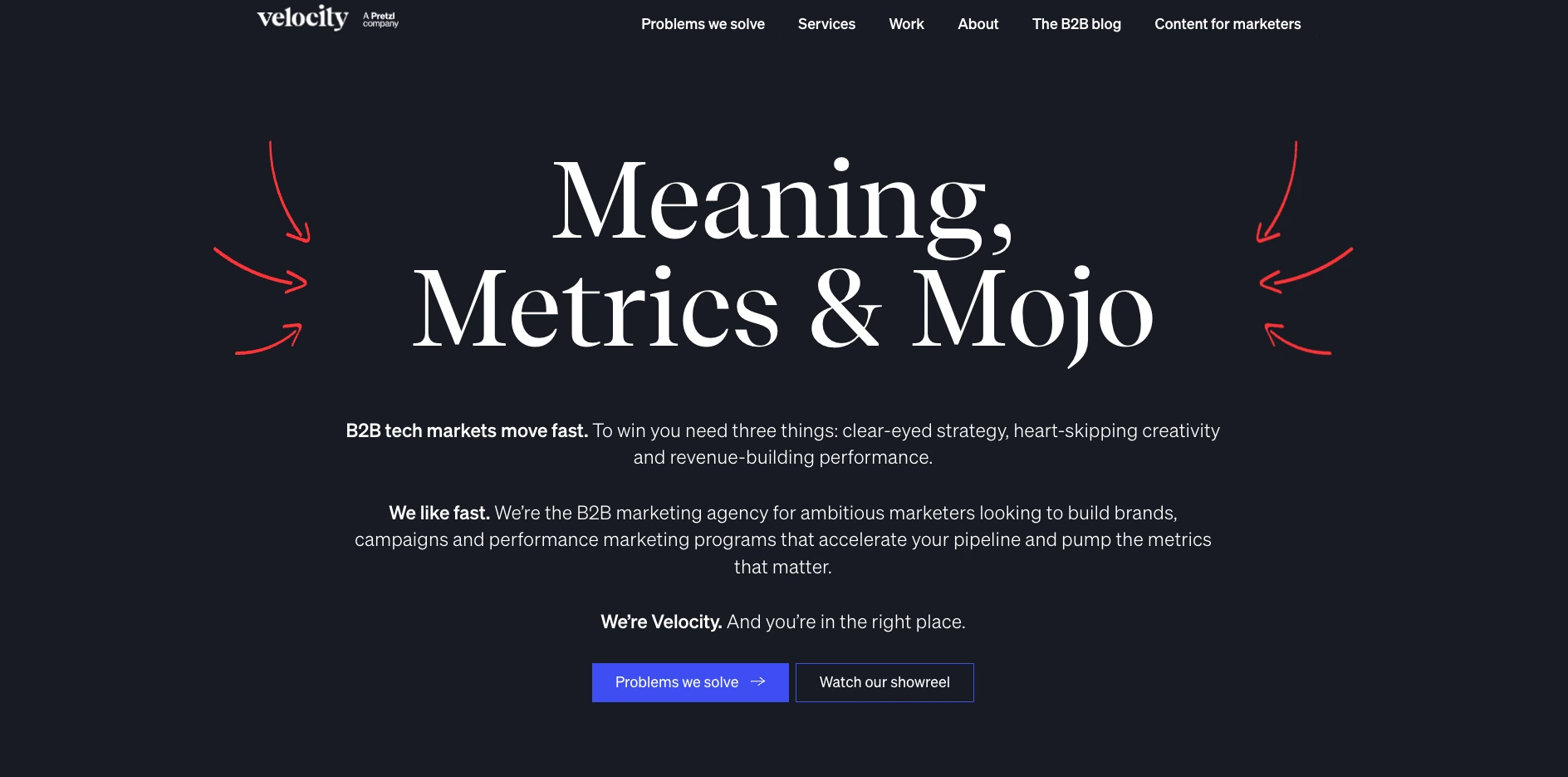
- Best for: Tech companies whose marketing problem is really a messaging problem
- Specialty: B2B content strategy, positioning, narrative-led campaigns
- What they are known for: Their core thesis is that most B2B demand generation fails not because of channel selection or media spend, but because the messaging is wrong. They start by getting the story right, then build demand programs around that messaging
- Location: UK
- Watch-out: If you wanted someone to “just run paid ads,” this is the wrong agency. Velocity will challenge your story first.
5. Transmission Agency
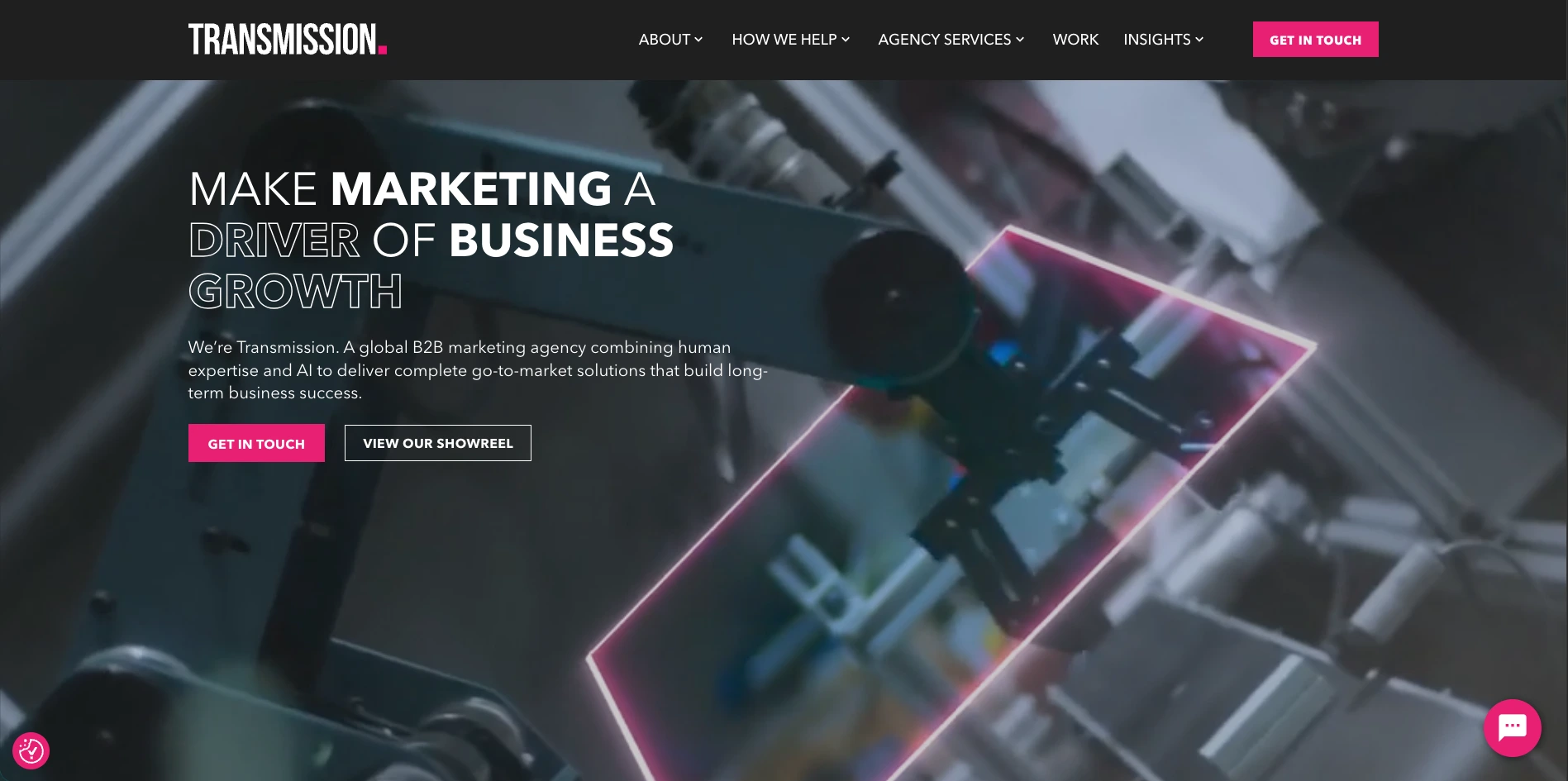
- Best for: B2B tech companies running global demand generation programs
- Specialty: Account-based marketing, demand gen, content syndication
- What they are known for: Global B2B network with offices in London, New York, Singapore, and Sydney, focused on enterprise tech pipeline
- Location: Global, headquartered in London
- Watch-out: Best fit for companies with meaningful enterprise targets. Not built for SMB-focused SaaS.
6. SotaMedia
- Best for: Tech and SaaS companies that need full-stack execution across Southeast Asia
- Specialty: AI-powered growth marketing, tech PR, event production, marketing automation
- What they are known for: Operating as the marketing arm of SotaTek, a 1,300-person IT enterprise serving clients in 25 countries. Dev capability and marketing capability sit under one parent, which means campaigns can be paired with the technical assets behind them (whitepapers reviewed by engineers, landing pages built by an in-house dev team, automations built without a third vendor).
- Location: Hanoi, with reach across Southeast Asia
- Watch-out: If you want a US-centric brand voice or pure-play paid media specialist, look elsewhere. SotaMedia’s strength is integrated execution for tech companies operating in or expanding into Asia.
7. Directive
- Best for: B2B SaaS companies past product-market fit, ready to scale paid acquisition
- Specialty: Performance marketing tied to pipeline metrics
- What they are known for: Their “Customer Generation” methodology replaces lead-count dashboards with a framework built around CAC and LTV, connecting marketing spend to predicted revenue outcomes
- Location: Irvine, California
- Watch-out: The startup package starts at $6,500 per month, with larger scopes priced higher. Not a fit for very small budgets or one-off projects.
8. First Page Sage
- Best for: B2B SaaS companies building organic authority and thought leadership at scale
- Specialty: SEO-led content marketing, brand authority, executive thought leadership
- What they are known for: Ranked #1 in their own 2026. B2B SaaS agency roundup based on authority signals, with a content model built around long-form pieces that compound organic traffic over twelve to eighteen months
- Location: USA, distributed team
- Watch-out: Content compounding works on a multi-quarter timeline. If you need pipeline this quarter, pair it with a demand-capture partner.
9. Siege Media
- Best for: SaaS and tech companies running content-first growth
- Specialty: Content marketing, link earning, SEO
- What they are known for: Consistent placement across content marketing and digital marketing rankings, with a portfolio of long-form posts that have ranked top three on competitive SaaS keywords for years
- Location: San Diego, with a distributed team
- Watch-out: Heavy content investment. Companies looking for a quick paid-media test should look at a performance-led agency instead.
10. Animalz

- Best for: B2B and SaaS companies that need technical content written by people who can actually write
- Specialty: Long-form editorial content, founder-voice writing, technical depth
- What they are known for: Editorial standards closer to a magazine than an agency, with writers who research like journalists rather than copywriters
- Location: Distributed, with team across the US, Europe, and Asia
- Watch-out: Editorial only by design. If you need a partner who also runs your paid media, ABM, and reporting, Animalz is not the full answer.
Best tech marketing agency by vertical
The list above ranks agencies by what each one does well. But “tech” is a wide bucket. A fintech raising a Series B and a hospital software company selling into procurement have almost nothing in common except that both are called “tech.” Below is a short read on which agencies fit which vertical.
Best fintech marketing agency
Fintech buyers split into two groups: regulated B2B (banking infrastructure, payments, lending) and consumer fintech. Both need a fintech marketing agency that understands compliance content, which most generalist B2B agencies do not write well. From the list above, Transmission Agency and Cremarc have shipped work for regulated financial buyers at enterprise scale. For early-stage fintech selling to other fintechs, Velocity Partners is a stronger fit because they will challenge your positioning before they spend a dollar on demand.
Best health tech marketing agency
A health tech marketing agency has to work inside HIPAA, FDA, and clinical buyer dynamics, where every claim needs evidence and every case study needs legal review. Generalist B2B agencies usually underestimate the review cycle and miss deadlines. Ironpaper (not in the main list above, but worth a look) and First Page Sage both have track records with regulated health buyers. For health tech startups under $5M in revenue, fractional in-house marketing usually beats an agency, because the first few quarters are about claims validation, not paid acquisition.
Best climate tech and clean tech marketing agency
A climate tech marketing agency or clean tech marketing agency works at the slowest sales cycle in tech: enterprise procurement plus capital-intensive buying decisions, often gated by government or utility approvals. The work is heavy on whitepapers, analyst relations, and PR rather than performance marketing. Cremarc and Fox Agency are the closest fit from the list above, both with experience marketing complex enterprise propositions. Performance-led agencies like Directive are usually the wrong call for climate tech because there is no short-cycle paid channel that converts.
Best marketing agency for developer tools and API products
Developer tools sell to a buyer who hates being marketed to. The work has to look and read like documentation, not advertising, which means the agency needs writers who can install your SDK and ship a working integration in a sandbox. Animalz is one of the few content agencies that hires writers from product backgrounds. Siege Media also runs strong technical content programs. For paid acquisition layered on top, Directive has shipped work for dev-tool SaaS clients.
Best tech PR agency
A tech PR agency is a specialty discipline most full-service agencies undersell. The work covers analyst relations (Gartner, Forrester, IDC), tier-one tech press placement, founder thought leadership, and crisis communications. From the list above, Fox Agency and Transmission run dedicated PR practices. SotaMedia runs tech PR as a core service for clients operating in Asia-Pacific, with placements across regional and international tech media.
Best marketing agency for tech startups (pre-Series A and Series A)
A marketing agency for tech startups at the earliest stages needs to operate at startup speed and startup prices. Most enterprise-focused agencies on this list are too expensive and too slow for a 10-person team. Directive’s startup tier ($6,500 per month) is one of the few transparent options. Kalungi (not in the main list above) specializes in early-stage SaaS. SotaMedia runs flexible engagements for early-stage tech companies in Southeast Asia, including hands-on AI marketing automation work that small teams cannot build in-house. See how we do it.
How to choose a tech marketing agency
Five questions, in order. Ask all three of your finalists the same five. Compare the answers side by side.
1. Who owns the pipeline number? If the agency owns traffic, MQLs, and “engagement,” but not opportunities, you are buying activity. A real partner names the pipeline metric in the contract and reports on it weekly.
2. Can your writers read a product spec without a babysitter? Ask for a sample piece written for a technical buyer. If the writing leans on adjectives, if you can swap “AI platform” for “marketing platform” and the post still works, the writers do not understand tech. Move on.
3. What is the reporting cadence, and what is in the report? Weekly is the right answer for most engagements. The report should show pipeline contribution, CAC, and one clear next experiment. If the deck is fifty slides of vanity charts, that is a tell.
4. Is the team in-house, or are they outsourcing the work? Some agencies sell senior strategy and quietly hand execution to contractors. Ask directly: Which roles are on your payroll, which are freelance, and who will work on my account? Get the names.
5. Show me a result in my exact category. “Tech experience” is too broad. A B2B SaaS agency that has only worked with HR tech is not automatically the right partner for fintech. Ask for two case studies from companies that look like yours, with real numbers.
A useful filter: an agency that brings dev capability under the same roof as marketing (SotaMedia’s model, for example) collapses the timeline between “We need a landing page” and “The landing page is live.” That matters more in tech than in most other industries, because the content the marketing team writes often needs technical validation before it ships.
Tech marketing agency vs. in-house team
The choice is rarely binary. Most tech companies end up with a hybrid setup. The question is which parts to keep in-house.
| Factor | Agency | In-house team |
|---|---|---|
| Cost to start | Lower (no recruiting, no benefits) | Higher (6-12 months to hire a full team) |
| Speed to first output | 2-4 weeks | 3-6 months to ramp |
| Category knowledge | Brings in patterns from similar clients | Knows your product better over time |
| Control | Lower (priorities shared across accounts) | Full control |
| Scaling cost | Linear (more scope, more retainer) | Step-function (new hires, new managers) |
| Best for | Companies under $20M revenue, or those entering a new channel | Companies above $30M with predictable demand |
The most common mistake is hiring a full in-house team before the demand model is proved. The second most common mistake is keeping an agency on retainer two years after the team should have brought the function in-house. Review the setup every twelve months.
Red flags to avoid
- Vanity metric reporting. If the monthly report leads with impressions and “reach” and the pipeline is buried on slide 18 or missing, the agency does not know how to be accountable.
- No technical writers on staff. Ask to meet the writer who will work on your account before you sign. If they cannot describe what your product does back to you, walk.
- Twelve-month minimum contracts with no exit clause. Reasonable agencies will accept a 60-90 day exit clause if performance falls below targets. Refusal is a tell.
- A portfolio of fifty logos from twelve different industries. Specialization beats range in tech. An agency that has done a little of everything has done a lot of nothing well.
- Founder-led pitches, team-led execution. The senior partner pitches you, then disappears. Ask who you will speak to in week four, week twelve, and week thirty-six. Get the names.
- No public methodology. If you cannot tell from their website how they actually work, the answer is usually “it depends on the client,” which usually means “we make it up.”
What to do before you sign
The right agency is the one that already understands your buyer and your sales cycle, not the one with the biggest portfolio. That is the whole shortlist.
One concrete action this week: pick three agencies from this list (or your own research), send all three the same five questions from the section above, and put the answers in a single document. The differences will not be subtle. The agency that gives you the clearest, most specific answers, especially to question five, is usually the right one.
If your tech company is operating in or expanding into Southeast Asia, SotaMedia is built for that brief: dev and marketing capabilities under one parent (SotaTek) with experience across B2B SaaS, IT services, and Web3. See how we can help you grow.
Frequently asked questions
A tech marketing agency handles strategy, content, paid media, PR, and lifecycle marketing for technical products. The work covers SaaS, developer tools, hardware, fintech, and deep tech. The agency builds campaigns around long buying cycles and committee decisions, which is the main thing that separates tech marketing from B2C or generalist B2B.
Recent benchmarks show serious B2B retainers starting around $5,000 per month for single-channel programs, with full-funnel or global engagements often reaching $50,000+ per month. Most mid-market B2B SaaS companies pay between $10,000 and $25,000 per month. Project work, such as rebranding or a single campaign, can range from $30,000 to $250,000.
For regulated verticals (fintech, health tech, defense, climate tech), yes, niche specialization saves you three to six months of explaining your category. For broader SaaS, a generalist B2B SaaS agency is usually fine as long as they have shipped work for buyer profiles similar to yours.
Pick an agency that has worked with companies one stage ahead of where you are now. If you are pre-Series A, you want an agency that has scaled a Series A SaaS. Not a Series C or enterprise specialist. Pre-PMF startups usually need fractional CMO support before they need agency execution.
Agency is better for speed, lower cost to start, and access to cross-client patterns. In-house is better for deep product knowledge and full control. Most tech companies over $20M ARR run a hybrid: in-house for product marketing and brand and an agency for execution layers (paid, SEO, content scale, and PR).
Paid media: 4-8 weeks for early signal, 3-6 months for stable performance. Content and SEO: 6-12 months for traffic, 9-18 months for pipeline contribution. PR and brand: 3-9 months for measurable lift, longer for category authority.