

A-Z Digital Marketing Glossary: 50 new terms you need to know (2026)


Table of Contents
Marketing in 2026 runs on things that most teams haven’t learned yet.
GEO, AI agents, zero-click, vibe marketing. These aren’t buzzwords someone made up at a conference. They’re where budgets are actually going, where search behavior is shifting, and where the gap between teams that adapt and teams that don’t is widening fast.
The problem isn’t that these concepts are complicated. It’s that the terminology moved faster than most training programs or job descriptions. A marketer who was sharp in 2022 can walk into a 2026 team meeting and not recognize half the words written on the whiteboard.
This glossary covers 50 terms that actually matter this year. Not every term that exists, but the ones showing up in strategy decks, agency briefs, and budget conversations right now. Each definition is written to be useful, not just technically correct.
Why digital marketing glossary changed so fast
Three years ago, most marketing teams were still debating whether to “get into AI.” Now that the debate is over, the teams that hesitated are catching up at a disadvantage.
Three forces changed the vocabulary of marketing in the last three years:
1. LLMs went mainstream faster than anyone planned for.
ChatGPT hit 100 million users in January 2023, just two months after launch. By early 2025, the majority of knowledge workers were using some form of AI tool in their workflow. That shifted how people search, how content gets discovered, and what “visibility” means for a brand. Google is no longer the only front door.
2. Zero-click search became the default behavior.
Over 60% of searches in 2024 ended without a click to any website. AI Overviews, featured snippets, and knowledge panels answered the question before a user ever left the search results page. If your brand isn’t being cited in those answers, you’re invisible to a growing share of your audience.
3. Privacy laws tightened the pipeline.
Chrome began testing third‑party cookie deprecation with 1% of users in early 2024, but by mid‑2024 Google formally paused the full phase‑out after industry and regulatory pushback. The direction is still the same: stricter privacy rules and less reliable third‑party tracking. GDPR enforcement got more aggressive. Dozens of countries passed their own data protection laws. The result: the old performance marketing playbook (retarget, track, convert) stopped working the way it used to. First-party and zero-party data are now the only data marketers can actually own.
These three shifts didn’t just change tactics. They introduced entirely new categories of strategy, new job titles, and a new vocabulary. That vocabulary is what this glossary covers.
The A–Z digital marketing glossary: 50 terms for 2026
A-C
AI agent

Know how to orchestrate AI Agent differentiate expert marketers nowadays
An AI agent is a system that can take actions on behalf of a user. Not just answer questions, but actually do things. In marketing, this looks like a bot that monitors your brand mentions, drafts responses, schedules posts, and files a report, all without anyone touching a keyboard. The difference between an AI agent and a regular automation tool is autonomy: an agent decides how to complete a task, not just when to execute a preset command.
By late 2025, platforms like Salesforce (Agentforce) and HubSpot had launched native agent tools. In 2026, the question isn’t whether to use agents. It is about which workflows to give them first.
AI marketing automation
AI marketing automation goes beyond scheduling emails and posting content at the right time. It means using machine learning to decide what to send, who to send it to, and when. Based on real behavior signals rather than anual rules. A basic example: instead of a fixed 7-day email drip, an AI system sends the next email when the lead’s behavior suggests they’re ready (opened the last one, visited a pricing page, spent 3+ minutes on a case study).
SotaMedia builds these systems for tech and SaaS clients. The goal is always the same: fewer manual touchpoints, better conversion rates.
Answer engine optimization (AEO)
AEO is what SEO looks like when the search engine is an AI. Traditional SEO tries to rank a page. AEO tries to make your content the answer: the one ChatGPT, Perplexity, or Google’s AI Overview pulls when someone asks a relevant question.
The tactics are different: definition-first sentences, structured data, FAQ sections, specific data points with sources. See also: GEO (a closely related but newer term).
Brand entity
In SEO and GEO, a brand entity is how search engines and LLMs understand your brand as a thing: a named, distinguishable entity with attributes. When Google knows that SotaMedia is a marketing agency specializing in AI marketing for tech companies, it can include that entity in relevant results. When AI models have the same understanding, they can mention and cite your brand in AI-generated answers.
Building your brand entity means consistent NAP data, LinkedIn presence, Wikipedia/Wikidata entries (if applicable), and a well-structured About page with Organization schema markup.
Citation rate
Citation rate is a GEO metric: the percentage of relevant AI queries where your brand or content gets mentioned. If you ask ChatGPT “what are the best AI marketing agencies in Vietnam” 100 times and your brand appears in 12 of those answers, your citation rate for that query cluster is 12%.
There’s no universal dashboard for this yet. Most teams track it manually by running target queries weekly across ChatGPT, Perplexity, Claude, and Gemini.
Content automation
Content automation uses AI and workflow tools to produce, format, schedule, and sometimes distribute content with minimal human involvement. The most common applications in 2026: automated social media posts pulled from blog content, AI-generated product descriptions at scale, dynamic email personalization, and content briefs generated from keyword research.
The risk is quality drift. Automation handles volume; humans need to handle judgment.
Conversion rate optimization (CRO)
CRO is the practice of increasing the percentage of visitors who take a desired action: sign up, book a call, buy. It’s one of the highest-ROI activities in marketing because it improves returns on traffic you already have.
Classic CRO toolkit: A/B testing headlines and CTAs, heatmap analysis (Hotjar, Microsoft Clarity), reducing form friction, and improving page load speed. In 2026, AI-powered CRO tools can auto-generate test variants and flag underperforming page sections without waiting for a full test cycle.
D-E
Dark social
Dark social is traffic that arrives at your site from private or untracked sources: a link shared in a WhatsApp group, a Slack message, an email thread, or a DM. It shows up in analytics as “direct traffic,” which is why most companies underestimate word-of-mouth.
The implication: If your blog post is shared heavily in a private Facebook group or a group chat, you’ll never see it in your referral data. Studies from 2023–2024 estimated that 70–80% of all social sharing happens in dark social channels, not on public feeds.
Data clean room
A data clean room is a secure environment where two companies can combine and analyze their datasets without either party seeing the other’s raw data. It’s used primarily in partnerships and media buying.
Example: a bank and a retailer want to know how many of the retailer’s customers are also the bank’s credit card holders and what they spend. A clean room lets both sides get aggregated insights without sharing customer records. Platforms like Google Ads Data Hub and Snowflake run clean room products.
Demand generation
Demand generation (demand gen) is marketing focused on creating awareness and interest before a prospect is actively looking to buy. It’s the opposite of capturing existing demand. It’s building it.
Tactics: thought leadership content, LinkedIn organic, webinars, newsletter sponsorships, and educational videos. The goal is not immediate conversion; it’s getting your brand into consideration before the buying window opens.
Entity-based SEO
Traditional SEO matches keywords. Entity-based SEO works with concepts: people, places, companies, products, ideas. The way Google’s Knowledge Graph does. When you optimize for entities, you’re making sure search engines understand not just what words appear on your page but also what things your page is actually about.
Practically, this means using structured data (schema markup), mentioning related entities naturally, getting your brand entity established (see: Brand entity), and writing content that covers a topic completely, not just matching keywords.
E-E-A-T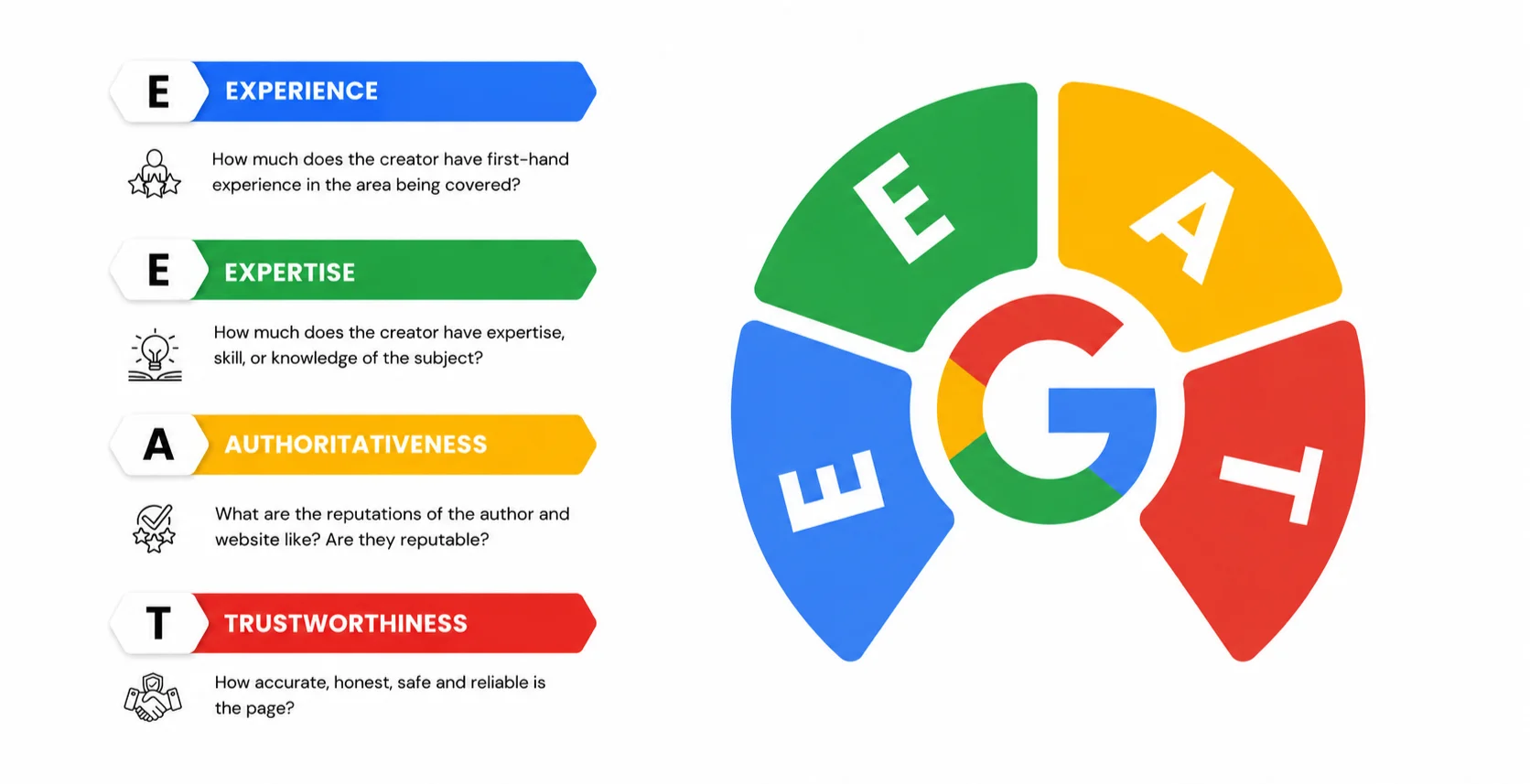
Apply E-E-A-T could help you rank better on Google
E-E-A-T stands for Experience, Expertise, Authoritativeness, and Trustworthiness. It’s Google’s framework for evaluating content quality, described in their Search Quality Rater Guidelines.
The extra “E” (Experience) was added in December 2022. It rewards content written by people with real, first-hand experience. Not just people who’ve studied a topic. A travel article written by someone who visited the place ranks better than one written by a researcher who never left their desk. In 2026, as AI-generated content floods the web, E-E-A-T signals are one of the main ways Google separates human-authored authority from machine-generated filler.
F-G
First-party data
First-party data is data you collect directly from your audience: email addresses, behavior on your website, purchase history, and survey responses. You own it. No one can take it away when cookies change or platforms update their policies.
In the post-cookie world, first-party data is the most valuable asset in a marketing stack. Companies that built email lists and CRMs through the 2010s are in a much stronger position than those who relied entirely on Facebook or Google retargeting.
Funnel-free marketing
Funnel-free marketing challenges the assumption that buyers move through a linear path (awareness → consideration → conversion). In practice, buyers research non-linearly, re-enter the market at random points, and often convert based on a single piece of content they found months before a purchase.
The funnel-free approach focuses on being useful at every touchpoint rather than engineering a prescribed path. It’s more common in B2B and high-consideration products where the sales cycle is long and unpredictable.
GEO (generative engine optimization)
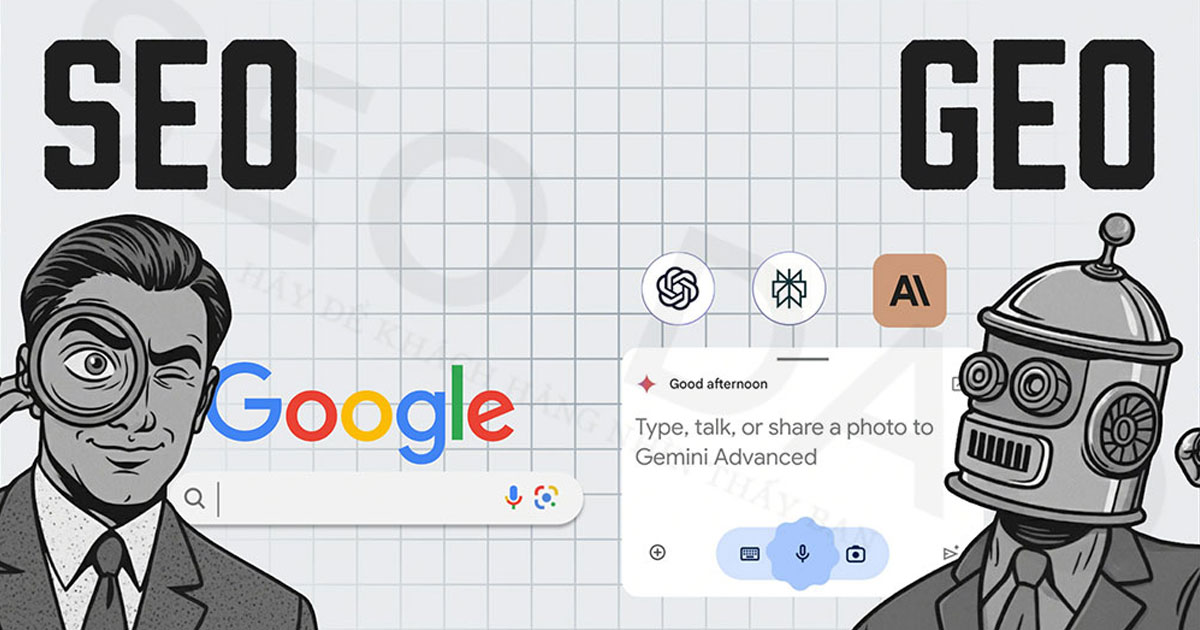
GEO is the new SEO in 2026
GEO is the practice of optimizing content to be cited by AI-powered answer engines: ChatGPT, Perplexity, Claude, Gemini, and others. It’s where SEO is going.
The core tactics: start every page with a definition-first sentence (LLMs often pull the opening of an article as a snippet), include specific data points with sources, structure content with FAQ sections using FAQPage schema, use Article and Organization schema markup, and allow AI crawlers in your siterobots.txt (GPTBot, ClaudeBot, PerplexityBot).
A 2024 study found that structured “Top N” list formats account for 74.2% of AI citations. Sites combining Article + FAQPage + Organization schema receive 3.2x more AI citations than those without.
At SotaMedia, GEO is part of every content brief. Getting cited in an AI answer is now as important as ranking on page one.
Growth loop
A growth loop is a self-reinforcing cycle where existing users or customers help acquire new ones. Unlike a funnel (which describes one user’s path), a loop describes how each user’s action feeds the next user’s discovery.
Classic examples: Dropbox’s referral program (share → free storage → new user shares), LinkedIn’s network graph (connections invite connections), TikTok’s algorithm (watch → share → new user watches → algorithm promotes). In B2B, growth loops often look like case studies, user-generated content, or review platforms.
H-I
HowTo schema
HowTo schema is a type of structured data markup (JSON-LDformat) that tells search engines your page contains step-by-step instructions. When implemented correctly, Google can show your steps directly in search results as an expandable rich result.
In 2026, HowTo schema is also a GEO signal: AI systems trained to identify instructional content recognize the pattern and are more likely to cite structured, step-by-step pages in answers to “how to” queries.
Hyper-personalization
Hyper-personalization uses real-time behavioral data, AI, and automation to deliver content and offers specific to each individual. Not just segmented by age or industry. The difference between personalization and hyper-personalization: Personalization says, “You’re in the SaaS segment; here’s SaaS content.” Hyper-personalization says, “You visited the pricing page twice this week, opened our last email, and work at a 50-person company. Here’s the case study most relevant to your situation.”
This requires a connected data stack: CRM + behavioral tracking + AI content delivery. Tools like Mutiny, 6sense, and Persado operate in this space.
ICP (ideal customer profile)
ICP is a detailed description of the company (in B2B) or person (in B2C) that gets the most value from your product and is most likely to stay long-term. It goes beyond demographics: a good ICP includes firmographics (company size, industry, tech stack, funding stage), behavioral signals (what triggers them to search, what problems they’re trying to solve), and outcome data (which customer types have the highest LTV and lowest churn).
Most companies have a vague sense of their ICP. Fewer have one defined precisely enough to use in targeting, content, or outbound messaging.
Intent data
Intent data tells you when someone is actively researching a topic relevant to your product before they even visit your site. It’s collected from sources like G2, Bombora, LinkedIn, and content networks; when a user at Company X reads multiple articles about “marketing automation for SaaS,” that’s a buying signal.
Intent data is used primarily in B2B outbound: instead of cold-calling a list, you reach out to companies showing active research behavior. It’s one of the key inputs behind signal-based outreach.
Influencer marketing

The popular use of social media has made influencer marketing essential in every marketing strategy
Influencer marketing is paying or partnering with people who have an audience to promote your product or brand. The format ranges from a single sponsored post to a long-term brand ambassador deal. Influencers are typically categorized by follower count: nano (1K–10K), micro (10K–100K), macro (100K–1M), and mega (1M+).
In B2C, influencer marketing is table stakes for most consumer brands. In B2B, it’s less common but growing fast, usually through LinkedIn creators, podcast hosts, and niche newsletter writers. The common mistake is chasing reach over relevance. A 10,000-follower account in the exact right niche outperforms a 500,000-follower generalist almost every time
J-L
JTBD (jobs to be done)
JTBD is a framework for understanding why people buy things. The core idea: people don’t buy products; they hire them to do a job. Milkshake research (from Clayton Christensen’s team) found that people often buy a morning milkshake not because they want a milkshake, but because it keeps them full and occupied during a boring commute.
In marketing, JTBD shifts the focus from “who is the customer” to “what job are they trying to get done.” It often produces better messaging than demographic-based thinking because it addresses motivation, not just profile.
KOC vs. KOL
KOL (Key Opinion Leader) is an influencer with a large following, typically tens of thousands to millions, with broad reach but often lower trust and higher cost.
KOC (Key Opinion Consumer) is an everyday customer who shares authentic content about products, usually with a smaller but highly engaged audience. Their influence comes from perceived authenticity, not celebrity.
In 2025–2026, brands across Southeast Asia shifted budget toward KOC-led campaigns because the ROI (engagement per dollar spent) is often higher, and audiences trust KOC content more than polished KOL posts. SotaMedia has an automated KOC discovery system that shortlists relevant profiles in hours rather than days.
LLM optimization
LLM optimization (sometimes called LLMO) is the practice of making your content more likely to be retrieved, cited, and presented by large language models. It overlaps with GEO but focuses specifically on the content and structural signals that affect how LLMs index, retrieve, and prioritize information.
Key signals: clear entity definitions, named authors with credentials, external citations from authoritative sources, FAQ structures, and content freshness (pages that aren’t updated lose AI citation rates 3x faster than regularly updated ones).
M-N
Marketing agent
A marketing agent is an AI agent specifically deployed for marketing tasks. It operates with minimal human input: monitoring brand mentions, generating first drafts, distributing content across platforms, qualifying inbound leads, and reporting on performance.
The distinction from automation: a marketing agent doesn’t just execute tasks; it decides which tasks to prioritize based on context. A content automation tool will post on a schedule. A marketing agent will notice that engagement dropped 40% on LinkedIn this week and draft a recommendation before you ask.
Marketing automation
Marketing automation is the use of software to execute marketing actions on a trigger or schedule, without manual work at each step. Email sequences, lead scoring, CRM updates, social scheduling. All standard. Unlike AI agents, traditional marketing automation follows rules you define: “If a user clicks link A, send email B after 2 days.”
Platforms: HubSpot, Marketo, Brevo, ActiveCampaign, Klaviyo.
MQL vs. SQL
MQL (Marketing Qualified Lead) is a lead that marketing has assessed as worth passing to sales, based on fit and engagement signals (opened 3+ emails, attended a webinar, or downloaded a whitepaper).
SQL (Sales Qualified Lead) is a lead that sales has assessed as having active buying intent and budget, ready for a direct sales conversation.
The handoff between MQL and SQL is one of the most common points of friction between marketing and sales teams. A shared definition, written down and agreed on, prevents the “marketing sends bad leads” vs. “sales doesn’t follow up” standoff.
NAP consistency
NAP stands for Name, Address, and Phone number. NAP consistency means your business information is identical across every place it appears online: your website, Google Business Profile, LinkedIn, directories, and press mentions.
It’s a local SEO signal but also a brand entity signal. If your name is “SotaMedia” on your website but “Sota Media” on your LinkedIn and “SotaMedia Agency” on a directory, search engines and LLMs may treat these as separate, unrelated entities. Consistent NAP strengthens the single entity they can trust.
Neural search
Neural search uses AI and vector embeddings to find content based on meaning rather than keyword matching. A traditional search for “how to reduce customer churn” only surfaces pages with those exact words. A neural search understands that “lowering subscription cancellations” and “improving retention rates” mean the same thing and surfaces all relevant content.
Google has been running neural search (via BERT, MUM, and their successors) since 2019. In 2026, most modern search and internal knowledge management tools use neural search by default.
O-P
Omnichannel
Omnichannel marketing means delivering a consistent experience across all the touchpoints a customer uses: website, email, social, ads, chat, in-person. And letting those channels work together rather than in silos.
The difference from multichannel: multichannel means being present on multiple platforms. Omnichannel means those platforms share data and context. A customer who clicks an email, visits your pricing page, and then sees an ad: in an omnichannel setup, the ad knows the customer already visited pricing and adjusts accordingly.
Organic AI traffic
Organic AI traffic is visitors who arrive at your site from an AI-generated answer. Someone asked ChatGPT a question; your site was cited in the response, and they clicked the link. Google Analytics 4 can track this from referral sources like ChatGPT, Gemini or Perplexity
Current data: Visitors arriving from ChatGPT convert at roughly 9x the rate of standard Google organic visitors. The volume is still smaller, but the quality of traffic is notably higher.
Product-led growth (PLG)
PLG is a go-to-market strategy where the product itself is the main acquisition and retention mechanism. Users discover the product, try it, get value, and convert. Without necessarily talking to sales. Slack, Notion, Figma, and Canva all used PLG to scale.
The marketing implication: PLG companies invest heavily in onboarding, in-product education, and virality features (invite flows and shareable outputs) rather than outbound sales sequences.
Programmatic SEO
Programmatic SEO is the process of generating large numbers of web pages from a template and a dataset, often hundreds or thousands of pages, each targeting a specific keyword combination. Zapier does this with integration pages (“Zapier + Gmail + Slack”). G2 does it with category and comparison pages.
The risk: if done badly, it creates thin content that Google penalizes. Done well, it captures long-tail search demand at scale.
Prompt engineering
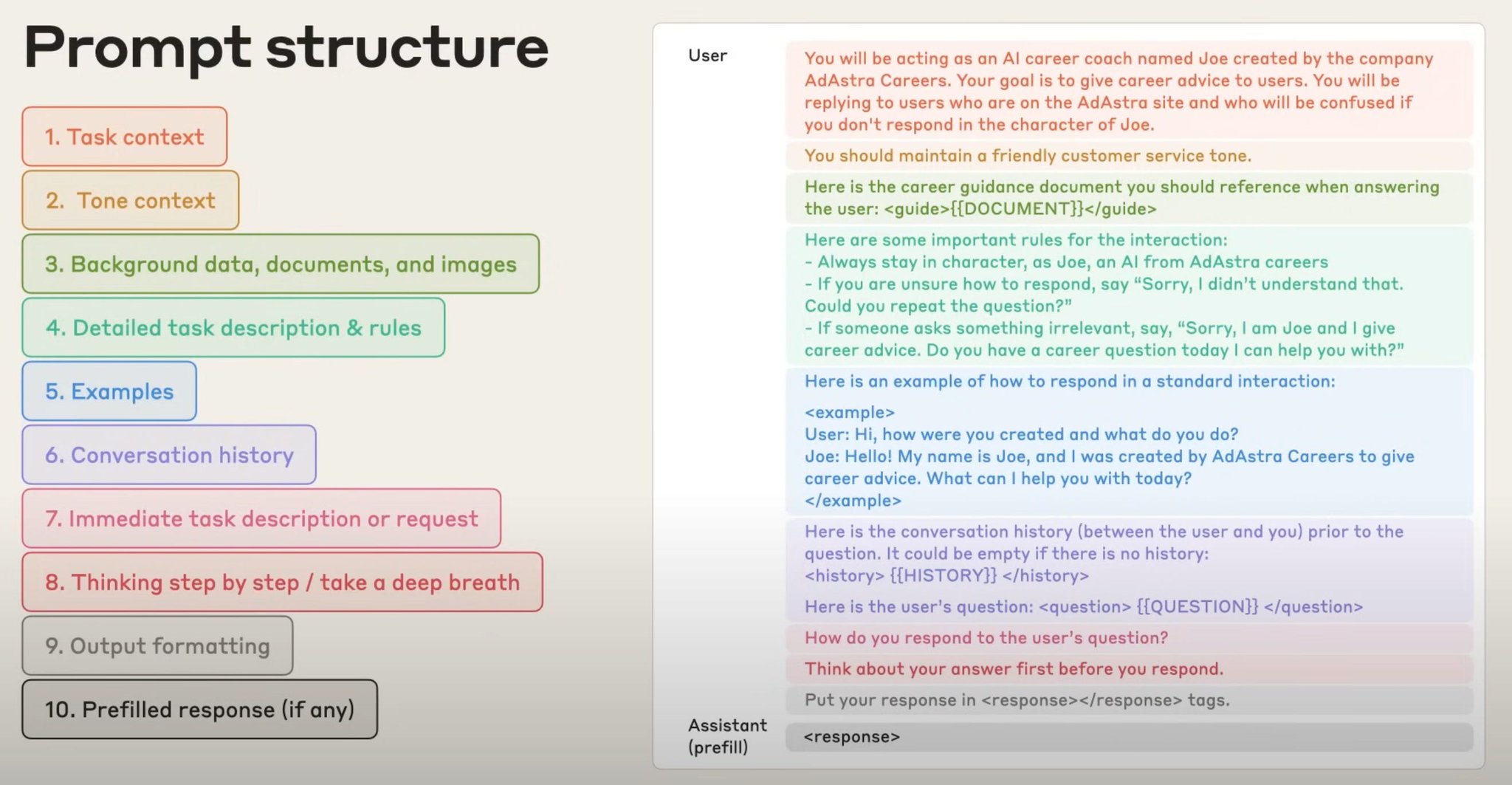
The must-know skill for every marketer in 2026 (Source: Anthropic)
Prompt engineering is writing instructions for AI models that produce consistently useful outputs. A well-engineered prompt is specific about role, task, format, constraints, and examples. “Write a LinkedIn post about AI” is a weak prompt. ” You are a B2B marketing strategist writing for a LinkedIn audience of SaaS founders. Write a 150-word post making the argument that AI agents will replace SDRs by 2027. Use a direct first sentence, no hashtags, and end with a question” is a strong prompt.
In 2026, prompt engineering is a core skill for any marketer using AI tools. Not optional.
PMF (product-market fit)
Product-market fit is the point where a product satisfies a strong market demand. The classic test, from Marc Andreessen: If you removed the product, would a meaningful number of users be genuinely disappointed? Sean Ellis’s benchmark puts that number at 40%: if 40% or more of your users would be “very disappointed” without your product, you likely have PMF.
For marketers, PMF matters because almost everything scales better after it’s found. Paid acquisition, content, community, and referrals: they all work harder when the product itself retains people. Trying to grow aggressively before PMF usually just accelerates churn. Recognizing where you are on that spectrum changes what your marketing priorities should be.
Q-S
Query expansion
Query expansion is what search engines and LLMs do when they broaden or rephrase a user’s search to find more relevant results. A user searching for “AI marketing tools” might have their query internally expanded to include “marketing automation software,” “AI content creation,” and “automated lead generation.”
For content creators, understanding query expansion means writing content that covers a topic completely: not just the exact keyword, but the concepts and questions around it. This is how a single page can rank for dozens of related queries.
RAG (retrieval-augmented generation)
RAG is an AI architecture where a model retrieves relevant information from an external knowledge base before generating a response. The alternative is relying on training data alone, which has a cutoff date and can hallucinate.
Perplexity is essentially a consumer-facing RAG system: it retrieves live web content and generates an answer based on what it finds. Many enterprise AI chatbots use RAG to answer questions based on internal company documents rather than general knowledge.
For marketers: RAG-based systems are more likely to cite fresh, well-structured content. Another reason to keep pages updated and properly formatted.
Schema markup
Schema markup is structured data added to a web page (usually in JSON-LD format) that tells search engines and AI systems exactly what the content means. Article schema identifies a blog post. FAQPage schema marks question-and-answer pairs. Organization Schema tells crawlers your company name, description, and parent organization.
Schema markup doesn’t change how a page looks to users. It changes how it looks to machines, and in 2026, machines are increasingly the first readers.
Share of voice (AI)
Traditional share of voice measures how much of a conversation your brand owns compared to competitors in paid or organic search. AI share of voice is the same concept applied to LLM outputs: when AI tools answer questions in your category, how often does your brand get mentioned versus competitors’ brands?
Tracking this requires running consistent queries across ChatGPT, Perplexity, Claude, and Gemini and logging which brands appear and how prominently. Tools like Ahrefs Brand Radar are building toward this metric.
Signal-based outreach
Signal-based outreach means triggering sales or marketing contact based on a specific buying signal rather than a generic cold list. Signals can include the following: a prospect visited your pricing page, their company posted a job for a role your product enables, they engaged with a competitor’s content, they raised a funding round, or they showed intent data (see: Intent data).
The result: outreach that arrives when someone is actually thinking about the problem your product solves, not at a random time on a cold list.
T-V
Topical authority
Topical authority is a measure of how thoroughly a website covers a specific subject area. Search engines reward sites that own a topic, covering it broadly and deeply, over sites that have a single well-optimized page on it.
Building topical authority means creating a cluster of content around a core topic: a pillar page, supporting articles, FAQs, and comparison pages. For SotaMedia, this looks like owning “AI marketing” as a topic: not just one article, but full coverage of every relevant question a potential client might ask.
Traffic attribution
Traffic attribution answers the question, “Which marketing activity actually drove this conversion?” It’s harder than it sounds because most customers touch multiple channels before buying.
Attribution models: last-click (the most common and least accurate), first-click, linear (credit split across all touchpoints), and data-driven (ML-based, requires volume). In 2026, the default in Google Analytics 4 is data-driven attribution. The real challenge: attributing dark social and AI-referred traffic, which doesn’t appear in standard channel reports.
UGC (user-generated content)
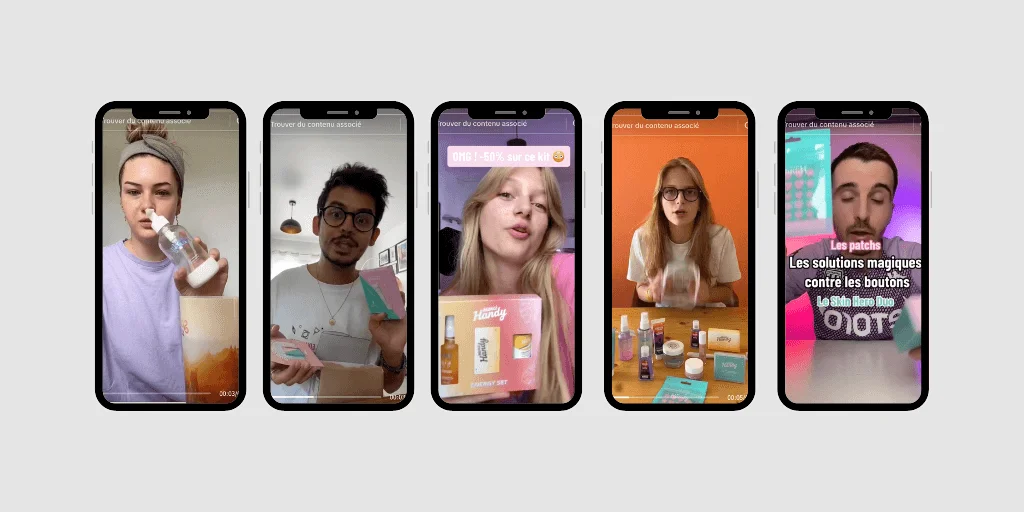
UGC is the vital part for every digital marketing strategy in 2026
UGC is any content created by customers or users rather than the brand itself: reviews, unboxing videos, social posts, photos, and testimonials. It’s one of the most trusted content formats because it comes from real people with no obvious incentive to sell.
The marketing use cases in 2026 range from basic (reposting customer photos on Instagram) to sophisticated (feeding UGC into paid ad creative, since UGC-style ads consistently outperform polished brand creative in performance campaigns).
UTM parameters
UTM parameters are tags added to URLs that tell analytics tools where traffic came from. A URL like sota.media/blog?utm_source=linkedin&utm_medium=organic&utm_campaign=ai-glossary tells GA4 that this visitor came from LinkedIn, via an organic post, in the “ai-glossary” campaign.
Without UTMs, all your social, email, and partner traffic collapses into “direct” in your analytics. With them, you know exactly which content and channels drive traffic, leads, and revenue.
Vibe marketing
Vibe marketing is content created to build emotional resonance and brand familiarity, not to convert directly. It’s the aesthetic-heavy, personality-driven content style that performs well on TikTok, Reels, and some corners of LinkedIn. Think mood boards, quick POV videos, behind-the-scenes clips, and memes with brand context.
The metric isn’t CTR or lead volume. It’s brand recall and audience sentiment. Vibe marketing works when your audience is not in buying mode, but you want to stay in their awareness for when they are.
W-Z
Zero-click search
Zero-click search happens when a user gets their answer directly from a search results page, from a featured snippet, AI Overview, knowledge panel, or answer box, without clicking any link. In 2024, Sparktoro and Datos data confirmed that more than 60% of Google searches in the US ended without a click.
The strategic response: optimize for visibility even without the click. Your brand name and answer appearing in a zero-click result still builds awareness. And optimizing for structured answers often leads to citations in AI tools, where clicks are more valuable.
Zero-party data
Zero-party data is information that customers share with you directly and intentionally: quiz answers, product preferences, survey responses, and “tell us about yourself” forms. The difference from first-party data is that zero-party data is self-reported and explicitly given. First-party data is observed behavior (what you clicked, what you bought).
Zero-party data is highly accurate because it comes directly from the source. Used well, in personalization, product recommendations, and email segmentation, it produces experiences that feel relevant rather than intrusive.
This glossary was produced by SotaMedia, the marketing arm of SotaTek. SotaMedia builds AI-powered marketing systems for tech companies, SaaS, and Web3 businesses across Southeast Asia and the globe. Last updated: May 2026.
If you want to see which of these terms apply directly to your marketing setup, contact SotaMedia here.