

AI Marketing
Are you looking for a way to reduce cost and time on repetitive content production, customer research, and campaign execution?
Generative AI Marketing can help businesses automate repetitive marketing tasks while using customer data to support faster, more personalized decisions.
In this guide, we explain what generative AI marketing is, its key benefits, practical use cases, real-world examples, and how businesses can implement it effectively.
Key takeaways
- Generative AI is transforming marketing by supporting content creation, customer analysis, personalization, and campaign optimization at scale.
- AI does not automatically guarantee better results; businesses need clear objectives, reliable data, suitable workflows, and human oversight.
- AI increases marketing productivity by automating repetitive tasks such as content drafting, research summarization, and customer-data analysis, allowing marketers to focus more on strategy.
- Successful AI implementation requires a structured process from collecting data to continuously monitoring and optimizing.
- Human marketers remain essential for strategy, creative direction, brand decisions, and reviewing AI-generated outputs; AI mainly supports and automates execution.
- Businesses should start small and scale gradually: identify a specific problem, run a pilot, measure KPIs, ensure privacy and brand-safety controls, and then expand successful workflows.
What is generative AI marketing?
Generative AI marketing is the use of generative AI models such as ChatGPT and Claude to support daily marketing activities like creating images, AI-generated advertising videos, blogs, and content.
Generative AI can support daily tasks and strategic activities such as identifying insights, customer segmentation, and creating hyper-personalized campaigns.
What are the benefits of generative AI marketing?
Generative AI marketing brings various benefits for marketers and the companies, such as increasing productivity, reducing production costs, creating hyper-personalization at scale, etc.

4 main benefits of Generative Ai marketing
Increased productivity and lower content production costs
Generative AI can increase the productivity of marketing departments, which can save 5% to 15% of the overall budget of marketing (McKinsey & Company, 2023)
In the past, it took marketers hours to handle repetitive tasks such as searching for information, compiling information, writing video scripts, filming, and editing. However, these days, many Gen AI platforms like HeyGen can tackle these tasks quickly.
As a result, companies do not spend too much money to hire staff to create video, and marketers also have more time for strategic activities.
Hyper-Personalization at scale
Traditional personalized campaigns are based on generic factors such as customer demographics (ages, job, and location) or buying occasions. However, this approach can not meet the instant need of customers, leading to reduced conversion opportunities of marketing campaigns.
Meanwhile, Gen AI can solve this problem by using real-time data such as:
- Customer Demographic & Transactional Data such as age, purchase history, average order value, and transaction frequency from CRM systems, e-commerce platforms, point-of-sale (POS) systems, etc.
- Behavioral data such as website visits, products viewed, search queries, email engagement, and in-store interaction from mobile app analytics, marketing automation platforms, cookies, tracking pixels, etc.
- Contextual data such as time of interaction, current location, operating system, weather conditions, and events such as holidays or birthdays from mobile devices, GPS data (with user consent), browser information, CRM records, etc.
This data from generative AI helps marketers create personalized content, offers, and recommendations for individual customers rather than broad audience segments.
Improved lead generation performance
74% of marketers believe AI helps them better understand customer needs (Sitecore). This is because generative AI can analyze large volumes of customer feedback, reviews, and behavioral data to uncover trends, sentiment, and emerging customer needs.
Therefore, marketers can create more relevant and personalized content, which can increase customer engagement and improve lead generation performance.
Greater accessibility for SMEs
The rise of affordable and freemium AI tools has significantly lowered the barriers to AI adoption. This allows SMEs to access marketing capabilities that were previously available mainly to large corporations.
Previously, activities such as market research and customer analysis often required large budgets for customer interviews and data collection. Now, AI automation can help SMEs extract insights from customer reviews, CRM records, surveys, and online conversations faster. Thus, SMEs can make more data-driven marketing decisions instead of relying on assumptions.
Traditional marketing vs. generative AI marketing
“Why do many companies adopt generative AI for marketing now?” To answer that question, we compared based on some criteria like the ability to create content, personalize, scale, etc.
|
Criteria |
Traditional Marketing |
Generative AI Marketing |
|
Content Creation |
Content is created manually by writers, designers, and marketers. |
AI can generate drafts, images, videos, and campaign assets in minutes. |
|
Personalization |
Typically limited to audience segments. |
Enables one-to-one personalization based on customer behavior and preferences. |
|
Creative Testing |
Limited variations due to time and resource constraints. |
Dozens or hundreds of content and ad variations can be generated for testing. |
|
Scalability |
Scaling requires additional budget and headcount. |
AI allows teams to scale content production and personalization with fewer resources. |
|
Role of Marketers |
Significant time spent on execution and repetitive tasks. |
More focus on strategy, creativity, optimization, and quality control. |
Practical Use Cases and Examples of Generative AI Marketing
Generative AI is being applied across content creation, customer research, personalization, and campaign optimization. The examples below show how businesses use it to reduce manual work while scaling marketing execution.
Hyper-personalized advertising and creative generation

Store owners can automatically replace the store name in the ad based on the local PIN code.
By collecting real-time data such as purchasing time, payment methods, etc. from the platform customers use, generative AI helps brands create a large number of hyper-personalized campaigns.
Cadbury Celebrations: Shah Rukh Khan My Ad (2021) campaign is a typical example. In order to support small local stores in India, recover revenue after the Covid-19 pandemic, and increase retention on Diwali.
By using AI to copy the face, voice, and gestures of the actor Shah Rukh Khan, store owners can create their specialized advertisement, which suits their products, local consumers’ needs, and buying behavior.
Besides, based on the data of PIN codes, AI also automatically replaces stores’ names in each advertisement with the names of each local store.
When customers see the advertisement on social media, they will see Shah Rukh Khan introduce the nearest store for them. The campaign allows store owners to create a specialized advertisement that is suitable for their field, local customers’ needs, and buying behavior.
Results:
- 1.4 billion impressions and 94 million video views
- 130,000 personalized ads generated at scale
- Over 11,000 mentions on Twitter
- 33 million Cadbury Celebrations gift boxes sold, the highest sales volume in the brand’s history
- Diwali sales increased by 30% year over year.
- Distributed across 440,000 retail stores, with sales growing 69% in modern trade and 29% in traditional retail channels.
Content creation and content repurposing
Generative AI helps marketing teams produce and adapt content across channels, from blog posts and emails to social media assets, without creating every piece from scratch.
Example: Goosehead Insurance uses Jasper.ai to create blog content and email campaigns and repurpose existing content across marketing channels. This helps personalize content while improving the efficiency and productivity of marketing activities.
AI-Generated visual content

DALL-E allows customers to create creative images with Coca-Cola products
Generative AI is changing how brands create marketing visuals. Instead of relying entirely on photographers, designers, and production teams, marketers can generate product images, advertising creatives, and campaign assets from simple text prompts.
A well-known example is Coca-Cola’s “Create Real Magic” campaign, cooperating with OpenAI and Bain & Company. The platform allowed consumers and creators to generate Coca-Cola-inspired artwork using GPT and DALL·E, turning AI-generated visuals into an interactive brand experience. This campaign helps Coca-Cola create a huge amount of new content in a condensed time frame at one-tenth of the cost.
Customer insight generation and market research
Generative AI can process large volumes of customer and market data to identify trends, sentiment, and recurring pain points faster than manual analysis.
For example, Launchmetrics also uses generative AI to process large volumes of online conversations and brand-related data, helping fashion and beauty brands understand consumer perception.
Results:
- Turns unstructured customer data into actionable insights
- Helps identify shifts in brand perception and customer sentiment
- Speeds up insight generation across large volumes of data
How can businesses apply generative AI in marketing?
Generative AI delivers the strongest results when paired with clear business objectives, high-quality data, and human oversight. Rather than adopting AI tools randomly, companies should integrate AI into existing marketing processes and decision-making workflows.
The MARK-GEN framework
According to the framework proposed by Islam et al. (2024), organizations can implement generative AI in marketing through seven structured stages:
- Define Marketing Aim: Identify the business objective, such as increasing lead generation, improving personalization, reducing content production costs, or accelerating campaign execution.
- Data Collection: Gather customer, product, campaign, behavioral, and market data from CRM platforms, analytics tools, social media, websites, and internal databases.
- Data Processing: Clean, organize, and prepare data to improve output quality and reduce inaccuracies.
- Model Design: Select the most appropriate AI model or platform based on the use case, whether content creation, customer insight generation, personalization, or creative production.
- Model Training: Fine-tune the model using brand guidelines, historical campaigns, customer data, or proprietary datasets when required.
- Model Evaluation: Measure content quality, relevance, accuracy, brand alignment, and business impact before deployment.
- Deployment: Integrate AI into day-to-day marketing workflows and continuously monitor performance, feedback, and optimization opportunities.
Following a structured framework helps businesses move beyond isolated AI experiments and build repeatable processes that generate measurable marketing outcomes.
4 practical prompts for marketing teams
The following prompt templates can help marketing teams accelerate content creation, campaign planning, personalization, and creative production while maintaining brand consistency.
Personalized ad copy
Use this prompt to quickly generate multiple ad variations tailored to a specific audience and marketing objective.
Prompt:
Act as a senior performance marketing strategist with 10+ years of experience in Facebook and Instagram advertising.
Create 5 unique Facebook ad variations for the following product or service.
Product/Service: [Describe the product/service]
Company: [Company name]
Target Audience:
– Industry:
– Job title:
– Company size:
– Geographic location:
– Pain points:
– Current challenges:
– Desired outcomes:
– Common objections:
Campaign Objective:
– Lead generation / Sales / Demo booking / Webinar registration / App installs
Offer:
[Discount, free trial, consultation, promotion, etc.]
Brand Voice:
– Professional
– Helpful
– Trustworthy
– Benefit-focused
Requirements:
– Use audience-specific language
– Address a major pain point within the first sentence
– Focus on outcomes rather than features
– Avoid generic marketing buzzwords
– Create distinct messaging angles for each variation
For each variation, provide:
- Messaging angle
- Primary text (100–150 words)
- Headline (under 40 characters)
- Description (optional)
- Call-to-action
- Suggested image or creative concept
Output in a structured table.
Product description generation
Use this prompt to create concise product descriptions that focus on customer benefits and conversion.
Prompt:
Write a compelling product description for:
Product: [Product name]
Key features: [Main features]
Target audience: [Who is the product for?]
Customer needs/pain points: [What problem or need does the product address?]
Unique selling proposition: [What makes the product different from competitors?]
Brand tone: [e.g. Premium, Friendly, Professional, Energetic]
Requirements:
– Start with a strong hook based on the customer’s needs or pain points
– Turn key features into clear and relevant customer benefits
– Highlight the product’s unique selling proposition
– Use persuasive, natural, and easy-to-understand language
– Match the tone to the target audience and brand
– Avoid generic claims, jargon, and repetitive information
– End with a clear and action-oriented call-to-action
– Keep it concise and under 150 words
Campaign idea generation
Use this prompt when planning new campaigns, content initiatives, or product launches.
Prompt:
Generate 10 campaign ideas for:
Company:
Industry:
Target audience:
Marketing goal:
For each idea, provide:
– Campaign concept
– Key message
– Suggested channels
– Example creative angle
Image Generation Prompt
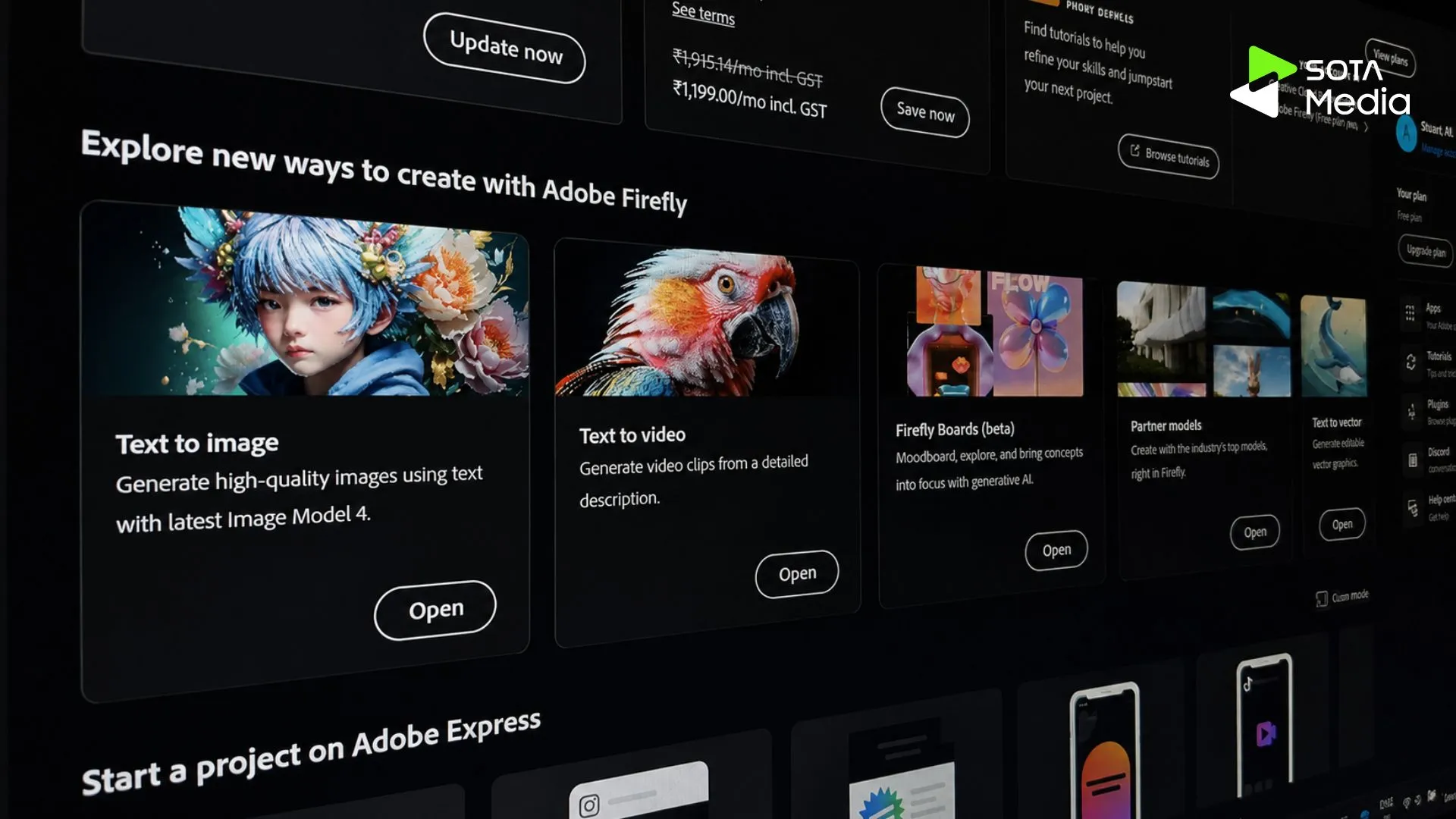
This prompt can be used with image generation tools such as ChatGPT, Midjourney, Adobe Firefly, or Gemini to create advertising visuals.
Prompt:
Create a high-end advertising image for [product].
Product: [Product name + key visual features]
Target audience: [Target audience]
Brand colors: [Brand colors]
Style: [Photorealistic / Premium / Minimalist / Cinematic / Lifestyle]
Background: [Describe the setting, environment, and supporting elements]
Composition:
– Make the product the main focal point.
– Use a clean, balanced composition with clear visual hierarchy.
– Keep the product sharp, fully visible, and naturally positioned.
– Leave suitable negative space for text if needed.
Lighting:
– Use professional commercial lighting.
– Create realistic highlights, shadows, reflections, and depth.
– Match the lighting to the mood and brand identity.
Camera:
[Camera angle + shot type + lens, e.g. 3/4 angle, close-up, 50mm]
Details:
– Realistic materials and textures.
– Natural shadows and reflections.
– High level of product detail.
– Consistent brand identity.
Mood: [Premium / Fresh / Energetic / Elegant / Trustworthy]
Avoid: Distorted products, incorrect proportions, blurry details, unnatural shadows, excessive visual clutter, unrealistic textures, incorrect logos, and obvious AI artifacts.
Output:
– Aspect ratio: [1:1 / 4:5 / 16:9 / 9:16]
– High-resolution, realistic, commercial-grade quality.
– Suitable for social media advertising.
Key considerations when implementing Generative AI Marketing
Before implementing generative AI marketing, businesses need clear objectives, reliable data, and proper controls. The following considerations help reduce risks and ensure AI delivers measurable marketing value:
- Define clear business objectives before selecting AI tools.
- Ensure data quality and data privacy compliance.
- Establish human review and approval workflows.
- Maintain brand voice and content consistency.
- Monitor output accuracy and hallucination risks.
- Measure performance using predefined marketing KPIs.
- Start with pilot projects before scaling across teams.
- Stay compliant with copyright, privacy, and AI regulations.
How SotaMedia can help
Instead of investing months testing dozens of AI tools and workflows, businesses can start with AI automation systems that reduce implementation risk and accelerate time-to-value.
Services included in our AI Marketing Automation solution:
- Automated Content Scheduling Across All Channels
- 24/7 Lead Prospecting & Qualification
- KOC & Influencer Shortlisting with AI Scoring
- Community Comment Automation
- Custom Workflow Automation
Conclusion
Generative AI is changing how businesses create content, analyze customers, personalize campaigns, and execute marketing at scale. But adding AI tools alone does not guarantee results. Businesses need clear objectives, reliable data, suitable workflows, and human oversight.
Whether your goal is to reduce content production costs, scale personalization, or make faster data-driven decisions, the right AI automation workflow can turn generative AI into a practical marketing capability.
If you’re exploring how to apply generative AI to your marketing operations, SotaMedia can help build AI-powered workflows that reduce implementation risk and support growth.
Frequently asked questions
No. AI can automate repetitive tasks and support analysis, but marketers are still needed for strategy, creative direction, judgment, and brand decisions.
Marketers define the strategy, customer segments, messaging, and business objectives. AI handles much of the execution, while marketers review outputs and optimize campaigns. Generative AI marketing uses AI models such as ChatGPT and Claude to support marketing tasks, from content creation and personalization to customer analysis and campaign optimization.
AI can automate repetitive tasks such as drafting content, generating creative variations, summarizing research, and analyzing customer data. This gives marketers more time for strategic work.
Yes. Affordable and freemium AI tools have lowered the cost of accessing capabilities such as content production, customer analysis, and campaign automation that previously required larger teams and budgets.
Common risks include inaccurate outputs, hallucinations, data privacy issues, copyright concerns, and inconsistent brand messaging. Human review and clear governance are important controls.