

Generative AI in Marketing: Use Cases, Benefits & Examples


Table of Contents
Key Takeaways
- Generative AI cuts content production time, not content quality standards
- The highest ROI use cases in 2024-2025: ad creative testing, email personalization, and SEO content at scale
- Risks are real: brand voice drift, factual errors, and over-reliance without a human review layer
- Teams with under 10 people can start with one use case, one tool, one workflow before scaling
What Is Generative AI in Marketing?
Generative AI in marketing is the use of large language and image models to produce, test, and optimize marketing output: from blog posts to ad copy variants to personalized email sequences. It differs from traditional marketing automation in one key way: instead of sending pre-written messages based on rules, it creates net-new content from a prompt or data input. The underlying models include GPT-4-class LLMs for text, DALL-E and Stable Diffusion for images, and platforms like Meta Advantage+ and Google Performance Max for ad creative. Inputs are brand briefs, audience data, and past campaign performance. Outputs are copy, images, scripts, product descriptions, and landing page variants.
Why Generative AI in Marketing Is Growing Fast Right Now
The adoption curve steepened because output quality crossed the “good enough to publish” threshold around 2023-2024, while the cost per asset fell sharply.
In McKinsey’s 2024 Global Survey on AI, 65% of organizations reported regularly using generative AI in at least one business function, nearly double the figure from 2023. Marketing and sales recorded the biggest year-over-year jump, with reported adoption more than doubling. On the productivity side, McKinsey estimates that generative AI could deliver productivity gains worth 5-15% of total marketing spend globally.
The pressure driving adoption is straightforward: SEO content demand, paid ad creative testing volumes, and email personalization at scale all outpaced what human teams could deliver manually. Three conditions aligned: accessible APIs, better prompt tooling, and flat marketing headcounts.
What Are the Main Generative AI Use Cases in Marketing?
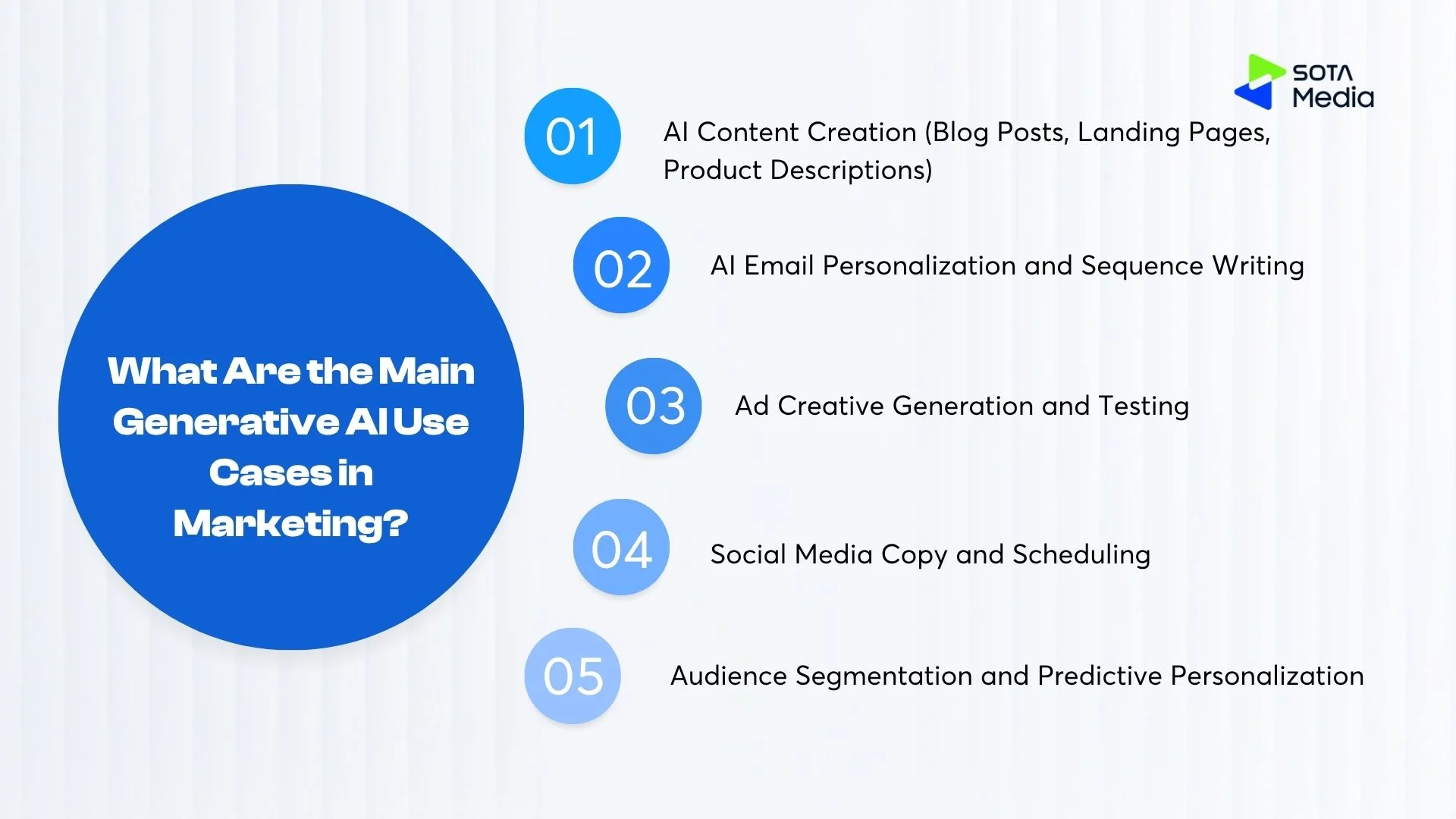
The five highest-impact use cases, ranked by how widely they are deployed in 2024-2025:
1. AI Content Creation (Blog Posts, Landing Pages, Product Descriptions)
AI drafts first-pass content from a brief; humans edit for accuracy, tone, and brand fit.
- Time saving: drafting a 1,500-word post drops from 4-6 hours to under 1 hour with a solid brief
- Best for: high-volume SEO content, product catalog descriptions, localized pages
- Tools in use: ChatGPT, Claude, Jasper, SurferSEO AI
- Human layer required: fact-check, brand voice pass, internal linking
2. AI Email Personalization and Sequence Writing
AI generates subject line variants, personalized body copy, and send-time recommendations at the individual recipient level.
- Proven lift: personalized subject lines increase open rates by 26% on average [cite: Campaign Monitor / Mailchimp published data]
- Use case: e-commerce re-engagement, SaaS onboarding drips, B2B nurture sequences
- Tools: HubSpot AI, Klaviyo AI, Salesforce Einstein
3. Ad Creative Generation and Testing
AI generates multiple copy and visual variants for paid campaigns, which are then A/B tested against each other.
- Meta and Google both have built-in generative AI for ad creative (Advantage+ Creative, Performance Max)
- Manual process: 1 creative team produces 5-10 variants per campaign; AI: 50-100 variants in the same time
- Risk: brand safety, visual consistency, legal clearance on AI-generated images
4. Social Media Copy and Scheduling
AI drafts platform-specific post variants from a single content brief across LinkedIn, Instagram, X, and TikTok.
- Each platform needs different length, tone, and format; AI handles the adaptation layer
- Tools: Hootsuite AI, Buffer AI, Lately.ai
- Human role: approve, add real context (photos, event details), monitor comments
5. Audience Segmentation and Predictive Personalization
AI analyzes behavioral data to segment audiences and predict which message will convert which segment.
- Goes beyond rule-based segmentation (age, location) to behavioral pattern clustering
- Used by: e-commerce, SaaS, publishers, and D2C brands with enough first-party data
- Requires data infrastructure first; not a plug-and-play tool for teams without clean CRM data
Real-World Examples of Generative AI in Marketing
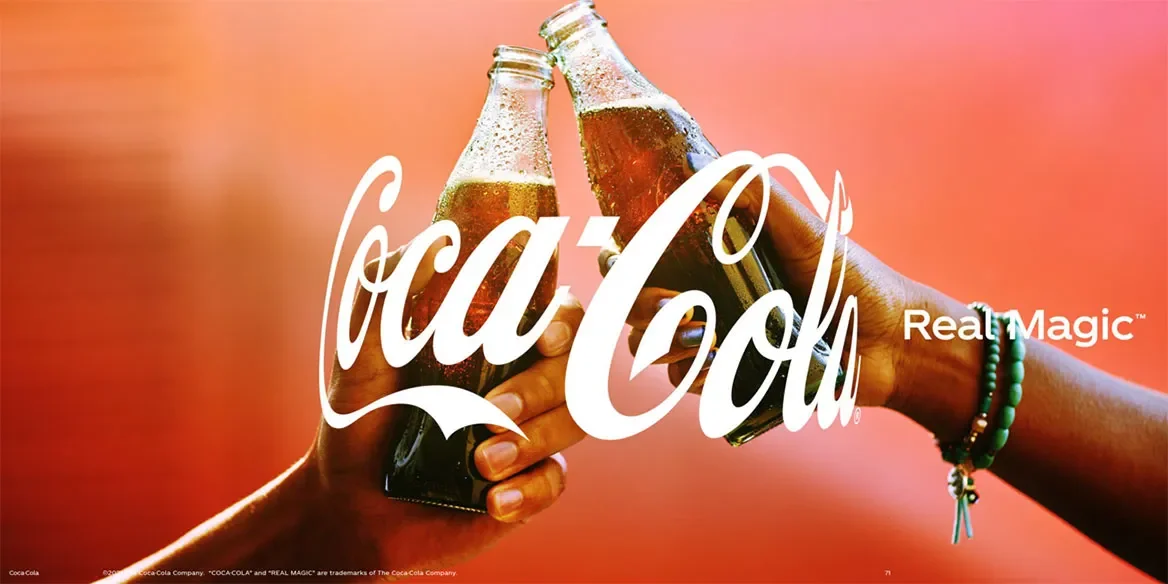
Coca-Cola: In March 2023, Coca-Cola launched “Create Real Magic,” a consumer-facing AI platform built using GPT-4 and DALL-E. The platform invited digital artists to generate original artwork using iconic elements from Coca-Cola’s creative archives, and 30 selected creators were brought to Atlanta’s headquarters to co-create content with the brand’s marketing team. Coca-Cola’s CIO noted the initiative produced “a huge amount of new content in a condensed time frame at one-tenth of the cost.
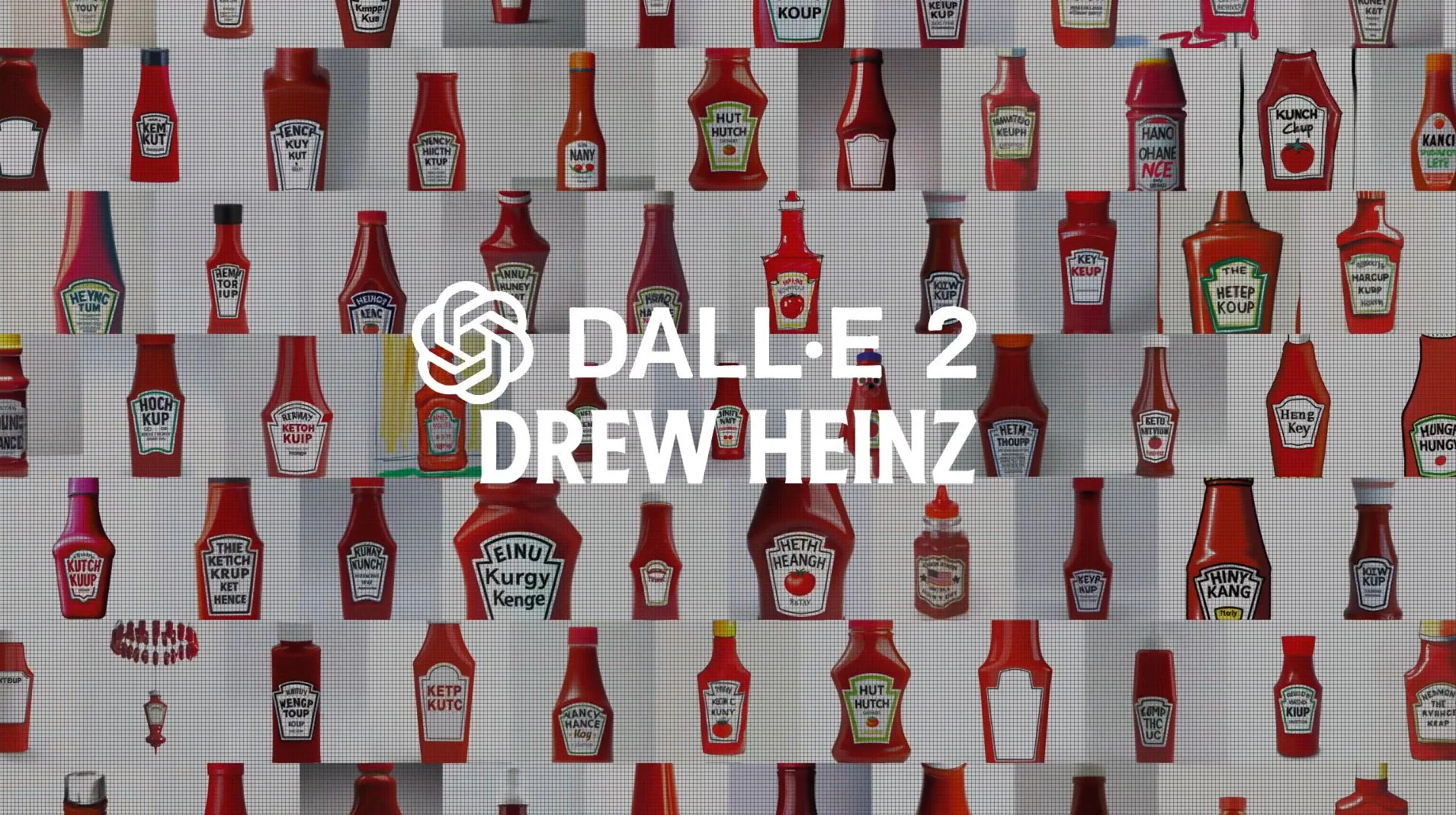
Heinz: Heinz used DALL-E 2 to generate images from non-branded ketchup prompts like “impressionist painting of a ketchup bottle.” Every result defaulted to something unmistakably Heinz. The campaign earned 2,500% higher earned media relative to media investment and generated 1.15 billion impressions, with a 38% higher engagement rate than previous Heinz campaigns.
JPMorgan Chase: A pilot with AI copywriting platform Persado showed that ads with AI-generated copy received up to a 450% lift in click-through rates, versus the 50-200% lift from human-written ads. JPMorgan signed a five-year enterprise deal with Persado following the results.
Benefits of Generative AI in Marketing: Manual vs. AI-Assisted Workflow
|
Task |
Manual Workflow |
AI-Assisted Workflow |
|
1,500-word SEO blog post |
5-7 hours (research + writing + edit) |
1-2 hours (brief + AI draft + human edit) |
|
10 ad copy variants |
3-4 hours copywriter time |
20-30 minutes with human review |
|
Email subject line testing (10 variants) |
2 hours |
15 minutes |
|
Social posts for 1 campaign (5 platforms) |
3-4 hours |
45 minutes |
|
Monthly content calendar (20 pieces) |
2-3 days |
Half a day with approved templates |
|
Audience segmentation brief |
Analyst: 4-6 hours |
AI clustering + analyst review: 1-2 hours |
How to Start with Generative AI in Marketing (Without a Big Team)
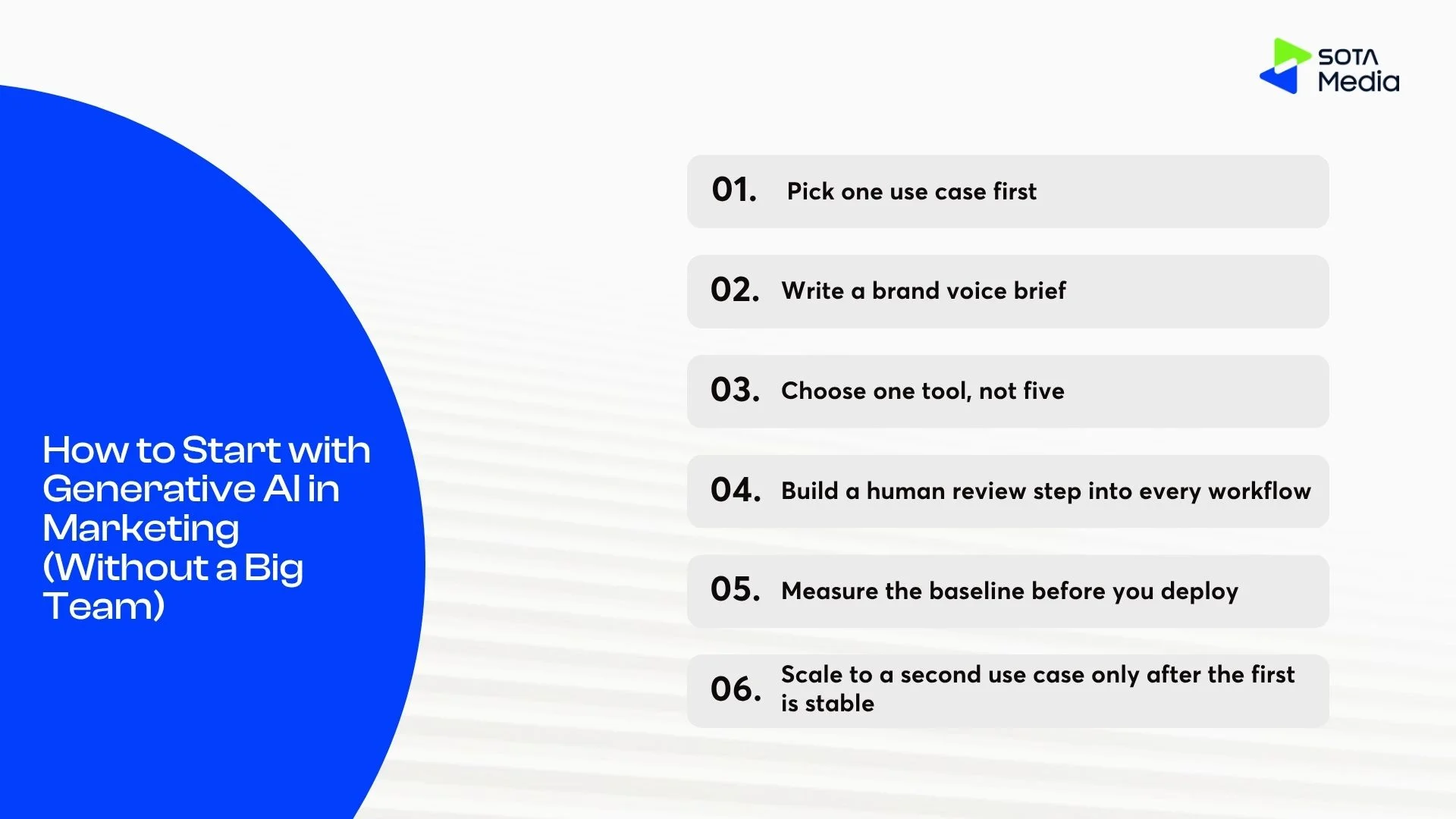
A team of 2-5 people can have a working AI content workflow within two weeks by following these steps.
- Pick one use case first. Start with the task that takes the most time and has a measurable output: weekly blog posts or email subject line testing are the two most common starting points.
- Write a brand voice brief. AI produces generic output without guardrails. Document your tone, banned words, preferred sentence length, and 3-5 examples of approved copy before writing a single prompt.
- Choose one tool, not five. ChatGPT or Claude for text. Midjourney or Adobe Firefly for images. Run the same tool for 30 days before adding another.
- Build a human review step into every workflow. No AI output goes live without a human reading it for factual accuracy and brand fit. This is not optional for brand safety.
- Measure the baseline before you deploy. Record how long the current process takes and what it costs. After 30 days with AI, compare. The data justifies scaling the investment.
- Scale to a second use case only after the first is stable. Most teams fail with AI by adopting too many tools before any single workflow is reliable.
What Are the Risks and Limits of Generative AI in Marketing?
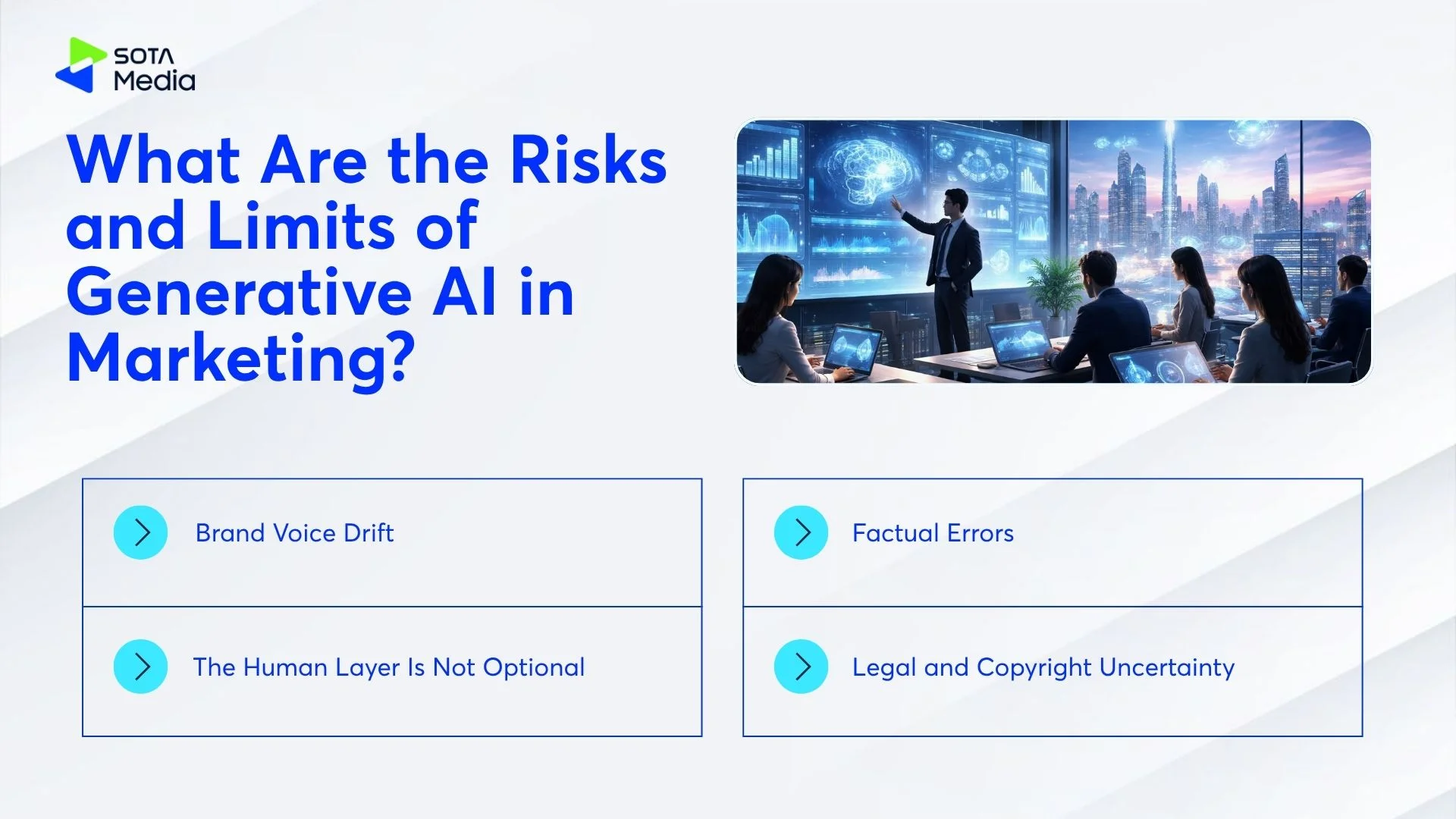
Brand Voice Drift
AI trained on generic internet text defaults to a generic voice. Without a detailed system prompt and brand guide, AI-generated content sounds identical to every other company’s output. The fix is investing in a proper brand prompt library before scaling volume.
Factual Errors
LLMs generate confident-sounding text that can contain wrong statistics, fabricated citations, and outdated information. This is a publishing liability, not a minor inconvenience. Every AI-generated factual claim needs a human to verify the source before publication.
The Human Layer Is Not Optional
Teams that remove editors entirely to cut costs typically see declines in organic traffic and brand trust within 3-6 months. AI handles volume; humans handle judgment, nuance, and accountability. Among marketers who use AI to produce written content, 86% still keep a human in the loop on final decisions.
Legal and Copyright Uncertainty
AI-generated images and text trained on copyrighted data create IP questions not fully resolved in most jurisdictions as of mid-2025. AI-generated images of real people in ads require explicit legal review before use. The EU AI Act, which came into force in 2024, includes disclosure requirements for AI-generated content in certain contexts.
The Right Next Step for Your Marketing Team
If your team spends more than 40% of its time producing content rather than analyzing what works, generative AI addresses the bottleneck directly. The question is not whether to use it, but which use case to start with and how to keep human judgment in the loop.
SotaMedia builds AI marketing workflows for companies that need production scale without losing brand control: AI content strategy, prompt library development, workflow integration with existing CMS and CRM, and a human review layer built into every process.
See how SotaMedia approaches AI marketing