

Omnichannel Digital Marketing
A UGC creator is someone paid to produce content that looks native and unscripted, not like a traditional ad. Paid social algorithms now reward that native look over polished production, one reason brands are shifting budget here: algorithms suppress content that reads as an ad and favour posts that pass for something a real person made (HubSpot, 2026). This article covers what a UGC creator is, how they differ from influencers, and 6 criteria for choosing one for your campaign.
Key takeaways
- A UGC creator focuses on producing authentic, relatable content for brands
- A UGC creator sells content, not reach. They don’t need a following.
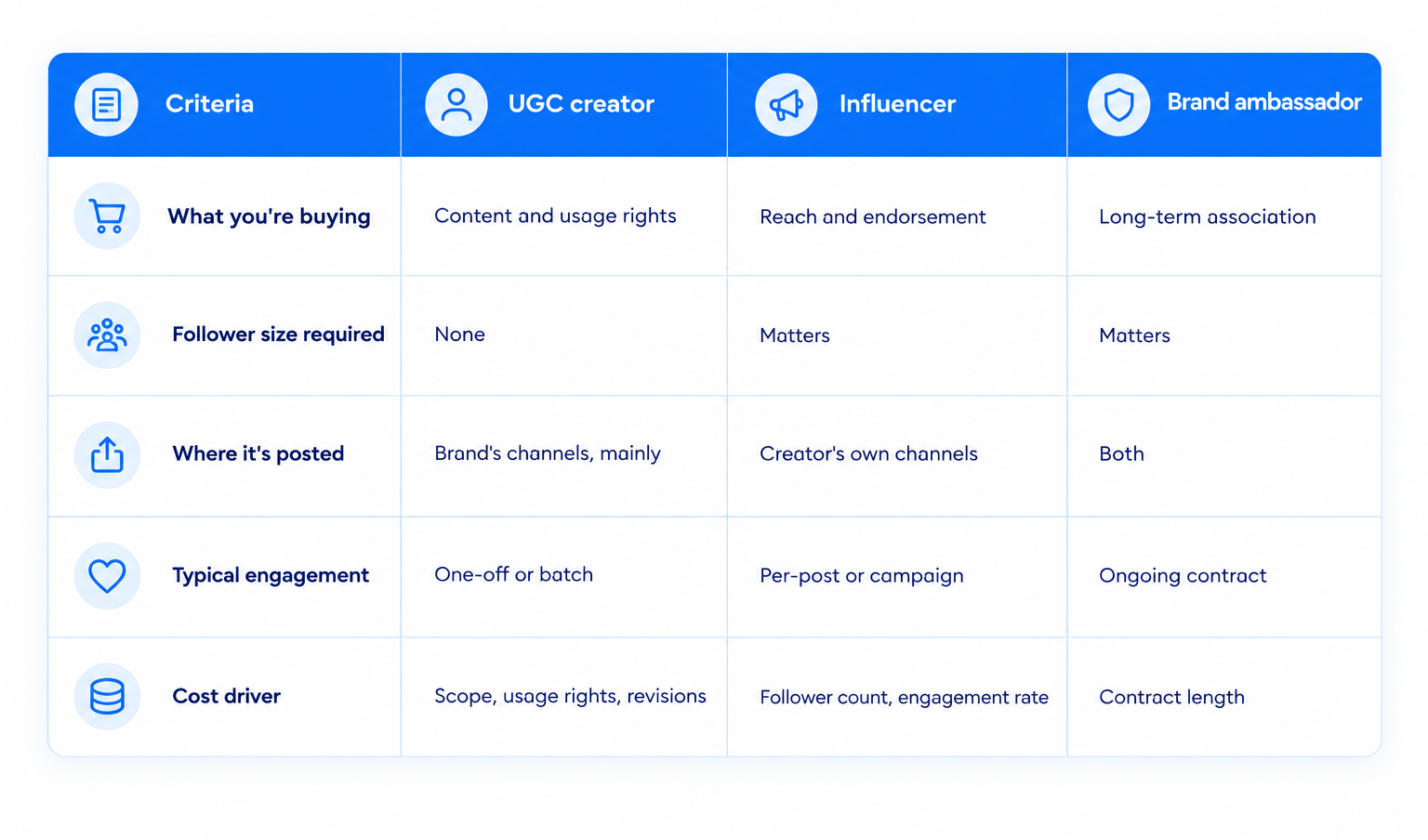
- The main difference from an influencer: you buy content and usage rights, not an audience.
- Choosing one comes down to 6 checkable criteria: niche fit, raw footage quality, usage rights, paid-usage track record, a single-creator test, and sourcing route.
What is a UGC creator
A UGC creator is a person paid to produce photo or video content in the style of organic, unpaid user content. A brand commissions a UGC creator to produce content for a flat fee or day rate, then uses the content across paid ads, product pages, or brand-owned social channels. This differs from organic UGC, which is unpaid and unsolicited. Commissioned UGC also typically appears on the brand’s channels rather than the creator’s own.
What a UGC creator actually delivers
Raw-feeling video and photo: unboxings, direct-to-camera testimonials, tutorials, before-and-after clips, and hook-driven short video. It’s shot to look native on purpose, with a phone camera, natural light, and no studio set, because polished production reads as an ad and gets skipped.
One agency breakdown of 2026 social data found that brands are told to discontinue heavily produced, highly polished content because audiences increasingly perceive it as sales copy rather than useful information (HubSpot, 2026).
Where brands use UGC creator content
Paid social ads on Meta and TikTok, landing pages, product detail pages, and organic brand accounts. A publicly viewable case shows the mechanic at work:

Virgin Voyages on TikTok
The cruise brand brought over 1,100 creators onto a ship to produce native, first-person travel content under the hashtag #sailingwithvirgin, then amplified the strongest clips with paid usage rights through TikTok’s Branded Buzz. The campaign generated more than 20,000 pieces of content and 236 million views and drove a 696% increase in TikTok-referred website traffic, a 396% increase in brand engagement, and a 386% increase in follower growth (Virgin Voyages, May 2026).
UGC creator vs influencer vs brand ambassador
The 3 roles get confused because they can look similar on screen. The table below applies the same 5 criteria to each.
When to use a UGC creator instead of an influencer
Use a UGC creator for ad creative refreshes, product launches, and categories where the buyer needs proof before they trust a claim. The point is buying content that performs inside your ad account, not access to someone else’s audience.
How to choose a UGC creator for your marketing campaign
Before you brief anyone, run the creator against these 6 checks.
How to choose a UGC creator for your marketing campaign
01Match niche to productChoose creators who understand your product category.
02Review raw footageCheck lighting, camera handling, and the first 2–3 seconds.
03Check usage rightsConfirm organic, paid usage, and whitelisting terms.
04Check paid performanceAsk for past CTR or hook-rate data, not just views.
05Test 1 creator firstTest 2–3 concepts before scaling to a creator roster.
06Choose a sourcing routeCompare marketplace, agency, and direct outreach by speed, vetting, and cost.
1. Match the creator’s niche to your product category
A generic lifestyle creator defaults to lifestyle hooks. For a technical or B2B product, brief a creator who already understands the category, or the script reads generic and the target buyer notices.
2. Review their raw footage, not just their edited reel
Review the raw footage for consistent lighting, steady camera work, and a clear hook within the first 2 to 3 seconds. Edited reels can hide weak footage that becomes obvious in the original files.
3. Check usage rights and licensing terms before you brief
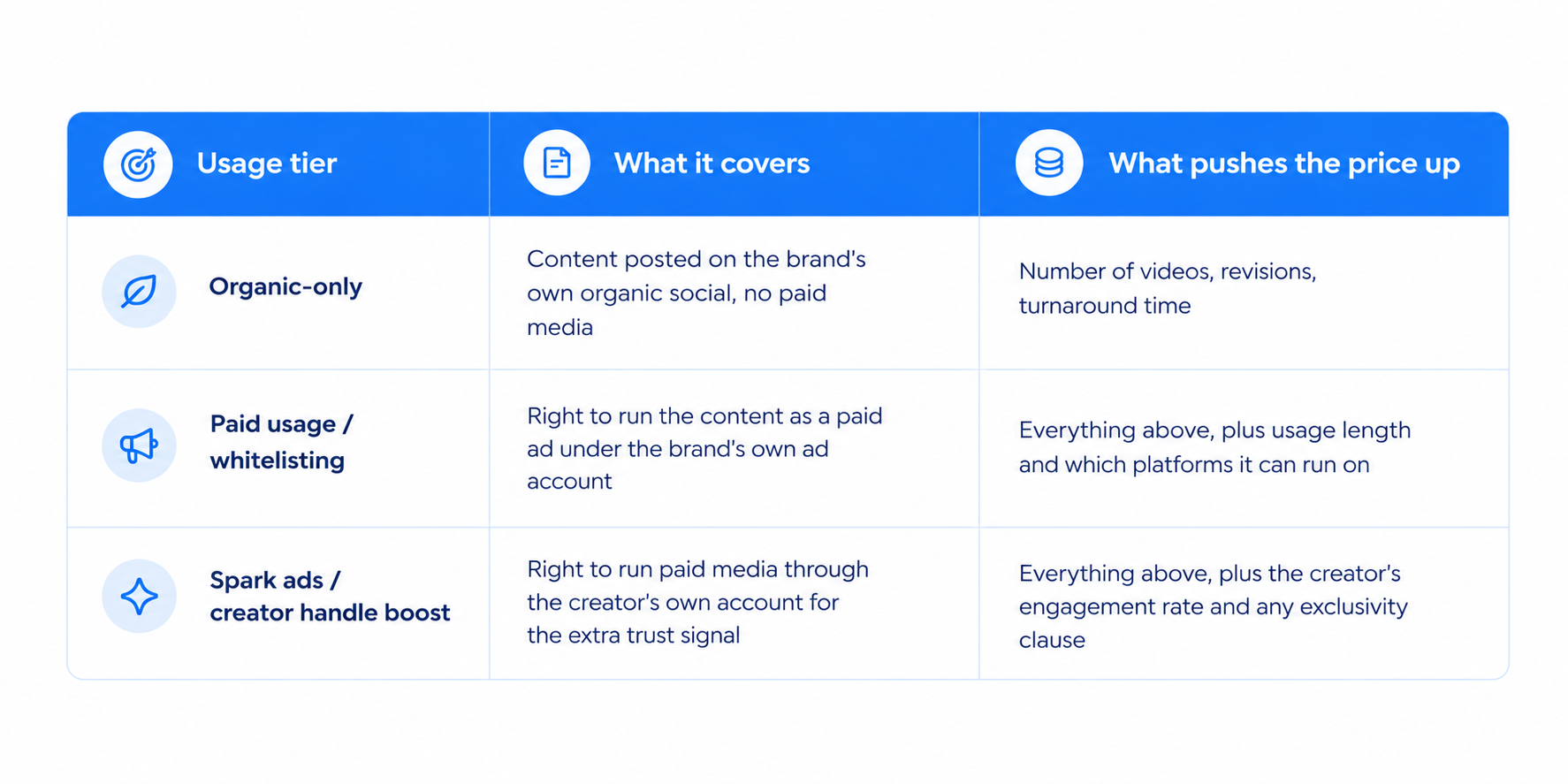
Organic-only rights cost less than paid usage. Whitelisting or spark-style ad access, letting the brand run paid media through the creator’s own handle, costs more again.
4. Ask for a paid-usage track record, not just view counts
Views on a creator’s own channel do not show how their content will perform in paid ads. If available, ask for past paid-placement data such as click-through or hook rates.
5. Run a single-creator test before committing to a batch
Brief 1 creator on 2 to 3 concepts, test them in paid, and scale to a roster only once you see which creator and concept combination earns the most spend.
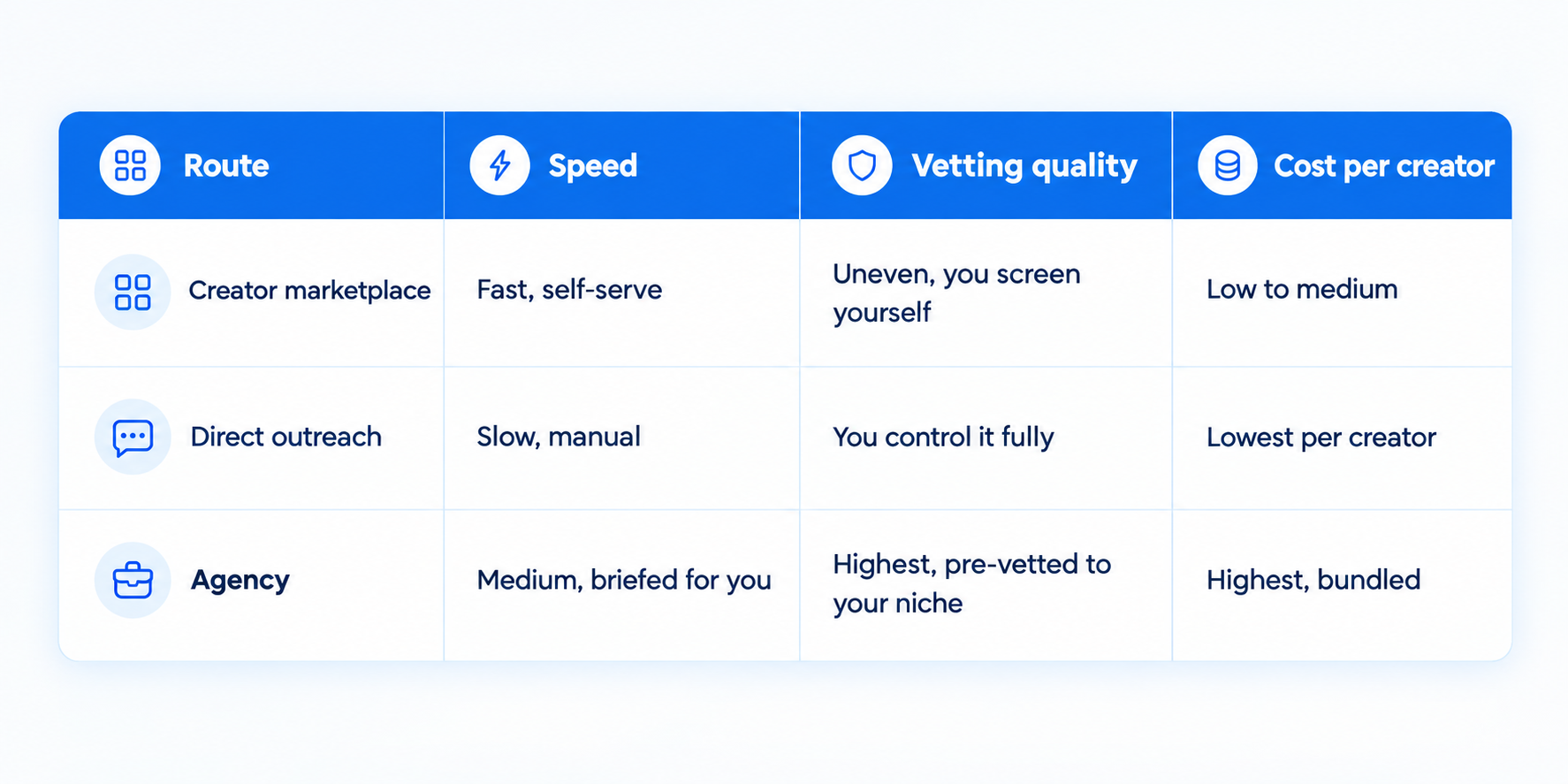
6. Decide sourcing: creator marketplace, agency, or direct outreach
Choose a marketplace, agency, or direct outreach based on your sourcing and vetting capacity. Marketplaces save time, agencies handle more vetting, while direct outreach gives you more control over cost.
How much does a UGC creator cost
A UGC creator’s rate is set by scope and usage rights, not by follower count. The same creator can quote 3 different prices for the same video, depending on where and how long a brand plans to run it.
3 factors move the number: how many videos are in the batch, how many rounds of revision are included, and which usage tier the brand buys.
A UGC creator with 500 followers and a creator with 50,000 followers can charge the same rate for the same organic-only brief, because the brand isn’t paying for their audience. Follower count only starts to matter if the brand also wants the content posted on the creator’s own channel, which is a different line item from the production fee.
Benefits of hiring a UGC creator
The advantages mostly comes from how a UGC creator fits paid social. You are paying for content designed for the ad environment, rather than building a campaign around a creator’s audience.
- Lower production costs come from using the creator’s existing setup. Their phone, lighting, and location can replace much of the equipment and crew required for a traditional studio shoot.
- Turnaround is usually shorter. Raw footage can arrive within days, giving the brand more room to refresh creative regularly without waiting for another studio production slot.
- The content already matches the format of paid social. Phone-shot footage and direct-to-camera delivery feel native to the feed, so you spend less time adapting polished production footage to look like an organic post.
- One brief can generate several assets. Different hooks, openings, and cuts can come from the same shoot, giving the media team more creative angles to test instead of relying on a single hero asset.
- Usage rights can match the campaign plan. A brand can pay for organic use, paid usage, or Spark-style ads based on where the content will run. That keeps the scope tied to actual media needs rather than paying for audience reach or exclusivity that the campaign does not require.
Common mistakes and limitations
Common mistakes
These show up most often once a brand moves past a single test video and starts working with a UGC creator on a regular cycle.
- Briefing a UGC creator like an influencer and chasing follower count instead of content quality. A UGC creator with a small following can still deliver a clean hook and natural delivery; a creator with a large one can still freeze up on camera. The number on their profile says nothing about either.
- Skipping the raw footage review and judging only the edited reel. An edit can cut around a shaky hook, patch uneven lighting, and hide 8 failed takes behind the 1 that worked, so the reel looks fine while the underlying footage would have failed criterion 2 above.
- Buying content without usage rights confirmed in writing before the shoot. Renegotiating rights after the footage exists puts the brand in a weaker position and often costs more than agreeing the tier upfront, and in some cases the creator simply declines to extend the rights at all.
Treating the first batch as the final answer. Skipping the single-creator test from criterion 5 and committing straight to a full roster means the brand scales an unproven concept, creator, or hook alongside the ones that do work, and pays for all of it before any of it is validated in paid media.
Limitation: no built-in reach
A UGC creator hands over content, not a following. If the brief is actually about awareness on a channel the company doesn’t own, budget for an influencer or a brand ambassador contract instead, and keep the UGC creator brief as a separate line item reserved for ad creative.
This distinction matters most at budget planning time. A team that folds UGC creator spend into an influencer line item ends up comparing cost per creator across 2 very different products, content on one side and reach on the other, and the comparison misleads whoever is reading the report. Keep the 2 budgets and the 2 success metrics separate: content performance for the UGC creator line, and audience reach or engagement for the influencer line.
Conclusion
Choosing a UGC creator should start with content fit, not follower count. The right creator matches the niche, can produce usable raw footage, grants the usage rights you need, and has paid-usage data you can evaluate. Start with 1 creator, test the content in your next ad refresh, then decide whether to build a larger roster or change your sourcing route.
If you need help turning product positioning into creator briefs, SotaMedia is one option to consider, with experience helping tech companies brief creators around how buyers evaluate the product.
Frequently asked questions
A UGC creator is someone paid to produce content that looks native and unscripted, for brands to use in ads or on owned channels, regardless of their own follower count.
No. An influencer sells access to their own audience. A UGC creator sells content and usage rights, and the content usually runs on the brand's channels, not the creator's.
Rates depend on scope, number of videos, usage rights, organic-only versus paid ads, and revisions, not follower count.
No. Reach isn't the product. Brands buy the content itself and place it through their own paid or organic channels.
UGC is unpaid, unsolicited content from real customers. A UGC creator is a paid professional hired to produce content in that same native style.
Paid social ad creative, product pages, landing pages, and organic brand social accounts.
Ask for past paid-usage performance data, hook rate and click-through rate, rather than relying on their own channel's view count.
It depends on scale and vetting needs. Direct outreach is cheaper for one-off content. An agency or marketplace helps when the brief needs to match a technical product, and when you need vetted creators at volume.