

Omnichannel Digital Marketing
Key takeaways
- SaaS marketing means acquiring, activating, retaining, and expanding subscribers for cloud-based software — not driving one-time purchases.
- The metrics that matter most are LTV, CAC, churn, MRR, and NRR. These shape budgets and strategy at every stage.
- A healthy B2B SaaS LTV:CAC ratio is 3:1 or higher; top-performing teams run at 4:1 or above.
- Monthly churn under 5% for B2B and 7% for B2C is the floor most investors and operators use as a reference point.
- In 2026, the most effective SaaS marketing combines product-led growth, content, community, and lifecycle programs—not paid advertising alone.
The formula for selling most products is straightforward: someone wants it, you show it to them, they buy it. SaaS breaks that formula.
When someone subscribes to software, they are not buying it once. They pay every month, evaluate it against every invoice, and cancel the moment it stops earning its seat. That changes everything about how you market it.
SaaS marketing is the work of attracting the right subscribers, getting them to use the product, keeping them long enough to turn a profit, and growing their spend over time. Unlike a product campaign that ends at checkout, SaaS marketing runs from the first Google search to the renewal email two years later.
In 2026, this plays out inside a market where hundreds of tools compete in every category, AI has cut the cost of launching new products, and buyers research everything before they speak to anyone. A campaign built around a demo request form is no longer a strategy by itself.
This guide covers what SaaS marketing actually is, how it differs from traditional marketing, which strategies work in the current market, and how to measure whether any of it is working.
What is SaaS marketing?
SaaS marketing is the set of strategies and tactics used to acquire, retain, and grow revenue from subscribers of cloud-delivered software. The product is accessed over the internet on a subscription basis, typically billed monthly or annually, rather than installed and owned as a perpetual license.
The job does not stop at new sign-ups. SaaS marketing covers the full customer journey: building awareness, generating qualified leads, converting trials or demos, activating new users to first value, reducing churn, and identifying expansion opportunities within existing accounts.
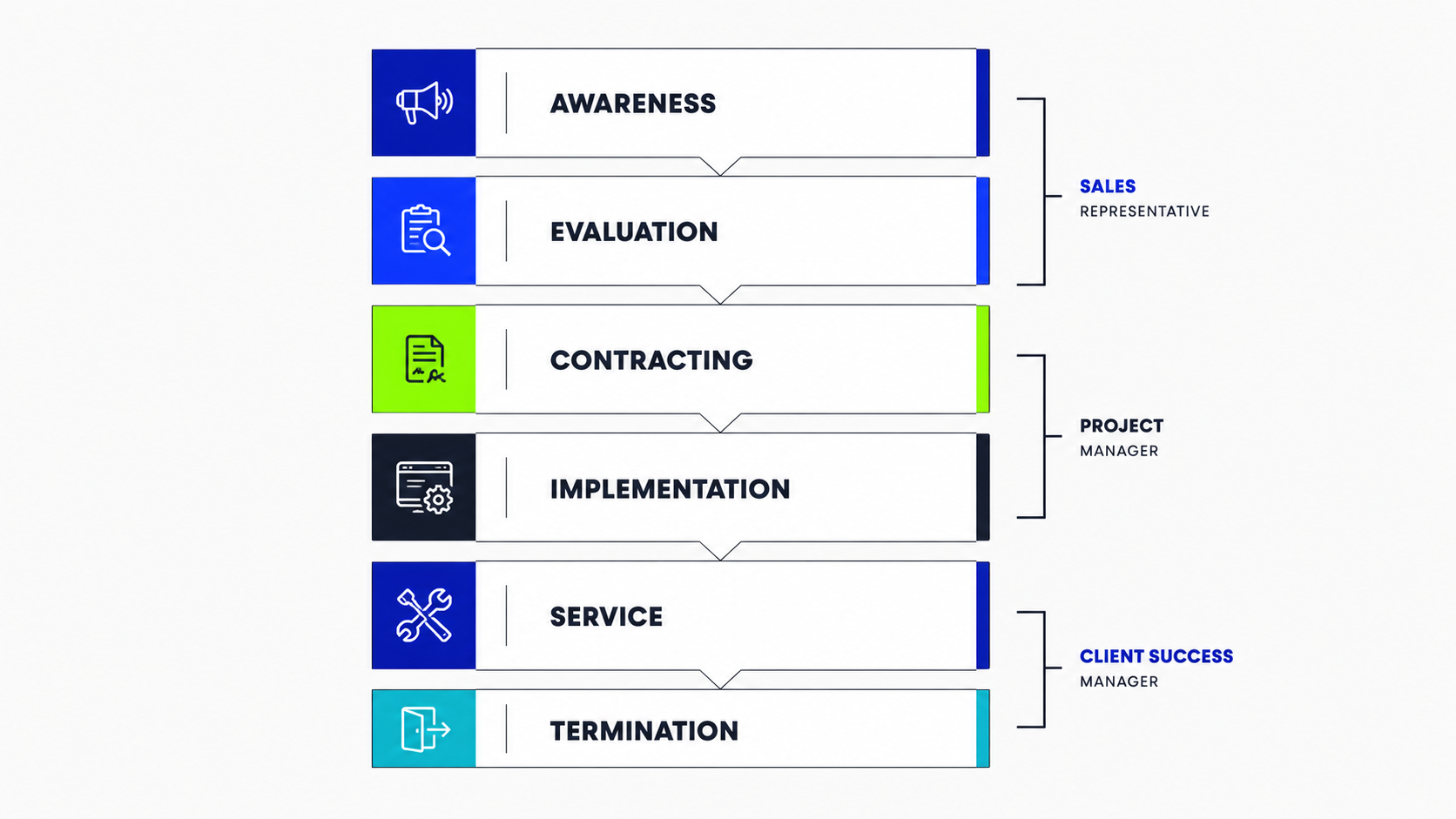
SaaS Customer Lifecycle
Because the product is digital and delivered online, SaaS marketing runs almost entirely through digital channels: SEO, content marketing, email automation, in-app messaging, paid acquisition, and community. The sales team, when one exists, is often a later-stage layer on top of a self-serve motion.
What makes SaaS marketing different?
No physical product
There is nothing to ship, touch, or return. When a prospect evaluates a SaaS tool, they cannot hold it. They cannot see what they are getting until they log in. Marketing has to make something intangible feel worth paying for before the first invoice arrives.
Free trials and freemium tiers solve this problem. The marginal cost of adding one more user is near zero for most SaaS products, which means the product itself can be a distribution channel. Let people try it. If it works, they pay.
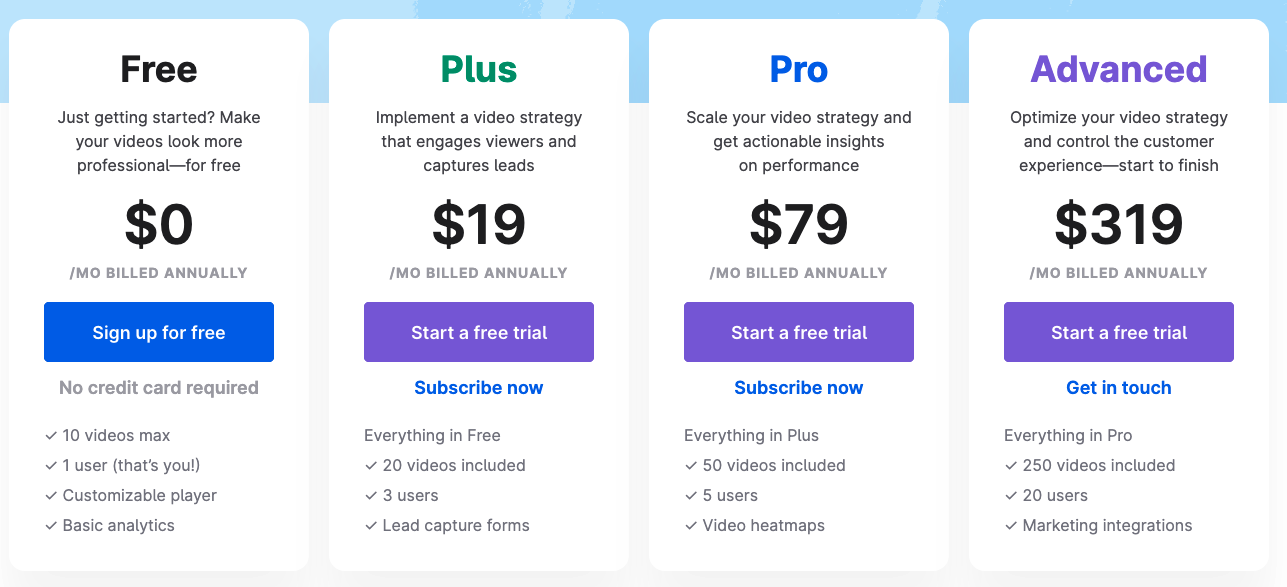
Example of a SaaS freemium pricing table
Recurring revenue and high churn risk
Subscription revenue looks healthy until cancellations start stacking. A SaaS product that loses 8% of its customers each month has effectively replaced its entire base within a year. That is not growth. That is a treadmill.
Industry benchmarks put healthy B2B monthly churn below roughly 5% and B2C below roughly 7%. Below those numbers, growth compounds over time. Above them, you are spending to stay flat.
This is why SaaS marketing teams invest heavily in onboarding, product education, and customer success. These are not post-sale services. They are part of the marketing function because they directly determine whether the revenue you acquire stays or leaves.
Decision-maker audiences and buying committees
Most enterprise SaaS is not purchased by a single person. A typical B2B deal involves at least three groups: the economic buyer who approves the budget, the end users who need to work with it daily, and IT or security who evaluate whether it can be safely deployed.
Each group has different concerns. Executives want ROI and risk reduction. End users want speed and workflow fit. IT wants security documentation and integration specs. A landing page or campaign built for only one of these groups fails the other two, and any one of them can kill the deal.
This is why SaaS marketing produces persona-specific content: case studies framed around business outcomes, technical documentation for practitioners, and security whitepapers for compliance teams.
Longer sales cycles
A $30/month tool might close within an hour of someone finding it. An enterprise contract at $60,000/year usually takes months. Enterprise buyers run pilots, compare vendors, seek internal sign-off, and run security reviews before signing anything.
This creates a marketing problem: how do you stay relevant to a buyer who is researching now but not ready to decide for six months? The answer is content that answers questions at each stage, email sequences that add value without pushing for a meeting, and in some cases account-based marketing that keeps the brand visible inside specific target accounts throughout the evaluation period.
Crowded markets, accelerated by AI
The SaaS market has always been competitive. In 2026, AI has made it significantly more so. Building a new SaaS product is cheaper and faster than it was three years ago, which means more entrants in every category, more comparison content, and more noise for buyers to cut through.
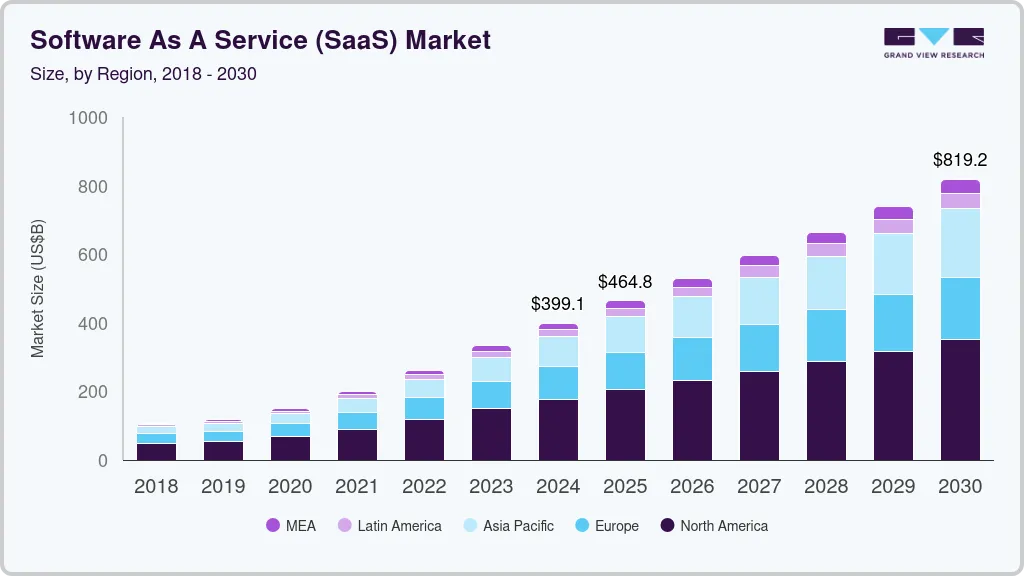
Source: Grand View Research
Standing out requires a position that is specific, not just “better” or “faster.” Differentiation lives in the customer type served, the problem solved, or a meaningful feature difference. Vague positioning disappears in a crowded market.
SaaS marketing vs traditional marketing
The clearest way to understand SaaS marketing is to compare it directly with traditional product marketing.
| Factor | SaaS Marketing | Traditional Marketing |
|---|---|---|
| Revenue model | Recurring subscriptions | One-time purchases |
| Primary goal | Acquire + retain + expand | Drive the purchase |
| Key success metric | LTV:CAC, churn, NRR | Sales volume, campaign ROI |
| Funnel scope | Full customer lifecycle | Pre-purchase to checkout |
| Main channels | SEO, email, in-app, content | TV, print, retail, digital |
| Sales cycle | Weeks to months (mid-market to enterprise) | Hours to days |
| Product trial | Free trial or freemium standard | Uncommon outside FMCG |
| Buyer type | Committees of 3-6 stakeholders (B2B) | Often one buyer |
The structural difference is that traditional marketing campaigns have an endpoint. The sale is the finish line. SaaS marketing has no finish line. The subscription renews next month, and the month after that. Every piece of marketing is also the first touchpoint of a retention program.
SaaS marketing strategies that work in 2026
Content marketing and SEO
The SaaS teams with the lowest customer acquisition costs over time own a category in search. They publish educational content that answers the specific questions buyers ask, from “What is [category]?” to “How to [specific job to be done],” and build organic traffic that compounds without ongoing spend.
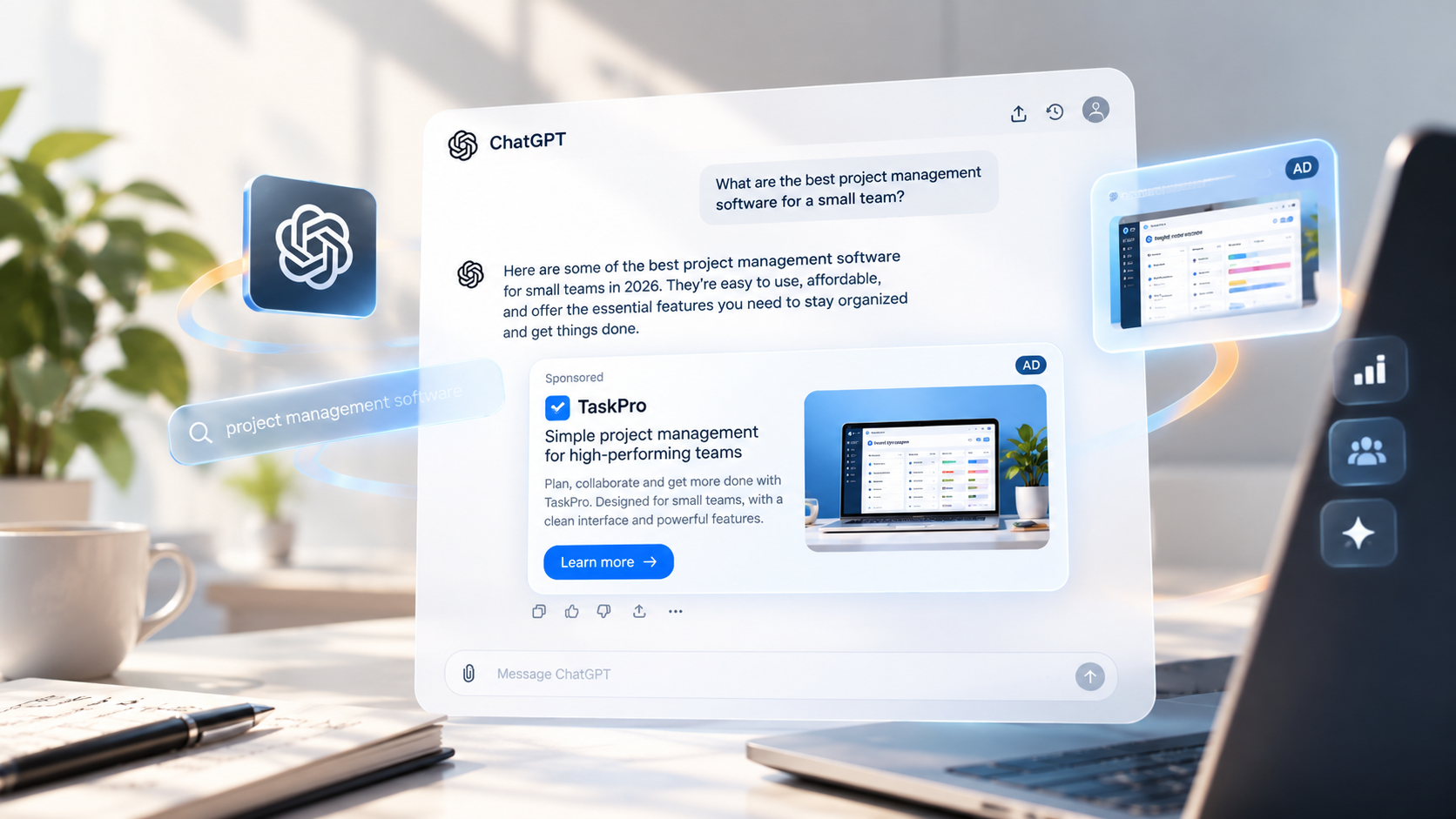
In 2026, good content strategy targets two audiences simultaneously. The first is traditional search (ranking on Google). The second is generative engine optimization (GEO): structuring content so it gets cited in ChatGPT, Perplexity, Claude, and Gemini when buyers ask about your category.
The mechanics overlap. Clear definitions, structured headings, authoritative external links, and schema markup serve both Google and AI engines. The goal in 2026 extends beyond ranking to being the source that AI tools quote when someone asks a question in your space.
Product-led growth and free trials
The most defensible SaaS acquisition channel is the product itself. Free trials and freemium tiers let users experience real value before paying. They lower the friction to signing up and shorten the time from first click to paying customer if the product is good.
Product-led growth (PLG) works when three conditions are met: the product’s value is obvious within a short usage window, onboarding is clear enough that users reach that value without a guide, and pricing allows early users to start small and grow into larger plans.
Not every SaaS product fits PLG. Complex tools with long implementation times, or those solving enterprise compliance problems, often need a sales-led motion instead. The question to ask is whether a new user can reach a meaningful “aha moment” without human help.
Video marketing
Software is hard to describe. A two-minute product walkthrough shows exactly what clicking through the tool feels like in a way that three paragraphs of copy cannot.
Short product demos on YouTube and LinkedIn cut explanation time from a 45-minute sales call to a self-serve watch. Customer story videos add social proof. Feature launch videos drive adoption among existing users who have not yet explored new capabilities.
For developer or technical audiences, YouTube tutorial content can become a significant acquisition channel on its own. A well-indexed library of “how-to” videos ranks in search, teaches users, and builds brand trust without a direct sales pitch.
Influencer and creator marketing
B2B SaaS influencer marketing is nothing like the consumer version. A product review from an industry creator with 9,000 followers who are all engineering managers converts better than a mention in a general tech publication that reaches a million people.
The formats that work: sponsored product reviews where the creator actually uses the tool, co-branded webinars that teach something useful to their audience, and tutorial content that shows the tool solving a real problem. Credibility with the right audience is the signal. Raw follower count is secondary.
The clearest sign a B2B influencer collaboration will work: the creator’s audience matches your ICP, and the creator has a record of giving honest opinions rather than promotional takes.
Referral programs
Users who come through referrals from satisfied customers convert faster and churn less often than most paid acquisition sources. The reason is simple: they already trust the recommender.
Referral programs structure this naturally occurring behavior by offering incentives, such as account credits, discounts, or cash, for successful introductions. The design matters: the reward must be compelling enough to motivate the referrer, and the process must be simple enough that they actually follow through.
Dropbox’s referral program, which offered free storage to both the referrer and the new user, is widely cited as a turning point in their early growth. The mechanic was simple, the reward was directly tied to product value, and the ask was low.
Thought leadership
Publishing a genuine point of view on an industry problem, a benchmark report based on real data, or a practitioner-level explainer builds a reputation that advertising cannot buy. In categories where buyers follow a short list of trusted voices before making decisions, getting into that list is worth more than any paid campaign.
Annual state-of-the-industry reports work particularly well for B2B SaaS: they generate press coverage, backlinks, social sharing, and first-party data simultaneously. The data becomes a business asset that drives awareness for 12 months.
The prerequisite is that the content has to actually say something. Generic takes and aggregated stats from other people’s research do not build authority. Original data or a specific, defensible opinion does.
Community-led growth
User communities, whether Discord servers, Slack groups, or public forums, can create engagement that no ad can replicate. When users help each other, share use cases, and answer each other’s questions, the product becomes stickier. The community adds value that lives outside the product itself.
For SaaS companies, community also functions as a retention and expansion mechanism. Power users who actively participate in a customer community are less likely to churn than those who do not engage. They also tend to become the referral sources and case study candidates that marketing teams spend good money finding elsewhere.
How to implement a SaaS marketing strategy
Step 1: Pick a north-star metric
Start with the number that tells you whether marketing is working at the business level. For most early-stage SaaS products, this is a free-trial-to-paid conversion rate or new MRR. For growth-stage companies, it is often pipeline-generated or net new ARR. Every channel and campaign decision follows from this choice.
Step 2: Define who you’re actually targeting
An ideal customer profile (ICP) is more useful than a persona. A persona is a character sketch. An ICP is a filter. What company size? What industry? What job function buys? What tool do they currently use that yours replaces? The more specific the ICP, the sharper every downstream decision about channels, messaging, and offers.
Step 3: Build positioning before choosing channels
Channels are tactics. Positioning is strategy. The sentence you need before spending a dollar on marketing: “We help [specific customer] do [specific job] better than [specific alternative].” When that sentence is clear and true, channel decisions become easier because you know exactly who you are reaching and what you need to say.
Step 4: Choose two or three channels and commit to them
The most common SaaS marketing mistake is running a little of everything. Two channels executed consistently and well outperform seven channels done at a surface level. Pick based on where your ICP actually spends time and where you have the capacity to produce quality work, not based on what is trendy in marketing Twitter.
Step 5: Build the funnel experience
Traffic without a conversion path is noise. Each channel entry point needs a coherent path: landing page to sign-up or demo request, followed by an onboarding sequence, followed by a clear activation milestone. Build backward from the conversion point. Know exactly what a user needs to do and see to become a paying customer, and design every touch to move them toward that.
Step 6: Instrument tracking properly
Analytics that only capture monthly active users miss the most important signal: cohort retention. Users who activate in their first week behave differently from those who activate in week four. Tracking at the cohort level reveals retention patterns, channel quality differences, and onboarding gaps that aggregate metrics hide completely.
Step 7: Run structured experiments
“Let’s test a new homepage” is not an experiment. “We expect adding a specific customer proof point above the fold to increase trial sign-up rate by 10%, because exit surveys show visitors citing uncertainty about whether the product fits their use case.” The hypothesis has to name a metric, a mechanism, and a reason. Wins get rolled out. Losses get documented and dropped.
How to measure SaaS marketing success
The metrics that matter in SaaS marketing are not the same as those in traditional campaigns. Impressions and click-through rates describe channel activity, not business health.
| Metric | What it measures | Common benchmark |
|---|---|---|
| LTV:CAC ratio | Lifetime value vs. customer acquisition cost | 3:1 or higher; elite teams target 4:1+ |
| Monthly churn rate | % of customers canceling each month | Under 5% for B2B, under 7% for B2C |
| CAC payback period | Months to recover acquisition cost | Under 12 months |
| Net revenue retention (NRR) | Revenue from existing customers after churn and expansion | Over 100% means expansion covers churn and contraction |
| Activation rate | % of sign-ups reaching the “first value” milestone | Varies by product; define your own milestone |
| Free trial to paid conversion | % of trials converting to paid plans | Varies by product type and trial length |
| MRR/ARR growth | Month-over-month and annual recurring revenue growth | Depends on stage and segment |
Beyond the numbers: metrics tell you what happened. They do not tell you why. An NPS survey run after month three can reveal whether a churn spike came from a pricing issue, an onboarding gap, or a feature that over-promised. Win/loss interviews explain why deals that should have closed did not. Session recordings show exactly where users get stuck in the product.
In 2026, many SaaS marketing teams also track their presence in AI-generated answers. When someone asks ChatGPT or Perplexity, “What is the best [your category] tool?” do they appear? This has become a leading indicator of brand visibility in a search landscape that is shifting away from traditional blue-link results. Tracking it takes five minutes a week: run the query, log the result, and repeat monthly.
Where this leaves you in 2026
SaaS marketing is a system, not a campaign. It runs from first impression through renewal. The product team, customer success, and the marketing function overlap more than they stay separate.
The teams that grow consistently share three things: a clear ICP they can describe in a single sentence, two or three channels they execute with genuine consistency, and metrics that go past sign-up volume to track who stays and why.
If you are starting from scratch, the first move is not to pick a channel. It is to talk to five current customers and understand exactly why they chose you, what they were doing before, and what would make them leave. Build everything else from that.
Once the foundation is in place, the harder problem is showing up where your buyers are actually looking. In 2026, that means search and AI-generated answers. Positioning that only lives in a slide deck does not convert. It needs to be in the right formats, on the right pages, structured so Google and AI engines can find and extract it.
That is what SotaMedia works on with B2B SaaS companies—getting the content strategy, SEO execution, and GEO layer built and working together. If you want to talk through where your current setup has gaps, contact us for a free audit.